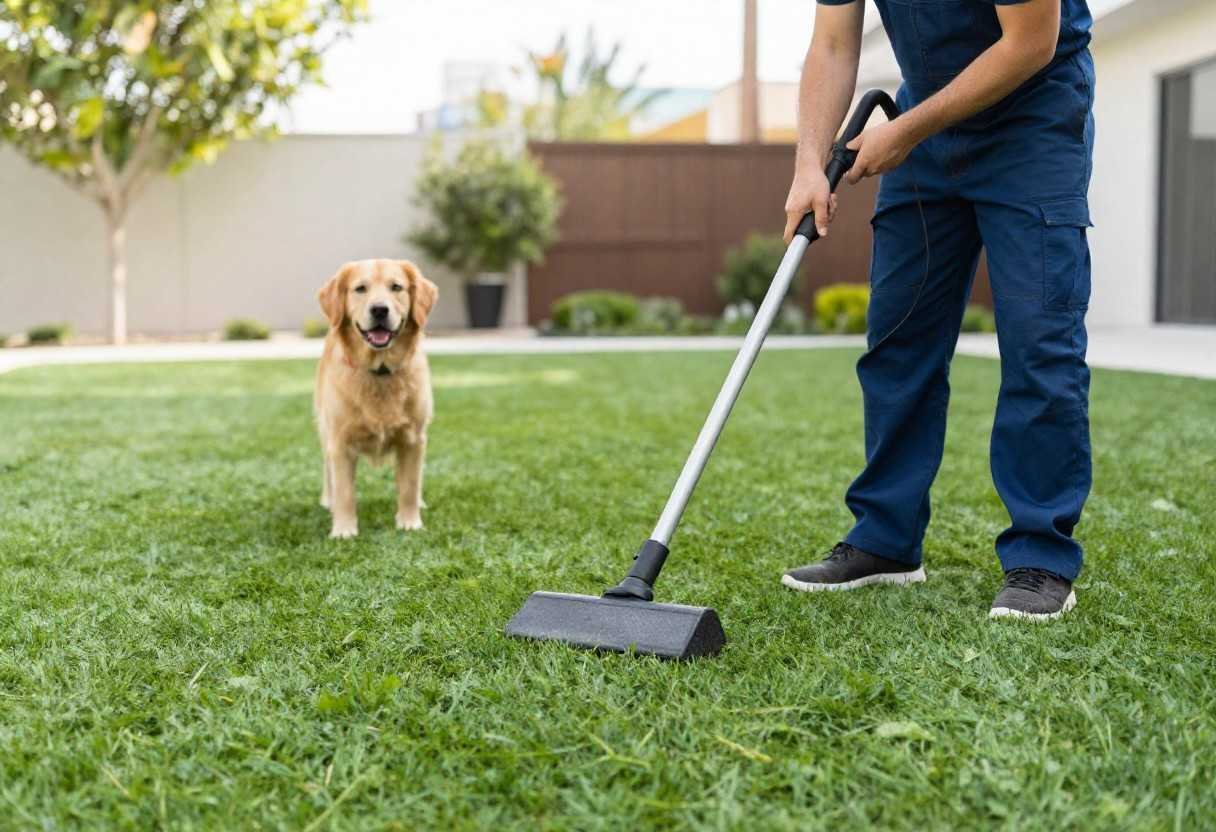
Synthetic grass has become a popular choice for pet owners because it stays green year-round, requires minimal maintenance, and can withstand heavy use from active dogs. However, one common challenge many pet owners face is persistent urine odors. While artificial turf offers numerous advantages over natural grass, understanding the science behind dog urine odors is essential for keeping your outdoor space clean, fresh, and enjoyable.
At Doggy Turf Detox, we specialize in helping homeowners eliminate stubborn pet odors through professional turf care. Let’s explore why dog urine smells develop in synthetic grass and what can be done to prevent them.
Understanding What’s Inside Dog Urine
Dog urine is much more than water. It contains a mixture of compounds, including:
- Urea
- Uric acid
- Ammonia-producing substances
- Salts and minerals
- Hormones and proteins
When a dog urinates on synthetic grass, the liquid initially drains through the turf system. However, not all components wash away equally. Some compounds remain trapped within the turf fibers, infill material, and base layers.
As these substances begin to break down, bacteria feed on the organic matter and produce gases that create the familiar unpleasant urine smell. The stronger the bacterial activity, the stronger the odor becomes.
Why Synthetic Grass Traps Odors More Than Natural Grass
Natural grass has biological processes that help break down waste. Soil contains microorganisms that naturally decompose organic materials, reducing odor buildup over time.
Artificial turf works differently. Although modern turf systems are designed for drainage, they do not contain the same living ecosystem found in natural soil. As a result, urine residue can accumulate beneath the turf surface.
Several factors contribute to odor retention:
- Repeated urination in the same area
- Poor drainage systems
- High temperatures
- Inadequate cleaning practices
- Low-quality infill materials
Without proper maintenance, odor-causing bacteria continue multiplying, creating increasingly noticeable smells.
The Role of Ammonia in Turf Odors
One of the biggest contributors to pet-related turf odors is ammonia.
When urea in dog urine breaks down, it converts into ammonia through bacterial activity. Ammonia has a strong, sharp smell that many people immediately recognize.
Hot weather accelerates this process. During summer months, especially in regions like Houston, rising temperatures increase bacterial growth and intensify ammonia release. This is why many homeowners notice stronger odors during warm afternoons than during cooler parts of the day.
The combination of heat, moisture, and trapped urine residue creates ideal conditions for odor development. Even if the turf looks clean on the surface, ammonia buildup beneath the grass can continue producing unpleasant smells.
How Bacteria Create Persistent Smells
Many people assume the odor comes directly from fresh urine. In reality, bacteria are often the primary culprit.
When urine remains within the turf system, bacteria begin breaking down organic compounds. This decomposition process generates gases that create lingering odors.
Over time, bacteria can establish colonies deep within:
- Turf backing
- Infill layers
- Drainage systems
- Base materials
Surface rinsing alone may not remove these bacterial populations. While a garden hose can temporarily reduce odors, it often fails to eliminate the source.
This is why professional odor treatment focuses on both cleaning and sanitizing the entire turf system rather than simply masking smells with fragrances.
Why DIY Cleaning Methods Often Fall Short
Many pet owners try household solutions such as vinegar, soap, baking soda, or store-bought deodorizers. While these methods may provide temporary relief, they rarely address the underlying issue.
Common DIY limitations include:
Incomplete Bacteria Removal
Most household products clean only the turf surface. Odor-causing bacteria often reside deeper within the turf structure.
Residue Buildup
Some cleaning products leave behind residues that can attract dirt and create additional maintenance challenges.
Temporary Odor Masking
Many deodorizers cover smells rather than eliminating their source. Once the fragrance fades, the urine odor often returns.
Potential Turf Damage
Using harsh chemicals can damage turf fibers, backing materials, or drainage systems, shortening the lifespan of the installation.
For long-term odor control, a specialized artificial turf cleaning service is often the most effective solution.
How Professional Artificial Turf Cleaning Eliminates Odors
Professional turf cleaning goes beyond surface maintenance. Companies like Doggy Turf Detox use advanced cleaning processes designed specifically for pet-friendly synthetic grass systems.
A comprehensive cleaning typically includes:
Deep Debris Removal
Pet hair, dirt, leaves, and organic matter are extracted from turf fibers and infill.
Specialized Turf Sanitization
Professional-grade cleaning agents target odor-causing bacteria without harming pets or turf materials.
Infill Restoration
Cleaning equipment reaches deep into the infill layer where much of the odor-causing residue accumulates.
Enzyme-Based Treatments
Enzymatic cleaners break down organic compounds at the molecular level, helping eliminate odors at their source.
Improved Drainage Performance
Removing debris and buildup helps restore proper water flow through the turf system.
For homeowners seeking an effective artificial turf cleaning Houston solution, professional services provide deeper cleaning than traditional DIY methods can achieve.
Preventing Future Odor Problems
The best approach to odor control is prevention. Regular maintenance can significantly reduce the risk of urine buildup and bacterial growth.
Helpful strategies include:
- Rinsing frequently used pet areas with water
- Removing solid pet waste promptly
- Scheduling routine professional cleanings
- Maintaining proper drainage
- Using pet-friendly turf infill products
- Monitoring areas where dogs frequently urinate
Regular maintenance not only improves odor control but also extends the life and appearance of synthetic grass installations.
Keep Your Synthetic Grass Fresh Year-Round
Dog urine odors in synthetic grass are not simply a surface problem. They result from a combination of biological processes involving urine compounds, bacterial growth, ammonia production, and environmental conditions.
Understanding the science behind these odors helps homeowners make informed decisions about turf care. While routine rinsing can help manage minor issues, deeper odor problems often require professional treatment.
At Doggy Turf Detox, we understand how important a clean, odor-free outdoor environment is for both pets and their owners. Through specialized cleaning techniques and proven sanitation methods, our team helps restore freshness, improve hygiene, and protect your investment in synthetic grass.
If persistent odors are affecting your lawn, a professional artificial turf cleaning service can help eliminate the source and keep your turf looking and smelling its best all year long.