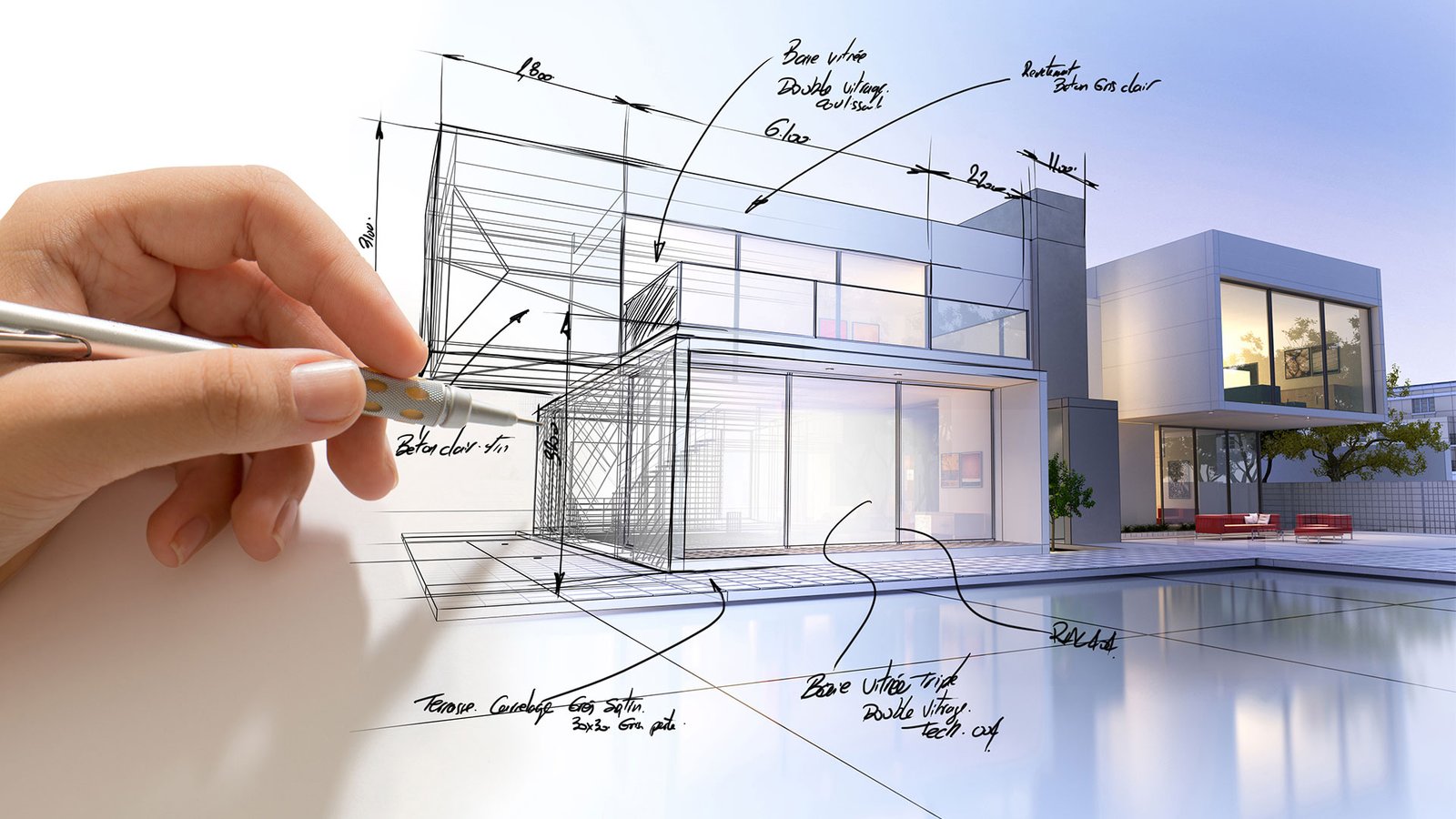
3D rendering in architecture stands at the forefront of modern visualization approaches, and a 3D Rendering Artist is a key player in making it happen. They are the professionals who take an arbitrary design concept and turn it into a physical reality. The demand for realistic and innovative architectural visuals is increasing rapidly. That is why the importance of this discipline cannot be overstated. Currently, the field and market of 3D rendering are on the rise, resulting in increased demand for these artists. They are the experts who are equipped and knowledgeable to navigate through the complexities of achieving immersive and realistic visualizations.
In this article, we are going to discuss the role of a 3D artist in design and architecture rendering. But before delving into that, let's have a look at what 3D architectural rendering is.
Defining 3D Architectural Rendering
It refers to the creation of 2D as well as 3D images that accurately demonstrate the features of a potential design. 3D Architectural Rendering Services take a mere design concept and transform it into a concrete 3D model by capturing the true essence of a client's vision. This technology is booming significantly because of the arrival of artificial intelligence. It has drastically enhanced realism in architectural visualizations.
A 3D Rendering Artist's Role in Architectural Visualization
A rendering 3D artist must possess a plethora of skills encompassing a variety of technical abilities. All of these skills that are going to be mentioned below majorly contribute towards architectural visualization in one way or another. Here they are:
3D Modeling
One of the most essential roles they play in architectural rendering is creating intricate 3D models of architecture. They will make sure that a model realistically reflects an artist's intent. In other words, they can create 3D models of complex objects as well as environments.
Texturing
After 3D modeling, the next role in the line is texturing. It refers to applying 2D images onto a 3D model. This is a major element in achieving realism in any Visualization. For this, they create texture maps which can be diffuse, specular, or normal, depending on a design requirement. This process is done to give a surface its needed features.
Lighting
When discussing the roles of a professional in terms of Artist Rendering, lighting surely comes in the top three. It is crucial for any 3D model, as it plays a crucial role in acquiring the desired level of realism in the visuals. A skilled 3D artist is responsible for understanding what type of lighting will be appropriate for a particular design. Thus, making an architecture visualization as realistic as possible.
Composition
This role is associated with arranging 3D modeling objects in a scene to make it more visually appealing. A 3D artist must know all the basic composition principles, from balance and symmetry to the rule of thirds. Having this knowledge will allow them to use various techniques of composition to make an architectural visualization more compelling.
3D Rendering Software Aptitude
For any 3D artist, it is essential that they are able to use 3D rendering software proficiently. There are numerous pieces of software on the market, and it is important for an artist to know what kind of features can be applied in a particular project.
A known 3D Architectural Visualization Agency, such as SMA Archiv, will always look for artists who have extensive knowledge about this software. The most well-recognized software in the industry is as follows:
- Maya
- Enscape
- Lumion
- Unreal Engine
- Revit
- AutoCAD
- 3Ds Max
- Sketchup
- Corona
- V-Ray
After getting to know what role a 3D artist plays in architectural rendering, let's dive into the types of architectural rendering.
Fundamental Types of Architectural Visualization Rendering
Architectural visualization rendering is divided into several types; the most basic are as follows:
Conceptual Architectural Rendering
As the name suggests, the visualization rendering will provide stakeholders with the basic idea about how their envisioned architecture will turn out without going into details.
Presentation Architectural Rendering
These renderings are of high quality, as they are created by capturing the maximum detail for presenting it to a client.
Technical Architectural Rendering
This type of rendering deals with the components, such as materials, texturing, colors, dimensions, etc.
Bottom line
A 3D Rendering Artist plays a crucial role in creating immersive and lifelike visualizations of any scope of architecture. It can be said that they can efficiently minimize the gap between a conceptual design to a realistic 3D Architectural Visualization. In this article, we have discussed how essential a 3D artist is in the realm of architectural visualization and how, with the right knowledge and tools, they are able to take architectural rendering to the heights of realism.