The Real Benefits of Marketing Automation (And the Mistakes That Quietly Kill Them)
By Mitu Das 13-06-2026 65
If you've ever stayed up late manually sending follow-up emails to leads, you already know why marketing automation exists. I've worked with small teams who were drowning in spreadsheets and repetitive tasks, and the moment they set up even basic automation, they got hours of their week back. But here's what nobody tells you upfront: automation isn't magic. Set it up wrong, and you'll automate your mistakes too, just faster.
In this guide, I'll walk you through the genuine, practical benefits of marketing automation, and the mistakes I see businesses make over and over again that quietly sabotage their results. By the end, you'll know exactly what to expect, what to avoid, and how to get started without wasting time or budget.
What Is Marketing Automation, Really?
At its core, marketing automation is software that handles repetitive marketing tasks for you, including sending emails, posting on social media, scoring leads, segmenting your audience, and triggering actions based on user behavior.
Think of it like setting up dominoes once, then letting gravity do the work every time someone interacts with your brand. Someone signs up for your newsletter? They automatically get a welcome email, then a follow-up three days later, then a special offer if they haven't purchased yet.
The point isn't to replace your marketing team. It's to free them up from repetitive grunt work so they can focus on strategy, creativity, and the things that actually need a human touch.
The Real Benefits of Marketing Automation
1. You Save Time on Repetitive Tasks
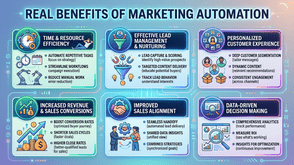
This is the most obvious benefit, and for good reason. Tasks like sending welcome emails, birthday discounts, abandoned cart reminders, and weekly newsletters can all run on autopilot once they're set up properly.
I worked with a small e-commerce store that was manually emailing every customer who abandoned their cart. Once they automated this single workflow, they recovered an extra few thousand dollars in sales per month, without anyone lifting a finger after setup.
2. Better Lead Nurturing Without the Guesswork
Not every lead is ready to buy right away. Marketing automation lets you nurture leads with relevant content based on where they are in their journey.
For example, someone who downloaded a beginner's guide probably isn't ready for a sales call yet. But someone who's visited your pricing page three times this week? That's a hot lead worth following up with personally.
Automation tracks this behavior and can trigger different email sequences or alert your sales team automatically, so nobody falls through the cracks.
3. More Consistent Messaging Across Channels
One of the underrated benefits of marketing automation is consistency. When you're manually managing emails, social posts, and follow-ups, things slip. Someone gets the wrong message at the wrong time, or worse, doesn't get followed up with at all.
Automation platforms let you map out the entire customer journey, from first visit to repeat customer, so the right message goes out at the right time, every time, without relying on someone remembering to do it.
4. Smarter Lead Scoring and Prioritization
Most automation platforms let you assign scores to leads based on their actions, such as opening emails, visiting key pages, or downloading resources. This means your sales team spends their time on leads who are actually interested, instead of cold-calling everyone on the list equally.
This is particularly useful for businesses with longer sales cycles, like B2B services, real estate, or high-ticket consulting.
5. Better Data and Insights Over Time
Every email open, click, and website visit gets tracked. Over time, this gives you a clearer picture of what's actually working: which subject lines get opened, which offers convert, and where people drop off in your funnel.
This is the kind of insight that's nearly impossible to gather manually, but becomes obvious once you have a few months of automated data to look at.
Common Marketing Automation Mistakes (And How to Avoid Them)
Here's the part most guides skip. Automation can absolutely backfire if it's set up carelessly. These are the mistakes I see most often.
Mistake 1: Automating Before You Have a Clear Strategy
The biggest mistake is jumping into automation tools before mapping out your customer journey. If you don't know what you want to happen at each stage, automation just speeds up the chaos.
Fix: Sketch out your customer journey first, even on paper. What happens after someone signs up? What should happen if they don't engage for two weeks? Map it before you build it.
Mistake 2: Over-Automating and Losing the Human Touch
Just because you can automate something doesn't mean you should. I've seen businesses automate so heavily that customers feel like they're talking to a robot at every touchpoint, with generic greetings and no personalization.
Fix: Keep high-value interactions, like responses to complaints, big purchases, or VIP customers, handled by real people. Automation should support your team, not replace meaningful human contact.
Mistake 3: Setting It Up and Never Reviewing It Again
Automation isn't "set it and forget it forever." Workflows that worked great a year ago might be sending outdated offers, broken links, or messaging that no longer matches your brand.
Fix: Schedule a quarterly review of your active workflows. Check open rates, click rates, and whether the content still makes sense for your current offers.
Mistake 4: Poor List Segmentation
Sending the same automated sequence to everyone, regardless of their interests, location, or behavior, is one of the fastest ways to tank your engagement rates and increase unsubscribes.
Fix: Segment your audience based on behavior, interests, or demographics before building automation sequences. Even basic segmentation, like new subscribers versus existing customers, makes a noticeable difference.
Mistake 5: Ignoring Mobile Experience
A huge portion of emails are opened on mobile devices. If your automated emails look broken or cluttered on a phone screen, you're losing engagement before people even read your message.
Fix: Always preview and test automated emails on mobile before activating a workflow.
How to Get Started Without Overwhelming Yourself
If you're new to this, don't try to automate everything at once. Start with one workflow, usually a welcome sequence for new subscribers or an abandoned cart reminder if you sell products online. Get that working well, measure the results, then build the next one.
This approach also pairs well with [a broader content marketing strategy], since automation works best when there's already valuable content guiding people through your funnel.
Final Thoughts
The benefits of marketing automation are real: time savings, better lead nurturing, consistent messaging, smarter prioritization, and data you can actually use to improve over time. But those benefits only show up when automation is built on a clear strategy, reviewed regularly, and balanced with genuine human interaction.
If you're considering setting up marketing automation for your business, start small, map your customer journey first, and avoid the common mistakes outlined above. And if you'd like help figuring out which workflows make sense for your specific business, [reach out for a quick strategy consultation]. Sometimes an outside perspective makes all the difference in avoiding costly setup mistakes.
Tags : Technology Marketing