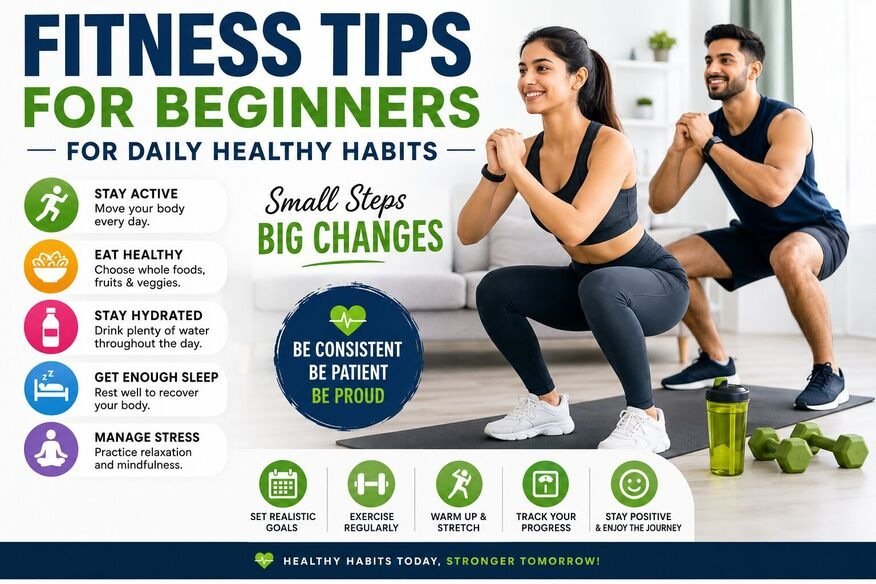
Fitness Tips for Beginners can help you build healthy daily habits, improve your energy, and create a sustainable lifestyle without overwhelming changes. Starting a fitness journey doesn't require expensive equipment or complicated workout plans. What matters most is consistency, patience, and making small improvements every day. By developing simple routines, you can gradually strengthen your body, improve your mental health, and enjoy long-term wellness.
Whether your goal is weight management, muscle building, or simply feeling healthier, daily healthy habits provide the foundation for success. This guide shares practical strategies that beginners can easily follow to make fitness a lasting part of everyday life.
Why Daily Healthy Habits Matter
Many beginners assume they need to spend hours in the gym to become fit. In reality, daily habits play a much bigger role than occasional intense workouts. Small actions repeated consistently lead to significant improvements over time.
Healthy habits help:
- Increase daily energy levels
- Improve cardiovascular health
- Support healthy weight management
- Build muscle strength gradually
- Improve flexibility and mobility
- Enhance mental focus
- Reduce stress and anxiety
- Improve sleep quality
Instead of focusing only on quick results, develop habits that become part of your lifestyle.
Start with Realistic Fitness Goals
One of the biggest reasons beginners quit is setting unrealistic expectations.
Rather than aiming to lose a large amount of weight in a few weeks, focus on achievable milestones such as:
- Walking 30 minutes daily
- Exercising four days each week
- Drinking more water
- Sleeping at least seven hours every night
- Completing a weekly workout schedule
Achieving smaller goals builds confidence and keeps motivation high.
Create a Consistent Workout Schedule
Consistency beats intensity when starting your fitness journey.
Choose workout days that fit your schedule and stick to them. Even 20–30 minutes of exercise can produce noticeable improvements over time.
A beginner schedule may look like this:
Monday
- Brisk walking
- Bodyweight exercises
Tuesday
- Stretching
- Yoga
Wednesday
- Strength training
Thursday
- Light cardio
Friday
- Full-body workout
Saturday
- Outdoor activities
Sunday
- Recovery and stretching
Following a schedule helps build discipline while preventing burnout.
Focus on Proper Warm-Up
Never skip warming up before exercising.
A proper warm-up prepares muscles and joints while reducing injury risk.
Simple warm-up exercises include:
- Arm circles
- High knees
- Shoulder rolls
- Hip rotations
- Light jogging
- Jumping jacks
Spend 5–10 minutes warming up before every workout.
Learn Basic Strength Exercises
Strength training is essential for beginners because it improves muscle tone, bone strength, and metabolism.
Start with bodyweight movements like:
- Squats
- Push-ups
- Lunges
- Planks
- Glute bridges
- Step-ups
Perform two or three sets with comfortable repetitions and increase gradually as your strength improves.
Don't Ignore Cardio
Cardiovascular exercise strengthens the heart and lungs while burning calories.
Beginner-friendly cardio includes:
- Walking
- Cycling
- Swimming
- Dancing
- Jogging
- Hiking
Aim for at least 150 minutes of moderate activity each week.
Prioritize Good Nutrition
Exercise works best when paired with balanced nutrition.
Your meals should include:
- Lean protein
- Whole grains
- Fresh vegetables
- Fruits
- Healthy fats
- Fiber-rich foods
Avoid relying heavily on processed snacks and sugary beverages.
Eating nutritious meals provides energy for workouts and supports recovery.
Stay Hydrated Throughout the Day
Water is often overlooked but plays an essential role in fitness.
Proper hydration helps:
- Regulate body temperature
- Improve muscle function
- Increase endurance
- Support digestion
- Prevent fatigue
Drink water consistently throughout the day, especially before and after exercise.
Get Enough Quality Sleep
Sleep is when your body repairs muscles and restores energy.
Adults should aim for seven to nine hours of quality sleep each night.
Good sleep habits include:
- Maintaining a regular bedtime
- Limiting screen time before bed
- Keeping the bedroom cool and quiet
- Avoiding caffeine late in the evening
Better sleep leads to improved workout performance and faster recovery.
Practice Proper Form
Correct exercise technique is more important than lifting heavy weights.
Poor form increases the risk of injuries and reduces workout effectiveness.
Take time to learn proper movement patterns before increasing intensity.
Using mirrors, instructional videos, or guidance from a qualified trainer can help improve technique.
Make Stretching Part of Your Routine
Stretching improves flexibility and reduces muscle tightness.
Include stretches for:
- Hamstrings
- Quadriceps
- Calves
- Back
- Chest
- Shoulders
Stretch after every workout while muscles are still warm.
Track Your Progress
Monitoring progress keeps you motivated.
Track information such as:
- Body measurements
- Workout duration
- Daily steps
- Strength improvements
- Weight changes
- Energy levels
Celebrate improvements even if they seem small.
Progress is built through consistency.
Stay Motivated with Small Rewards
Reward yourself after reaching milestones.
Examples include:
- New workout clothes
- Fitness accessories
- Healthy meals
- Relaxation days
- Outdoor adventures
Avoid using unhealthy foods as rewards.
Positive reinforcement helps maintain long-term motivation.
Build Healthy Daily Habits Beyond Exercise
Fitness extends beyond workouts.
Develop habits like:
- Taking stairs instead of elevators
- Walking during breaks
- Standing regularly while working
- Cooking healthy meals
- Limiting sugary drinks
- Practicing mindfulness
- Reducing prolonged sitting
These simple choices improve overall health throughout the day.
Avoid Common Beginner Mistakes
Many newcomers unknowingly slow their progress.
Common mistakes include:
- Doing too much too soon
- Skipping recovery days
- Ignoring nutrition
- Comparing yourself with others
- Using incorrect exercise form
- Expecting instant results
Focus on steady improvement instead of perfection.
The Importance of Recovery
Rest days are essential for muscle growth and injury prevention.
Recovery activities include:
- Gentle walking
- Stretching
- Foam rolling
- Hydration
- Nutritious meals
- Quality sleep
Recovery allows your body to adapt and become stronger.
Stay Positive Throughout Your Journey
Fitness is a lifelong commitment rather than a short-term challenge.
Some days will feel easier than others, but staying committed during difficult moments creates lasting success.
Develop a positive mindset by focusing on progress instead of perfection.
Every healthy choice brings you closer to your goals.
Create Your Own Sustainable Plan
Everyone's fitness journey is unique.
Design a routine that fits your:
- Work schedule
- Family responsibilities
- Physical abilities
- Personal goals
- Available equipment
Your plan should be enjoyable enough to maintain for months and years.
Incorporating a simple Fitness Routine at Home can make staying active easier, especially on busy days. Home workouts using bodyweight exercises, resistance bands, or light dumbbells help you remain consistent without needing a gym membership. A flexible routine ensures you never miss an opportunity to improve your health.
Conclusion
Developing healthy daily habits is the key to long-term fitness success. Instead of chasing quick results, focus on creating routines you can maintain consistently. Begin with realistic goals, stay active every day, eat nutritious foods, sleep well, and prioritize recovery. Over time, these simple habits will transform your physical health, boost your confidence, and improve your overall quality of life. By staying patient and committed, you can enjoy a healthier, stronger, and more energetic future—one day at a time.