Suture Practice Kit: A Practical Guide for Medical Students and Healthcare Trainees
By Stellman 12-09-2026 8
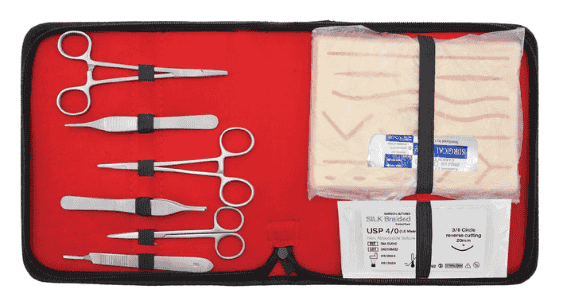
Learning how to suture is an important part of practical medical education. While lectures and demonstrations introduce the basic principles, developing good instrument handling, needle control, knot-tying, and stitch placement requires repeated hands-on practice.
A suture practice kit provides students and healthcare trainees with a dedicated setup for developing these skills in a controlled educational environment. Most training kits combine a practice pad with basic surgical instruments and different types of suture material, allowing learners to repeat exercises without practicing on patients.
What Is a Suture Practice Kit?
A suture practice kit is a collection of tools and training materials designed specifically for learning and practicing suturing techniques.
Depending on the kit, it may include a synthetic suture pad, needle holder, forceps, scissors, scalpel components, and multiple suture threads. Some training kits also include different blade sizes or suture materials to provide a broader learning experience.
The purpose is not simply to provide surgical instruments. A well-designed kit creates an opportunity for students to repeatedly practice fundamental skills and become more comfortable handling the tools used during suturing.
Why Do Medical Students Need Suturing Practice?
Suturing involves more than passing a needle through a simulated wound. Learners need to coordinate several movements while maintaining appropriate control of the instruments and suture material.
Regular practice can help students work on:
- Instrument handling
- Needle positioning
- Needle passage and control
- Suture tension
- Knot tying
- Stitch spacing
- Hand-eye coordination
- Basic wound-closure techniques
Educational suture kits are commonly designed for medical, nursing, veterinary, and other healthcare training programs. Some commercially available practice kits specifically describe use in classrooms, laboratories, simulation environments, and supervised home practice.
What Should a Good Suture Practice Kit Include?
The exact contents vary between manufacturers, but several components are particularly useful for beginners.
1. Suture Practice Pad
The practice pad is one of the most important parts of a training kit. Synthetic pads can provide simulated surfaces on which learners can practice different stitches repeatedly.
Some pads include pre-made wound patterns, while others provide a larger flat surface for creating different practice exercises.
2. Needle Holder
A needle holder allows students to practice controlled needle handling. Learning how to grip and manipulate a needle correctly is an important foundation for developing consistent suturing technique.
3. Tissue Forceps
Forceps can help learners become familiar with controlled handling during simulated wound-closure exercises. Different forceps designs can also introduce students to the variety of instruments used in clinical settings.
4. Surgical Scissors
Scissors are commonly included for trimming suture material and practicing basic instrument handling.
5. Suture Material
A kit may contain several suture materials and sizes. Working with different threads allows learners to become familiar with variations in handling and knot tying.
6. Scalpel Components
Some comprehensive kits also include a scalpel handle and compatible blades for supervised educational exercises. Because these are sharp instruments, appropriate safety procedures and supervision are essential.
Types of Suturing Techniques Students Can Practice
A suture practice kit can be useful for learning the fundamentals behind several common suturing patterns. The exact techniques taught should follow the curriculum and instruction provided by a qualified educator.
Common educational exercises may include:
Simple Interrupted Sutures
This is one of the basic patterns commonly introduced during suturing education. Each stitch is individually tied, allowing students to practice consistent needle placement and knot tying.
Running Sutures
Running techniques involve a continuous strand rather than individually tied stitches. Practicing this pattern can help learners develop rhythm and consistent spacing.
Mattress Sutures
Mattress patterns provide another opportunity to practice needle positioning, spacing, and controlled tension.
Knot-Tying Exercises
Knot tying is an essential component of suturing. Repeated practice can help students become more familiar with instrument ties and hand ties under appropriate instruction.
How to Choose a Suture Practice Kit
Not every training kit contains the same equipment. Before purchasing one, consider what you actually need for your course or training objectives.
Check the Instrument Selection
Look for a kit containing the basic instruments required for your intended exercises. A more comprehensive set may be useful for students who want to practice several aspects of basic surgical skills.
Look at the Practice Pad
A reusable pad can provide greater opportunity for repeated practice. Consider its material, thickness, wound patterns, durability, and size.
Review the Suture Variety
Different suture sizes and materials can provide additional opportunities to learn how various threads behave during practice.
Consider Portability
Students often move between classrooms, laboratories, libraries, and home study environments. A compact kit or carrying case can make training equipment easier to organize and transport.
Match the Kit to Your Training Level
Beginners may only need the basic instruments required for introductory suturing. More advanced learners may prefer a larger kit containing multiple instruments, suture types, and practice options.
Disposable and Reusable Training Components
Suture practice kits can contain either reusable or disposable components, depending on their intended application.
Reusable instruments can be cleaned and maintained according to the manufacturer's instructions and the requirements of the educational environment. Practice pads may also be reusable, allowing students to repeat exercises on the same training surface.
Disposable components can be useful when a single-use training setup is preferred. Regardless of the configuration, learners should always follow the manufacturer's instructions and their institution's safety procedures.
Suture Practice Kit for Medical Education
One of the main advantages of a dedicated suture practice kit is that it gives students a structured way to repeat fundamental skills.
Instead of practicing individual components separately, learners can work with the instruments, suture material, and practice surface together. This can make training sessions more consistent and help students become familiar with the complete process of handling basic suturing equipment.
For example, the StellmacherMed Student Suture Practice Kit – 38 Pcs combines a range of surgical instruments, a reusable suture pad, assorted suture threads, and scalpel components for educational practice.
Building a Consistent Suturing Practice Routine
Simply owning a kit does not develop surgical skills. Consistent, structured practice is more valuable.
Students can begin by becoming familiar with each instrument before progressing to basic needle handling and knot-tying exercises. Once comfortable with the instruments, they can work through different stitch patterns under appropriate instruction.
A useful practice session can focus on one skill at a time:
- Review the technique.
- Prepare the practice surface and instruments.
- Practice needle handling.
- Focus on consistent stitch placement.
- Practice knot tying.
- Repeat the exercise.
- Review technique with an instructor when possible.
Feedback from instructors is particularly valuable because correct technique involves more than simply producing a visually acceptable stitch.
Who Can Benefit From a Suture Practice Kit?
Suture training kits can be useful for a variety of educational settings, including:
- Medical students
- Nursing students
- Veterinary students
- Healthcare trainees
- Surgical skills programs
- Medical simulation laboratories
- Clinical skills instructors
- Educational workshops
Some commercial training kits are specifically marketed for medical, nursing, veterinary, surgical, emergency, and anesthesia education.
Final Thoughts
Developing suturing skills requires practice, patience, and appropriate instruction. A suture practice kit can provide students with a convenient way to repeatedly work on instrument handling, needle control, stitch placement, and knot tying in a controlled training environment.
When choosing a kit, pay attention to the practice pad, instrument selection, suture variety, durability, portability, and whether the contents match your educational requirements.
For students beginning their surgical skills training, having the right practice equipment can make regular hands-on learning easier to organize and more consistent. Explore Stellmacher med for medical training equipment and educational healthcare products designed for practical learning environments.