The Jimmies Unleashed: The Creepy Cult Aesthetic of 28 Years Later’s Sequel
By Techtainment Now 09-09-2025 80
The 28 Days Later franchise has never been about simple zombie scares. Instead, it has thrived by exploring the darkest corners of the human psyche in times of collapse. With the upcoming film 28 Years Later: The Bone Temple, the series takes an even more chilling turn. No longer focused purely on infection and survival, the narrative introduces audiences to cult rituals, symbolic bone shrines, and survivors who have become something far more terrifying than the infected. Central to this new direction are the 28 Years Later: The Bone Temple characters, a cast that embodies fanaticism, desperation, and the unsettling need to find meaning in chaos.
From Viral Horror to Cult Horror
The earlier films—28 Days Later and 28 Weeks Later—were about survival against overwhelming odds. The Rage Virus was the enemy, and the infected dominated the screen with their speed and savagery. But as society deteriorates over decades, survival itself becomes transformed.
In The Bone Temple, it’s not the virus alone that terrifies. Instead, it’s what humanity has become in its wake. The infected may still roam, but the greatest threat lies in the cult known as The Jimmies—a group of survivors who have twisted suffering into worship. This evolution in storytelling reflects a natural progression: after decades of ruin, people don’t just fight to survive—they invent rituals to justify existence.
The Jimmies and Their Disturbing Aesthetic
At the heart of the film’s horror lies The Jimmies, a cult defined by their grotesque practices and unsettling imagery. The trailer reveals ritual dances, bone-laden shrines, and blood-soaked offerings. Unlike traditional zombie antagonists, The Jimmies are not mindless—they are organized, deliberate, and terrifyingly devoted.
This cult aesthetic shifts the tone of the franchise into new territory, borrowing visual cues from folk horror traditions like The Wicker Man and Midsommar, but infusing them with the relentless energy of the Rage Virus world. The result is a hybrid that feels both ancient and post-apocalyptic, primal and modern.
Spotlight on the 28 Years Later: The Bone Temple Characters
The film’s disturbing vision is carried by its ensemble of characters, each representing different responses to trauma, faith, and madness.
- Spike – One of the most compelling figures in the trailer, Spike begins as a haunted survivor but gradually loses himself in The Jimmies’ rituals. His transformation from fractured human to fanatic cultist highlights the psychological decay at the heart of the story.
- Dr. Kelson – A scientist shrouded in moral ambiguity, Dr. Kelson appears to manipulate the cult for his own experiments. His presence raises questions about whether science can save humanity—or if it simply deepens the horror.
- Samson – A figure who may represent a new stage of the infected, Samson is physically imposing and disturbingly aware. He embodies the idea that even the virus itself is evolving, blurring the line between monster and man.
- The Cult Leaders – Though not yet fully revealed, glimpses of ritual masters suggest that leadership within The Jimmies is both theatrical and terrifying. Their control over followers embodies the way power thrives in chaos.
- Other Survivors – Background characters flesh out the world, showing how ordinary people cling to belief systems, however grotesque, when hope runs dry.
Together, the 28 Years Later: The Bone Temple characters reflect a spectrum of human responses to despair—from resilience and resistance to fanatic devotion.
Survivors as Monsters
One of the most unsettling aspects of The Bone Temple is its inversion of roles. Traditionally, infected beings are the monsters. But in this installment, it is the survivors themselves who become monstrous. By surrendering to cult rituals, they embody the idea that survival without purpose is intolerable—and purpose, even when horrifying, is preferable to emptiness.
Spike’s journey into fanaticism symbolizes this theme most powerfully. He doesn’t simply survive—he transforms, willingly abandoning his humanity for belonging. This makes him one of the most haunting 28 Years Later: The Bone Temple characters, because his horror is entirely human.
Visual Storytelling and Aesthetic Terror
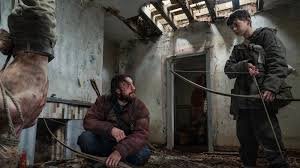
The trailer highlights a cinematic style that emphasizes ritualistic dread. Shadows flicker across fire-lit shrines, skeletal remains dominate the set design, and claustrophobic underground chambers reinforce a sense of entrapment. Unlike the chaotic urban visuals of the earlier films, The Bone Temple feels ritualistic, intimate, and suffocating.
This aesthetic choice reflects the thematic core: horror no longer comes from random chaos but from organized madness. The visuals themselves become a language of obsession, telling us as much about the cult’s psychology as the dialogue ever could.
Expanding the Mythology
While the original film focused on outbreak and survival, The Bone Temple expands the mythology of the franchise. It suggests that the Rage Virus isn’t just a biological threat—it’s the foundation of entire belief systems. The infected remain present, but their role is secondary to the survivors who worship or exploit them.
This expansion ensures that the series continues to evolve, avoiding repetition. By centering its horror on ideology and ritual, The Bone Temple positions itself as more than just another zombie sequel—it becomes a story about how humanity creates meaning out of ruin.
Conclusion
The 28 Days Later franchise has always pushed boundaries, but 28 Years Later: The Bone Temple looks to redefine what zombie cinema can be. Through the chilling presence of The Jimmies and the unsettling arcs of its characters, it transforms survival horror into a meditation on fanaticism, ritual, and the fragility of human sanity.
The 28 Years Later: The Bone Temple characters embody this evolution, with Spike’s descent into madness, Dr. Kelson’s twisted experiments, and Samson’s terrifying evolution ensuring that the horror resonates on multiple levels. By turning survivors into monsters, the film forces us to ask: in the aftermath of apocalypse, is survival about clinging to life—or surrendering to madness?