The Industrialized Construction Revolution: Bridging the Gap Between Data and Infrastructure
By Javeria Gauhar Khan 18-12-2025 168
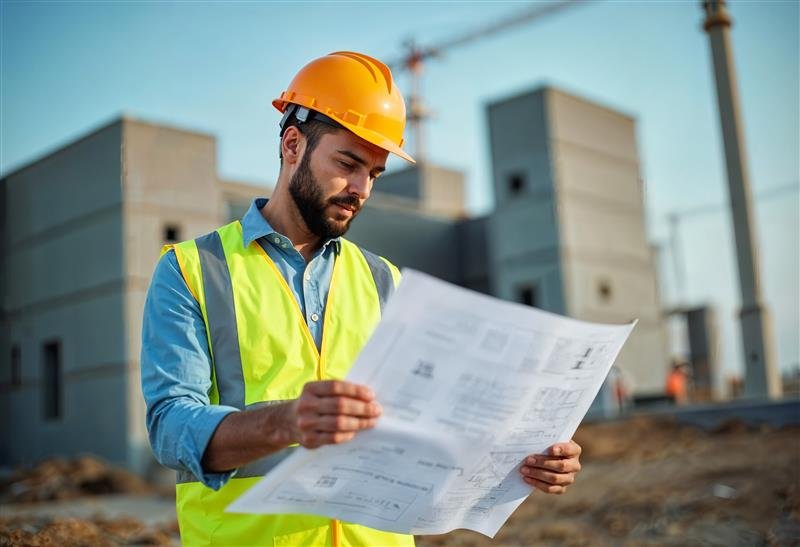
Let’s be honest: construction has a productivity problem. While every other industry—from tech to cars—got faster and cheaper, we’ve mostly stayed stuck in the mud. For years, we treated every project like a unique snowflake, which is just a fancy way of saying we reinvented the wheel every single time.
But that's changing. Fast. We’re finally moving toward "Productized Construction"—basically treating a 50-story tower with the same manufacturing logic you’d see in a Tesla factory.
It’s a massive shift. And if you ask any top seo agency abu dhabi, they’ll tell you the same: the firms actually winning the big global bids right now are the ones who can prove they aren't just guessing on-site. They lead with their data.
1. The Assembly Line Approach
The old way? You’d have a plumber on-site trying to hack through a beam because some drawing from six months ago didn't account for a new HVAC duct. It was a nightmare. Now, we use mep bim services to build the whole thing digitally first.
This isn't just "3D modeling." It’s an assembly line.
We model every pipe to the millimeter so the components can be prefabbed in a factory and just "snapped" into place on-site. No cutting, no welding in the rain, and zero guesswork. It’s cleaner, faster, and way more predictable.
2. Getting the Mechanical Math Right
HVAC isn't just about blowing cold air; it’s about fluid dynamics and thermal loads. You can’t wing that in a modern high-rise. Using mechanical bim services gives us the actual mathematical "weight" we need. We simulate how the air moves before we even order the units. The result? Shop drawings that feed straight into CNC machines. What you see on the screen is exactly what gets delivered to the site. Period.
3. Fixing the Plumbing Before the Pour
Plumbing is the ultimate "get it right or go home" system. Once that concrete is poured, you aren't moving a four-inch waste line without a jackhammer and a massive bill. Specialized plumbing bim services let us run hydraulic tests in the virtual world first. We catch the gravity-slope issues and the tight ceiling fits early, saving everyone a massive headache later.
4. Value Engineering: It’s Not Just "Cost Cutting"
A lot of people think value engineering is just a polite term for using cheaper materials. They’re wrong. Real value engineering in construction is about optimizing function. Maybe you can route a system differently to save 200 meters of copper. Maybe a structural tweak makes the MEP install twice as fast. It’s about using data to find the "sweet spot" where the building works better but costs less to build.
5. Data Centers: Where Mistakes Aren't Allowed
Look at data centers. These aren't just buildings; they're high-tech furnaces that process data. If the data center cooling systems fail for even five minutes, somebody loses millions.
This is where the "BIM or bust" mentality is strongest. We use the model to hunt down thermal hot spots and balance the cooling loops before the servers arrive. In this niche, precision isn't a "nice to have"—it’s the only way to survive.
6. The AI Factor
The most exciting part? We’re now letting machines handle the grunt work. Integrating ai in bim means we can use generative design to find the most efficient path for a thousand feet of conduit in seconds. It doesn't replace the engineer; it just gives them a massive head start. It turns a week-long coordination task into a ten-minute review session
The Bottom Line
The "brick and mortar" era is over. We're in the "bits and bytes" era now. The firms that treat their jobsites like industrial plants are the ones who are going to survive the next decade. It’s about being smarter, leaner, and lead with data. Everything else is just noise.