The Industrial Minerals Driving Modern Manufacturing and Why Their Source Country Matters
By thesharadgroup 14-07-2026 69
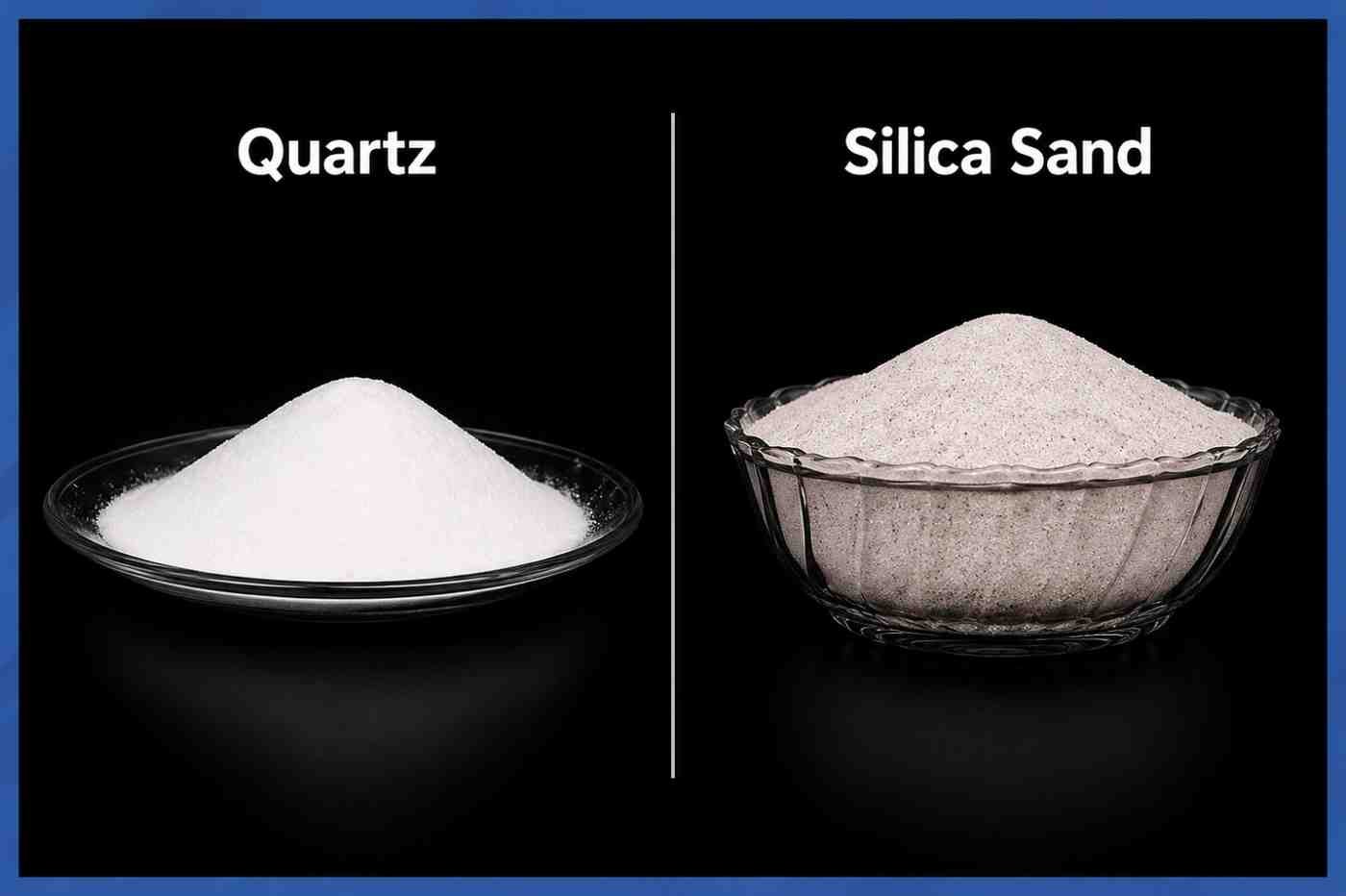
Every finished product in modern manufacturing begins with raw materials that most consumers never encounter directly. The glass in a smartphone screen, the ceramic in a spark plug, the filter media in a municipal water treatment plant - all of these trace back to industrial minerals extracted, processed, and shipped from deposits that most people couldn't locate on a map. The sourcing decisions that determine where these minerals come from are among the most consequential procurement choices that industrial manufacturers make.
Quartz and silica sand sit at the foundation of this raw material supply chain. They are consumed in larger volumes and across more diverse applications than almost any other industrial mineral category. The country they come from affects not just their price but their quality consistency, supply reliability, documentation quality, and the environmental and ethical standards under which they were produced. These factors matter more as supply chain transparency expectations have risen across global manufacturing.
Why Source Country Affects More Than Just Price
Industrial mineral pricing varies significantly between source countries - and that variation is real and worth capturing through smart sourcing. But buyers who evaluate source country decisions primarily through a price lens consistently underestimate the non-price dimensions that determine total supply chain cost. Quality variability, logistics reliability, documentation compliance, and supplier responsiveness all vary by source geography in ways that affect production costs independently of the raw material purchase price.
A mineral that costs fifteen percent less per tonne but generates two percent more production rejects due to specification inconsistency is not a cost saving - it is a cost transfer from the purchasing budget to the production budget. The transfer is often invisible in organizations where purchasing and production are managed separately, which is exactly why it persists. Buyers who have experienced this pattern recognize that total supply chain cost - purchase price plus the cost of quality variability plus the cost of logistics unreliability - is the only meaningful basis for source country comparison.
Source country also affects supply chain resilience in ways that have become more commercially significant since global supply chain disruptions made single-source dependency a board-level risk topic. Buyers who source industrial minerals from a single country or region carry concentration risk that buyers who have qualified multiple source geographies do not. India's position as an alternative or complementary source for quartz and silica sand gives buyers meaningful supply chain optionality that reduces concentration risk without requiring them to accept compromises on quality or price.
Quartz Across Its Application Spectrum
Quartz is consumed at different purity levels across a spectrum of industrial applications, and the supply chain that delivers each quality tier looks quite different from the others. At the lower end of the quality spectrum, quartz used in construction materials, road surfacing, and basic ceramics requires processing that removes gross impurities and achieves approximate particle size targets. At the upper end, quartz used in semiconductor fabrication and precision optical applications requires processing that achieves parts-per-million trace element levels under controlled manufacturing conditions.
Between these extremes lies the majority of industrial quartz consumption - glass manufacturing, standard ceramics, chemical applications, refractory materials, and water treatment. These applications have real specification requirements that not all suppliers can consistently meet, but they are not as demanding as the highest-purity applications and can be served by a broader range of suppliers. Understanding where a specific application falls on this quality spectrum is essential for identifying the right supplier tier and avoiding both overpaying for unnecessary purity and underspecifying for applications where consistency genuinely matters.
The growth in mid-tier quartz demand has been particularly strong over the past decade as glass consumption has expanded globally and as ceramic tile production has industrialized in developing markets. Indian quartz supply has grown alongside this demand, with processors developing product grades and processing capabilities specifically calibrated to mid-tier application requirements. This deliberate market development approach - building supply capability to serve identified demand segments rather than selling whatever the process naturally produces - reflects the growing commercial sophistication of the Indian quartz supply sector.
What Buyers Often Discover After Their First Indian Mineral Shipment
Buyers who source Indian mineral supply for the first time frequently report that their actual experience differs from their pre-sourcing expectations in specific ways. The quality of the mineral itself often exceeds initial expectations - buyers who approached Indian supply skeptically based on outdated market perceptions discover that established Indian processors produce material that competes analytically with their existing sources. This quality discovery is the most common positive surprise that first-time Indian mineral buyers report.
The documentation experience is more variable. Indian mineral exporters with established international customer bases produce documentation - test certificates, material safety data sheets, customs declarations, phytosanitary certificates where required - to a standard that experienced international buyers find entirely acceptable. Indian exporters earlier in their international development sometimes produce documentation that requires follow-up requests for corrections or additional information. Distinguishing between these two categories of supplier before placing an order is one of the practical benefits of thorough pre-qualification.
Logistics performance is the dimension where first-time experience most commonly reveals gaps between expectation and reality. Transit times, port handling, and documentation accuracy all affect when and in what condition a mineral shipment arrives. Buyers who have set realistic expectations for Indian supply logistics - understanding that Indian port handling has improved significantly but still varies by port and by freight forwarder quality - manage their supply chains more effectively than those who assume Indian logistics will perform identically to supply from geographically closer sources. Setting these expectations correctly before the first shipment arrives prevents the frustration that comes from comparing actual performance against unrealistic benchmarks.
The Silica Sand Supply Decision and What It Actually Involves
Silica sand procurement sounds straightforward - sand is sand, surely. Buyers who arrive at the Indian silica sand market with this mental model consistently discover that the reality is more nuanced than the product name suggests. Different silica sand deposits produce material with meaningfully different characteristics in grain shape, SiO2 content, trace element profile, and particle size distribution. These characteristics interact with specific application requirements in ways that make the sourcing decision genuinely technical rather than simply logistical.
Glass manufacturing is the clearest example of this technical complexity. The iron content of silica sand affects glass color in ways that matter differently for different glass types - clear container glass has lower iron tolerance than amber glass, architectural glass has different color requirements than automotive glass. A silica sand specification that works perfectly for one glass application may produce unacceptable color in another. Buyers who understand their application's specific iron tolerance can match their sourcing to Indian deposits that naturally meet their requirement - buyers who don't may source material that meets a generic specification but fails their specific production requirement.
Working with established silica sand companies that have application-specific experience in their buyers' end uses produces better outcomes than working with generalist suppliers who sell standard grades without understanding how those grades perform in specific applications. The suppliers with this application expertise have typically developed it through years of working with demanding customers who provided detailed feedback on production performance. Finding these suppliers requires qualification processes that assess technical depth alongside analytical capability - and the investment in finding them consistently pays back through better production outcomes.
India's Mineral Sector and the Sustainability Dimension
Sustainability in mineral sourcing has moved from a corporate responsibility footnote to a commercial requirement for an increasing number of industrial buyers. European manufacturers facing supply chain due diligence legislation, US companies responding to investor ESG requirements, and global brands managing reputational risk in their supply chains are all asking more detailed questions about the environmental and social practices of their mineral suppliers. India's mineral sector response to these questions is uneven - but the direction of travel among established exporters is clearly toward better sustainability documentation.
Environmental compliance in Indian mining operations is regulated under the Mines and Minerals Development and Regulation Act and state-level environmental legislation. Enforcement quality varies by state and by operation size, but established mineral processors competing for international business have significant commercial incentives to maintain documented environmental compliance. Third-party environmental audits, sustainability reports, and participation in responsible sourcing initiatives are all becoming more common among Indian mineral exporters who serve European and North American markets where these requirements are most pressing.
The social dimension of mineral sourcing sustainability - worker safety, community relations, fair labor practices - is an area where Indian mineral processors serving international markets are also developing better documentation. International buyers who conduct supplier audits that include social compliance assessment find varying levels of maturity across the Indian mineral sector. The strongest performers on social compliance tend to be the same processors who perform best on product quality and logistics - reflecting a general pattern where operational discipline in one area tends to correlate with operational discipline across all areas of the business.
Building a Resilient Mineral Supply Strategy With Indian Sources
A resilient mineral supply strategy is not built on a single supplier or a single source country - it is built on qualified options that can be called upon when primary supply faces disruption. Indian quartz and silica sand sources fit naturally into a resilient supply strategy as either primary or qualified backup sources, depending on the buyer's specific application requirements, volume needs, and existing supply relationships. The qualification investment required to add an Indian source to a supply strategy is a one-time cost that provides ongoing optionality value.
The most effective approach to building Indian mineral supply into a broader sourcing strategy starts with identifying the specific applications and volume tiers where Indian supply is most competitive. High-volume, mid-specification applications typically offer the strongest economic case for Indian sourcing - the volume justifies the logistics investment and the specification tier is well served by established Indian processors. Lower-volume, very-high-specification applications may still benefit from Indian sourcing but require more selective supplier identification to find processors capable of the required quality tier.
Qualifying a reliable quartz suppliers in india as part of a diversified sourcing strategy provides supply security that single-source approaches cannot match. The Indian suppliers most worth qualifying for this role are those with demonstrated export track records, documented quality management systems, and the processing infrastructure to serve specification requirements consistently over time. Identifying these suppliers through systematic qualification - rather than selecting on price alone - is the procurement practice that produces supply strategies capable of weathering the disruptions that all global supply chains eventually face.