Online shopping has changed the way people buy clothes. A few clicks can bring products from brands around the world directly to your doorstep. There is no need to drive to a shopping mall, wait in line, or visit multiple stores looking for a particular style.
But convenience comes with its own challenges.
One of the most common problems faced by online clothing shoppers is choosing the wrong size. A product can look perfect in photographs, have excellent reviews, and still end up being returned because the fit is not what the customer expected.
For shoppers and retailers alike, understanding clothing sizes can make a meaningful difference.
Why Size Mistakes Happen
Choosing a clothing size online sounds simple until you start comparing different brands and countries.
A customer may normally purchase a medium but discover that another brand recommends a large. Someone shopping from an international retailer might also find that the website uses European sizing instead of the US or UK system they are familiar with.
The problem is that size labels are not universal measurements.
An "M" is a useful general category, but it does not tell you everything about the actual dimensions of a garment. Similarly, a numerical size can represent different measurements depending on the sizing system.
This is why checking measurements is often more reliable than relying on a familiar label.
The Connection Between Sizing and Returns
When customers receive clothing that does not fit, returning it can be inconvenient.
The customer may need to repackage the item, print a return label, arrange a pickup, and wait for a replacement or refund. Depending on the retailer, return shipping may also involve additional costs.
For businesses, frequent size-related returns create their own operational challenges. Returned products need to be inspected, processed, restocked, or otherwise handled.
Although sizing is not the only reason products are returned, providing clearer information can help customers make better purchasing decisions.
Measurements Are More Useful Than Guesswork
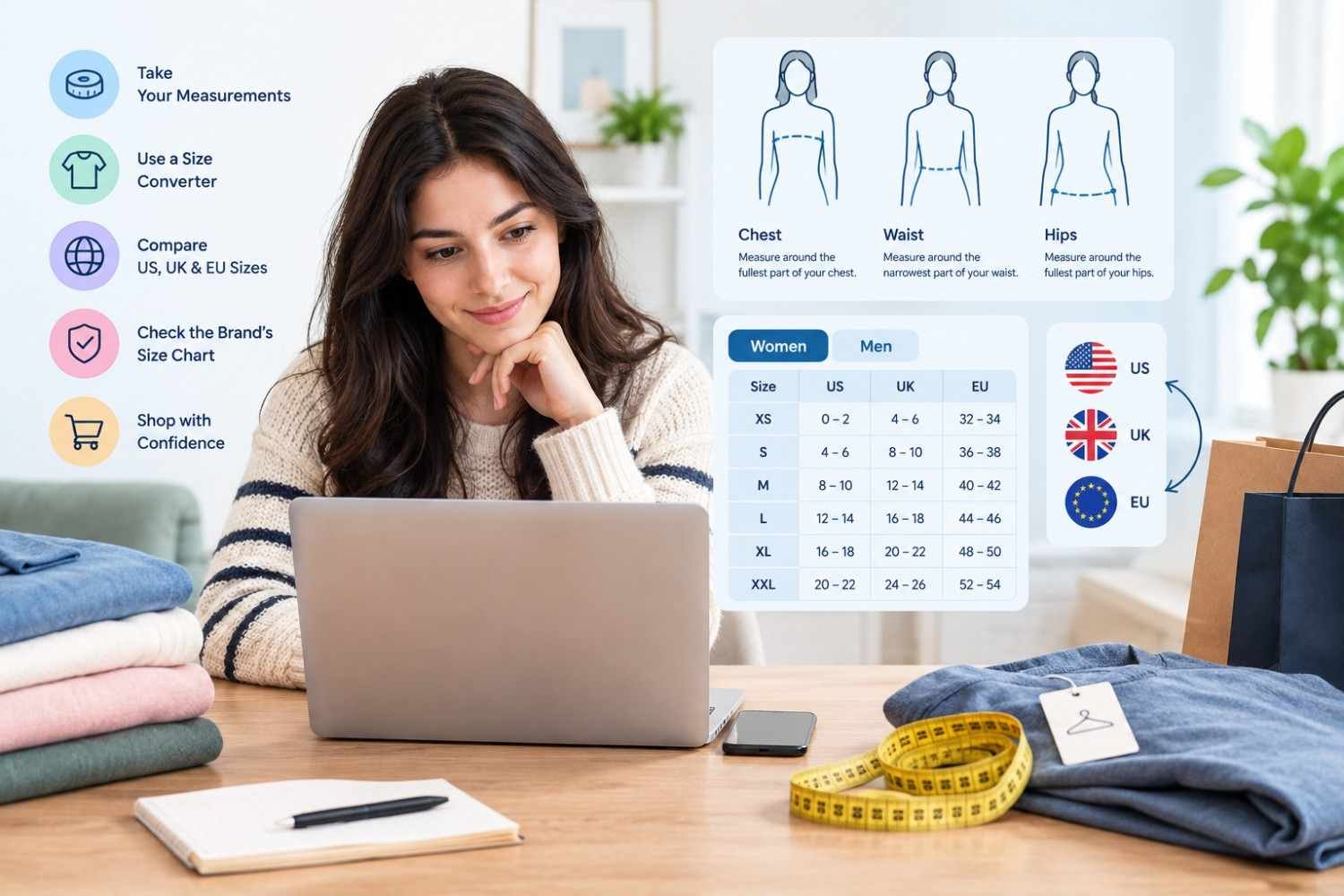
One of the easiest ways to improve the online shopping process is to know your own measurements.
Depending on the garment, useful measurements can include:
- Chest or bust
- Waist
- Hips
- Shoulder width
- Sleeve length
- Inseam
- Overall height
You do not necessarily need professional equipment. A flexible measuring tape and a few minutes can provide useful measurements to compare with a retailer's chart.
It is also worth updating measurements occasionally because bodies and clothing preferences can change over time.
International Shopping Adds Another Layer
International e-commerce makes size conversion even more important.
A shopper in the United States might visit a UK retailer and see sizes that are unfamiliar. Another customer may purchase from a European store where clothing is displayed using EU sizing.
Instead of trying to remember every conversion, shoppers can use a US UK EU clothing size reference to compare the systems.
Size Convertly provides separate conversion information for men's and women's clothing, including common alpha sizes such as XS, S, M, L, XL, and XXL alongside regional sizing systems.
This type of reference can be especially useful when browsing several international stores.
Clothing Fit Is About More Than Size
Even after finding the corresponding size, shoppers should consider the garment's intended fit.
A slim-fit shirt is designed differently from a relaxed-fit shirt. An oversized sweater may intentionally have extra room, while tailored clothing is designed to sit closer to the body.
Fabric also matters.
Stretch fabrics can provide more flexibility, while rigid fabrics may require more precise measurements. Product descriptions often provide clues about how a garment is intended to fit.
Reading these details before ordering can help prevent disappointment.
Read the Product Description Carefully
Size charts are not the only information available to shoppers.
Product descriptions may include details such as:
- Model height and worn size
- Garment measurements
- Fabric composition
- Fit description
- Length
- Stretch level
- Care instructions
If a model is significantly taller or shorter than you are, the way the garment appears in photographs may not accurately represent how it will look on you.
This is one reason measurements are so valuable.
Customer Reviews Can Add Context
Customer reviews can also provide useful information about sizing.
If multiple customers mention that an item runs small, that information may encourage you to examine the measurements more carefully. Likewise, comments about an oversized fit can provide additional context.
However, reviews are personal experiences rather than universal sizing rules.
One person's "too large" can be another person's preferred relaxed fit. Reviews are therefore best used alongside the official size chart rather than as a replacement for it.
A Better Way to Shop Online
A simple sizing routine can make online clothing purchases more predictable.
Start by measuring yourself. Then identify the sizing system used by the retailer. Compare your measurements with the brand's chart and use a conversion reference if the retailer uses unfamiliar regional sizing.
For shoppers who regularly buy from different countries, keeping a personal note of their measurements can save time.
Instead of asking, "What size do I normally wear?" the better question is, "Which size matches my current measurements for this particular brand?"
That small change in approach can make online shopping much more practical.
Choosing Between Two Sizes
Sometimes your measurements fall between two sizes.
There is no universal answer because the right choice depends on the garment and the desired fit.
For a fitted item, you may want to pay closer attention to the measurements of the chest, waist, or hips. For a loose garment, additional room may be intentional.
The fabric and construction should also be considered. A stretchy garment may accommodate a small difference, while a structured garment may require a more precise fit.
When possible, check whether the retailer provides measurements for the actual garment.
Why Size Conversion Tools Matter
A size conversion tool does not replace a brand's official chart. Instead, it can help shoppers understand how different sizing systems relate to one another.
For someone who is unfamiliar with international clothing labels, a clothing measurement conversion guide can provide a convenient starting point before comparing the final choice with the retailer's own measurements.
The goal is not to eliminate every possibility of a poor fit. No conversion chart can account for every brand, cut, body shape, and personal preference.
The goal is simply to make the decision more informed.
Final Thoughts
Getting clothing sizes right online is a small part of the shopping process, but it can have a big effect on the overall experience.
Instead of relying solely on familiar labels, shoppers can use measurements, brand-specific charts, customer feedback, and international conversion references to make better-informed choices.
For international shoppers in particular, understanding the difference between US, UK, and EU sizing can remove much of the confusion.
A few extra minutes spent checking measurements before ordering may save considerably more time later. As online shopping continues to connect consumers with retailers around the world, knowing how to navigate different sizing systems is becoming a useful everyday shopping skill.