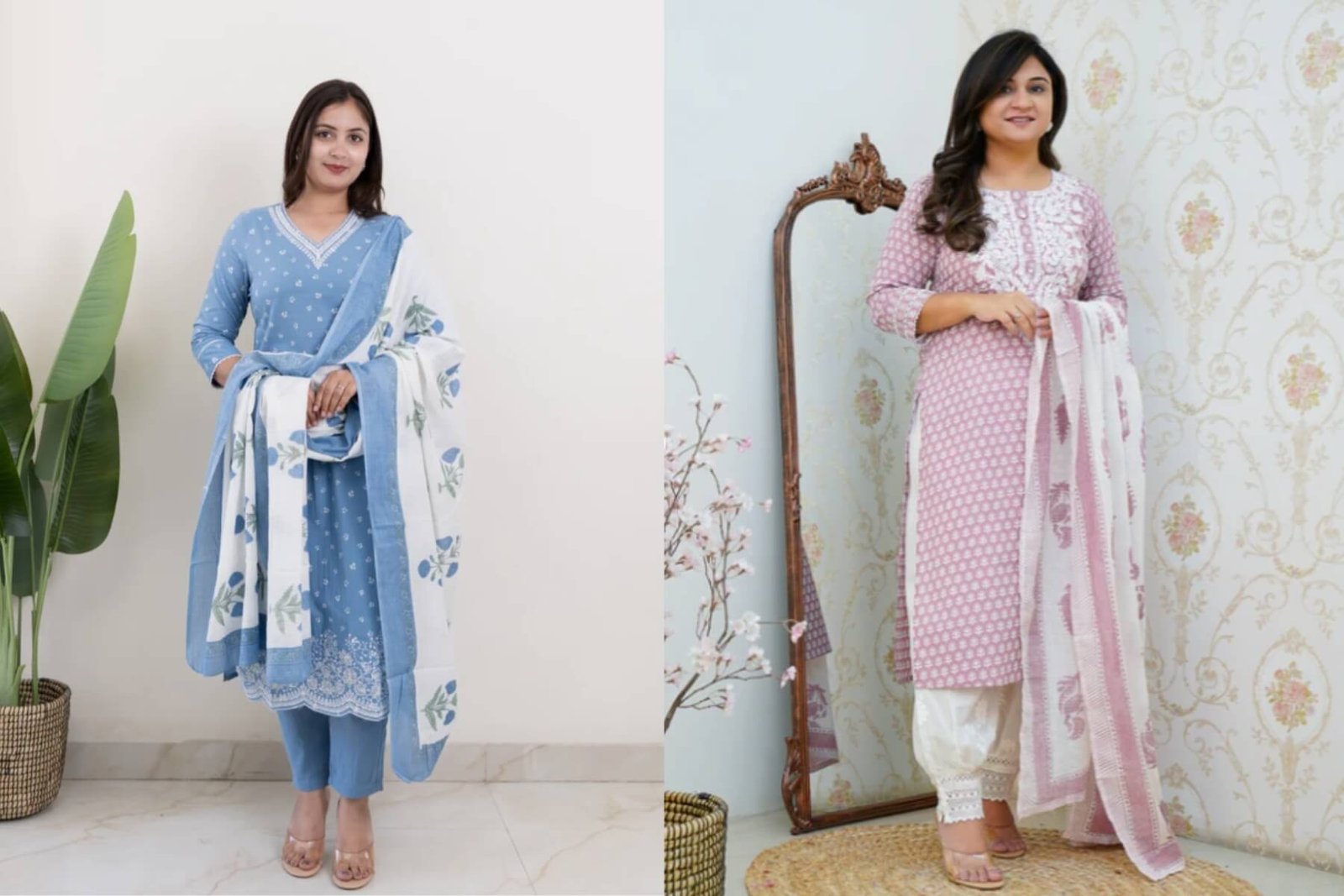
Open any Indian woman's wardrobe right now and there's a good chance you'll find it: that soft, slightly crinkled cotton kurta she reaches for on the hottest days. Mul cotton has been having a real moment lately, and the mul cotton kurta set in particular has turned into one of those pieces every online ethnic wear shopper seems to be searching for.
It's not hype for the sake of hype either. There are actual, traceable reasons behind it, tied to how Indian women are shopping and dressing differently than they did even five years ago. Worth unpacking, so let's get into it.
What Is Mul Cotton, Exactly?
In plain terms, mul cotton (people also call it mulmul) is a fine, loosely woven cotton fabric. Think of it as cotton that skipped the gym and stayed light on its feet, soft, a little sheer, and built to breathe.
None of this is new, by the way. The weaving tradition goes back generations in Bengal, and its most refined form, muslin, earned itself the nickname "woven air" because it was that fine. Royal households wanted it. So did traders sailing back to Europe centuries ago.
Fast forward to today, and the appeal hasn't really changed. It's still light against the body, still gentle on the skin, still made for weather that doesn't forgive heavy fabric. A mul cotton kurta is basically that old idea, just tailored for a modern closet.
Why Is Mul Cotton Becoming So Popular in Women's Fashion Right Now?
A few things are happening at once here. India's weather isn't getting any gentler, ethnic wear itself is being reimagined for comfort, and there's a visible pull away from synthetic blends toward anything natural.
Start with the numbers. The India Brand Equity Foundation, a trade body under the Ministry of Commerce and Industry, pegs India's textile industry at close to USD 190 billion for 2025-26, with cotton still holding the biggest chunk of that pie. This isn't some niche corner of the industry. Cotton is the backbone of it.
Then there's ethnic wear's own growth story. Deep Market Insights projects the Indian ethnic wear market growing at nearly 7.9% CAGR through 2031, and kurtas plus kurta sets specifically are flagged as one of the categories pulling that growth along.
On top of that, shoppers themselves have shifted. Custom Market Insights, drawing on data from the Cotton Corporation of India, notes that demand for organic and sustainably grown cotton has been climbing by roughly 20 to 25 percent every year. People aren't buying cotton just because grandma wore it. They're actively picking it over synthetics now.
Put those three threads together and you get exactly where mul cotton kurta sets sit: rooted in tradition, made from something natural, and genuinely comfortable to live in.
What Makes Mul Cotton Kurta Sets So Comfortable for Indian Summers?
Short version: the weave is loose enough to let air move through it.
Compare mulmul to regular cotton and the difference is in how tightly the yarns sit together. Mulmul's open structure lets air pass through more freely, which is exactly why it feels cooler even when the afternoon heat is unbearable. It handles moisture well too, so it doesn't turn sticky or cling to skin on humid days.
There's a smaller, less talked-about perk. Most fabrics stiffen up with repeated washing. Mulmul does the opposite, it softens more with every wash, which is the reverse of how synthetic and blended fabrics usually age.
That combination is why a mul cotton kurta can pull double, even triple duty, running errands one day, sitting through a full workday the next, then showing up again for a lazy Sunday with friends. It isn't locked into one occasion. It just adapts.
How Is Mul Cotton Different from Regular Cotton and Muslin?
Here's where people usually get confused: mulmul, mul cotton, and muslin are essentially the same fabric family, though not perfectly interchangeable terms.
Muslin is the name the rest of the world uses for this fine, plain-weave cotton. Mulmul (or mul cotton) is what India calls it, and it usually points to a slightly heartier, more everyday version compared to the almost impossibly fine Dhaka muslin of old.
Regular cotton sits on the other end of the spectrum. It's woven tighter, which makes it sturdier but also heavier, and it never quite gets that airy drape mulmul is known for.
Set a pure mul cotton kurta next to a regular cotton one, and the gap shows up in weight, in how it falls on the body, and in how it feels after a few trips through the wash. Pure mul cotton stays feather-light and gets softer. Regular cotton tends to stay stiffer and holds more heat against the skin.
What Should You Look for in a Pure Mul Cotton Kurta Set?
A few tells give it away: it should feel light in hand, have a faintly textured or slightly sheer surface, carry natural-looking dye tones rather than overly glossy synthetic shades, and already feel soft before it's even been washed once.
If you pick up a "cotton" kurta and it feels heavy or stiff or has an almost plastic-like sheen, that's usually a sign it's blended with synthetic fibre rather than being pure mulmul. A genuine pure mul cotton kurta set should feel like it weighs almost nothing.
Check the stitching too. Handloom mul cotton often carries small, uneven marks in the weave, and that's not a flaw. It's proof the fabric hasn't been over-processed to erase all its texture, which is part of what gives mulmul its authentic feel in the first place.
Most brands working with real handloom cotton will spell this out on their product pages. The Jaipur Studio, a Jaipur-based ethnic wear label that traces its roots back to 1950, is a good example, its own product notes point to mul cotton and muslin as some of the most breathable, skin-friendly fabrics in its range. Whichever brand you're buying from, it's worth actually reading the fabric details before you check out.
How Should You Care for Mul Cotton Kurta Sets?
Keep it gentle. Cold or lukewarm water, a mild detergent, and drying in the shade rather than direct sun will keep the fabric soft and the colour from fading too fast.
Skip the hard wringing, since mulmul's loose weave is more fragile than regular cotton. And when you do iron it, low heat works better than blasting it on high, which can flatten out the fabric's natural texture over time.
Treat it reasonably well, and cotton or mulmul pieces can hold up for several years of regular wear, at least based on general handloom and cotton care guidance floating around in Indian textile circles.
Frequently Asked Questions
Q. Is mul cotton good for daily wear?
Yes. It's light and breathable enough to wear all day, every day, especially once the weather turns warm.
Q. Does mul cotton shrink after washing?
A little, usually around 1 to 2 percent after the first wash. Cold water washing helps keep that shrinkage to a minimum.
Q. Is a mul cotton kurta suitable for office wear?
It can be, particularly in simpler solid colours or subtle prints. The soft drape works fine for both casual and semi-formal office settings.
Q. How is mul cotton different from muslin?
They're really the same fabric family. Muslin is just the name used internationally, while mul cotton (mulmul) is the term commonly used across India.
Q. Can mul cotton kurta sets be worn in winter?
You can layer one under a jacket or shrug on a mild winter day, but honestly, it's built for summer and humid weather, not the cold.
Is Mul Cotton the Right Choice for You?
If your city runs hot for most of the year, or you just can't stand fabric that sticks to your skin, mul cotton is a genuinely practical pick, not just a pretty one.
It also slides into everyday Indian wardrobes without much effort. A mul cotton kurta set works for office days, for family get-togethers, for travel, or for a completely uneventful day spent at home. It doesn't need an occasion to justify itself.
If you're trying to build a wardrobe around natural fibres that don't demand constant upkeep, mul cotton earns its place. It isn't a passing trend riding a wave of social media hype. It's a fabric with a long, real history and a comfort factor that still holds up today.