The Future of E-Commerce Trends: Strategies That Will Shape Online Retail Success in 2026
By Umair Amjad 29-07-2026 133
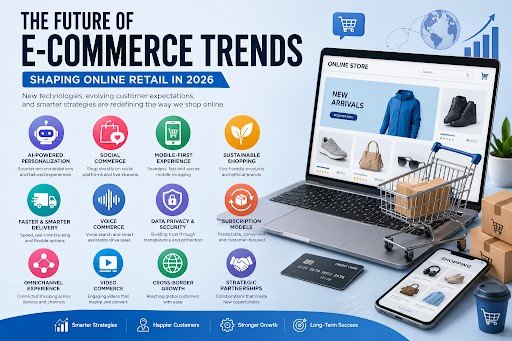
The e-commerce industry has evolved rapidly over the past decade, transforming the way consumers discover, compare, and purchase products. What was once a convenient alternative to traditional shopping has now become the preferred choice for millions of customers worldwide. As technology continues to advance, businesses must adapt to changing customer expectations and embrace innovative strategies to remain competitive.
In 2026, e-commerce is no longer just about having an online store. Success depends on delivering personalized experiences, building trust, optimizing logistics, and leveraging emerging technologies. Companies that understand these trends can create stronger customer relationships while improving efficiency and profitability.
This article explores the most impactful e-commerce trends shaping the future of online retail and provides actionable insights for businesses looking to stay ahead.
AI-Powered Personalization Is Becoming the Standard
Artificial intelligence has transformed how businesses interact with customers. Instead of showing every visitor the same products, AI analyzes browsing behavior, purchase history, demographics, and preferences to deliver personalized recommendations.
Customers increasingly expect retailers to understand their needs. Personalized shopping experiences improve engagement, increase conversion rates, and encourage repeat purchases.
Examples include:
- Personalized homepage recommendations
- Smart product suggestions
- Dynamic pricing strategies
- Automated customer support
- AI-generated marketing emails
Businesses using AI effectively create smoother customer journeys while maximizing sales opportunities.
Social Commerce Continues to Expand
Social media platforms are no longer just marketing channels—they have become complete shopping ecosystems.
Consumers can now discover products, watch demonstrations, read reviews, and complete purchases without leaving their favorite social apps. This seamless experience reduces friction and increases impulse buying.
Successful brands are investing in:
- Livestream shopping events
- Influencer collaborations
- User-generated content
- Short-form product videos
- Interactive product showcases
Building authentic communities around products often delivers better long-term results than relying solely on paid advertising.
Mobile Shopping Dominates Consumer Behavior
More than ever, customers browse and purchase products using smartphones.
A slow-loading website or complicated checkout process can quickly lead to abandoned carts. Mobile-first design is no longer optional—it is essential.
Key improvements include:
- Fast page loading
- Responsive website design
- One-click checkout
- Mobile wallets
- Simplified navigation
Businesses that optimize the mobile experience often see higher conversion rates and stronger customer satisfaction.
Sustainability Influences Purchasing Decisions
Consumers increasingly consider environmental impact before making purchases. They want transparency regarding sourcing, packaging, manufacturing, and shipping.
Businesses can demonstrate sustainability by:
- Using recyclable packaging
- Offering carbon-neutral shipping
- Reducing waste
- Partnering with ethical suppliers
- Sharing sustainability reports
Transparency builds trust and strengthens customer loyalty.
Faster Delivery Has Become a Competitive Advantage
Today's shoppers expect quick, reliable delivery.
While same-day shipping may not be possible for every retailer, businesses can still improve logistics by:
- Using regional warehouses
- Optimizing inventory management
- Providing real-time tracking
- Offering multiple shipping options
- Simplifying returns
Convenience plays a major role in customer satisfaction and repeat business.
Voice Commerce Is Growing
Smart speakers and voice assistants continue gaining popularity.
Consumers increasingly use voice search to:
- Compare products
- Check prices
- Reorder household essentials
- Track shipments
- Find local stores
Businesses should optimize product listings with conversational keywords and natural language content to improve visibility in voice searches.
Data Privacy Builds Customer Confidence
Consumers have become more aware of how companies collect and use personal information.
Trust has become one of the strongest competitive advantages in e-commerce.
Businesses should focus on:
- Transparent privacy policies
- Secure payment systems
- Multi-factor authentication
- Responsible data collection
- Compliance with privacy regulations
Customers are more likely to purchase from brands they trust with their personal information.
The Rise of Subscription-Based Business Models
Subscription commerce continues expanding beyond entertainment and software.
Today, customers subscribe to:
- Beauty products
- Coffee
- Pet supplies
- Meal kits
- Vitamins
- Clothing
- Household essentials
Subscriptions create predictable revenue while improving customer retention.
However, businesses must ensure subscribers continue receiving value to minimize cancellations.
Customer Experience Is the New Competitive Edge
Price alone rarely determines purchasing decisions anymore.
Customers remember experiences.
Leading e-commerce businesses invest in:
- Excellent customer service
- Fast response times
- Easy returns
- Personalized recommendations
- Transparent communication
- Loyalty programs
Positive experiences encourage customers to recommend brands to friends and family.
Building Strong Brand Identity
Thousands of online stores compete for customer attention every day.
Strong branding helps businesses stand out.
Successful brands consistently communicate:
- Their mission
- Company values
- Visual identity
- Brand personality
- Customer promise
Consistency across websites, emails, social media, and packaging strengthens recognition and trust.
Cross-Border E-Commerce Continues to Grow
Technology has made international selling easier than ever.
Businesses can now reach customers worldwide through:
- Localized websites
- Multiple currencies
- International payment methods
- Local shipping partners
- Multilingual customer support
Global expansion creates new revenue opportunities while reducing dependence on a single market.
The Importance of Marketplace Diversification
Many retailers rely heavily on one online marketplace. While marketplaces generate significant traffic, depending on a single platform creates risk.
Smart businesses diversify across:
- Their own websites
- Multiple marketplaces
- Social commerce
- Mobile apps
- Affiliate partnerships
Diversification improves resilience against changing platform policies and algorithm updates.
Emerging Brands Are Winning Through Innovation
Large corporations no longer hold every competitive advantage.
Smaller businesses often succeed by:
- Launching niche products
- Responding quickly to trends
- Building engaged communities
- Delivering personalized service
- Creating authentic brand stories
Innovation frequently outperforms size in today's digital marketplace.
Strategic Brand Partnerships
Partnerships allow businesses to reach new audiences while sharing marketing resources.
One growing example involves collaborations between retailers and specialized brands that bring unique value to specific customer segments. Working alongside brands such as hantlar enables online stores to diversify their product offerings while strengthening their market positioning through strategic partnerships and shared expertise.
The most successful collaborations prioritize customer value rather than simply expanding product catalogs.
Automation Improves Business Efficiency
Automation helps businesses reduce operational costs while improving consistency.
Common automated processes include:
- Inventory management
- Order processing
- Email marketing
- Customer service chatbots
- Shipping notifications
- Review requests
Automation allows employees to focus on higher-value tasks such as strategy and customer engagement.
Omnichannel Shopping Is the Future
Modern consumers move between multiple channels before making purchasing decisions.
A customer may:
- Discover a product on social media.
- Research it on a mobile phone.
- Read reviews on a laptop.
- Complete the purchase in an app.
- Pick it up in-store.
Businesses that connect every touchpoint create smoother shopping experiences and stronger customer relationships.
The Growing Role of Video Content
Video has become one of the most influential forms of digital marketing.
Consumers prefer watching products in action before purchasing.
Effective video content includes:
- Product demonstrations
- Tutorials
- Customer testimonials
- Behind-the-scenes content
- Live Q&A sessions
Video increases trust while reducing uncertainty during the buying process.
Preparing for the Next Wave of E-Commerce Innovation
The pace of innovation shows no signs of slowing.
Emerging technologies likely to influence online retail include:
- Augmented reality shopping
- Virtual fitting rooms
- AI shopping assistants
- Predictive inventory systems
- Blockchain verification
- Hyper-personalized customer experiences
Businesses that remain adaptable and customer-focused will be best positioned for future success.
Final Thoughts
The future of e-commerce belongs to businesses that combine technology with exceptional customer experiences. While new tools and platforms continue to emerge, the core principles remain consistent: understand customer needs, build trust, embrace innovation, and continuously improve every stage of the buying journey.
Companies that invest in personalization, automation, sustainability, mobile optimization, omnichannel strategies, and strategic partnerships will be better equipped to compete in an increasingly dynamic marketplace. By staying informed about evolving trends and responding proactively, online retailers can build resilient businesses capable of thriving in the years ahead.