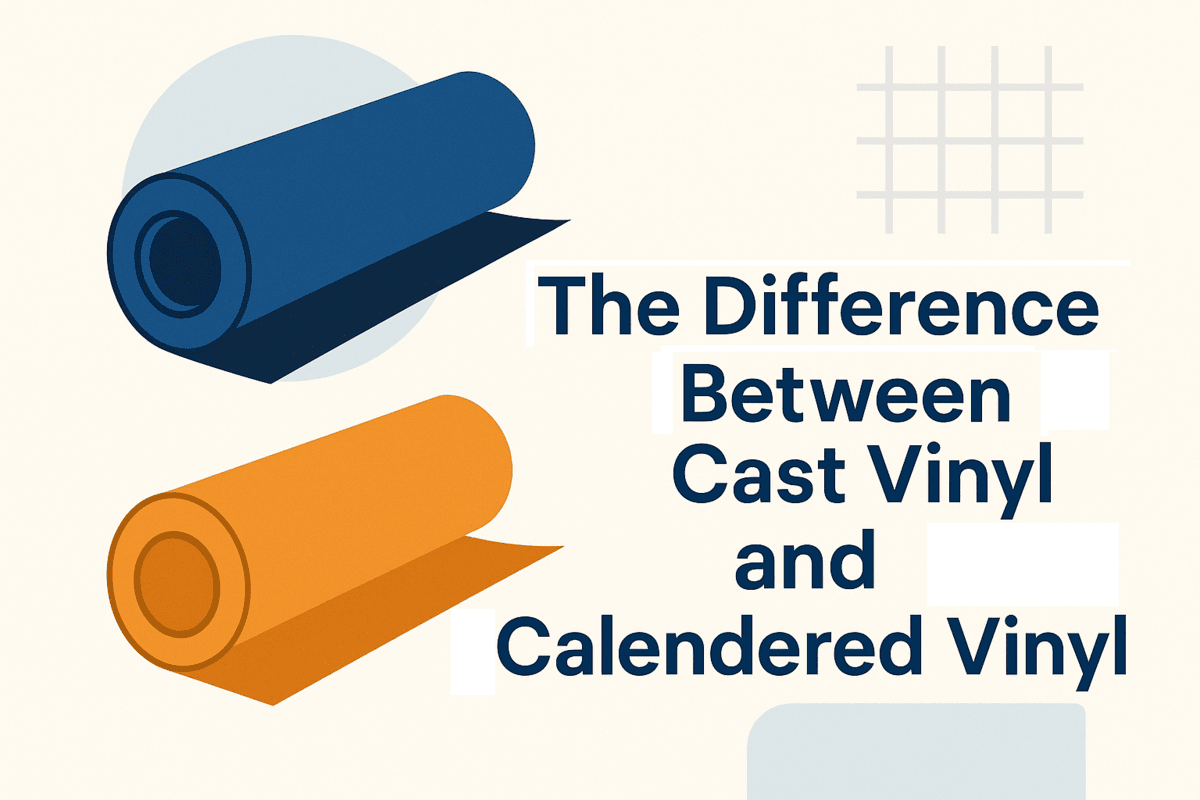
If you're exploring vinyl wraps for vehicles, storefront windows, signs, or wall graphics, you’ll quickly notice two main vinyl types: cast vinyl and calendered vinyl. At first glance, they may seem similar, but they’re designed for different applications, durability levels, and performance needs.
Choosing the right one matters—not just for how good the wrap will look, but also for how long it will last, how well it conforms to surfaces, and whether the investment delivers the return you expect. Understanding the difference helps you avoid wasted time, replacement costs, and installation headaches.
This guide breaks down everything you need to know before choosing between cast vinyl and calendered vinyl.
What Is Cast Vinyl?
Cast vinyl is considered the highest quality vinyl for long-term wrapping. It’s manufactured through a casting process where liquid vinyl is poured into thin layers and baked to cure.
Key Features of Cast Vinyl
1. Thin and Flexible
Cast vinyl is thin—typically 2 mils or less—which makes it highly conformable and ideal for curves, recesses, and complex surfaces.
2. Long-Term Durability
Because it doesn't shrink much, cast vinyl offers excellent stability. Most high-quality cast vinyl films last:
- 7–12 years outdoors
- Even longer indoors
3. Premium Appearance
The manufacturing process creates a smooth, painted-like finish. It also holds color exceptionally well because pigments set more evenly.
4. Better UV and Temperature Resistance
Cast vinyl performs well in hot, cold, and fluctuating environments without peeling or cracking.
Best Uses for Cast Vinyl
Cast vinyl is ideal for:
- Full vehicle wraps
- Complex curved surfaces
- Aircraft, motorcycles, boats
- High-end signage
- Fleet graphics
- Long-term branding applications
If you want longevity, superior aesthetics, and shape-conforming performance, cast vinyl is the top choice.
What Is Calendered Vinyl?
Calendered vinyl is produced differently. Instead of casting, the vinyl goes through heated rollers (calenders), which stretch and press the material into sheets.
Key Features of Calendered Vinyl
1. Thicker Material
Calendered vinyl is usually thicker—around 3–6 mils. This can make installation easier on flat surfaces but harder in deep bends or complex contours.
2. More Memory and Shrinkage
Because it’s stretched during manufacturing, it has a “memory” and tends to shrink over time. This is especially noticeable around edges or uneven textures.
3. Medium-Term Durability
Most calendered vinyl products last:
- 3–6 years outdoors
- 5–10 years indoors
Durability depends on exposure, climate, and installation quality.
4. Budget-Friendly
The biggest benefit? Lower cost. Calendered vinyl offers affordability for temporary or short-term projects.
Best Uses for Calendered Vinyl
Calendered vinyl is best suited for:
- Temporary promotions
- Flat signs and windows
- Short-term vehicle spot graphics
- Interior wall graphics
- Budget-driven branding projects
If your project doesn’t require extreme durability or surface flexibility, calendered vinyl can deliver a solid value.
Side-by-Side Comparison
Which One Should You Choose?
The right choice depends on your application, budget, and performance expectations.
Choose Cast Vinyl If:
- The wrap is permanent or long-term
- Your surface includes deep grooves, rivets, or complex curves
- You want the best finish and longest lifespan
- You are wrapping a full vehicle, business fleet, or brand-critical space
Choose Calendered Vinyl If:
- You need a short-term or temporary solution
- The application area is smooth, flat, and straightforward
- You want a wrapping option at the most affordable price point
- The branding will change frequently
A common mistake during purchasing is assuming all vinyl wraps perform the same. This misunderstanding leads to premature peeling, fading, cracking, or unnecessary repair costs. Many beginners also overlook installation conditions—something that contributes to avoidable errors similar to mistakes in DFW Vinyl Wrap Installation Services, where material choice and application method weren’t aligned with surface type or client expectations.
Installation and Longevity Considerations
Regardless of vinyl type, proper installation and preparation determine performance quality.
Key Installation Factors:
- Surface cleaning and decontamination
- Temperature control during installation
- Correct stretching methods
- Post-heating (for cast vinyl)
- Using manufacturer-recommended adhesives and tools
Even premium cast vinyl will fail if installed poorly, while well-installed calendered vinyl can exceed expectations.
Cost Considerations
Cast vinyl costs more upfront but reduces replacement frequency and improves brand perception over time. Calendered vinyl lowers initial cost but may require reprints, maintenance, or earlier replacement—especially in harsh climates.
When calculating cost, consider:
- Material lifespan
- Labor complexity
- Environment exposure (sun, heat, moisture, abrasion)
- Intended use duration
Sometimes the cheapest option long term isn’t the cheapest upfront.
Final Thoughts
Both cast and calendered vinyl have valuable use cases. The key is choosing the right one for your project based on durability needs, budget, environment, and surface type.
If you want longevity, premium finish, and high performance—go with cast vinyl. If you need something budget-friendly for short-term or flat applications—calendered vinyl is a strong fit.
Understanding the difference ensures you make the right investment and get results that look good and last.
Tags : .....