The Complete Guide to Safety Shoes: Industrial Safety Shoes and How to Choose the Best Safety Shoes for Work
By Rehan Khan 19-03-2026 213
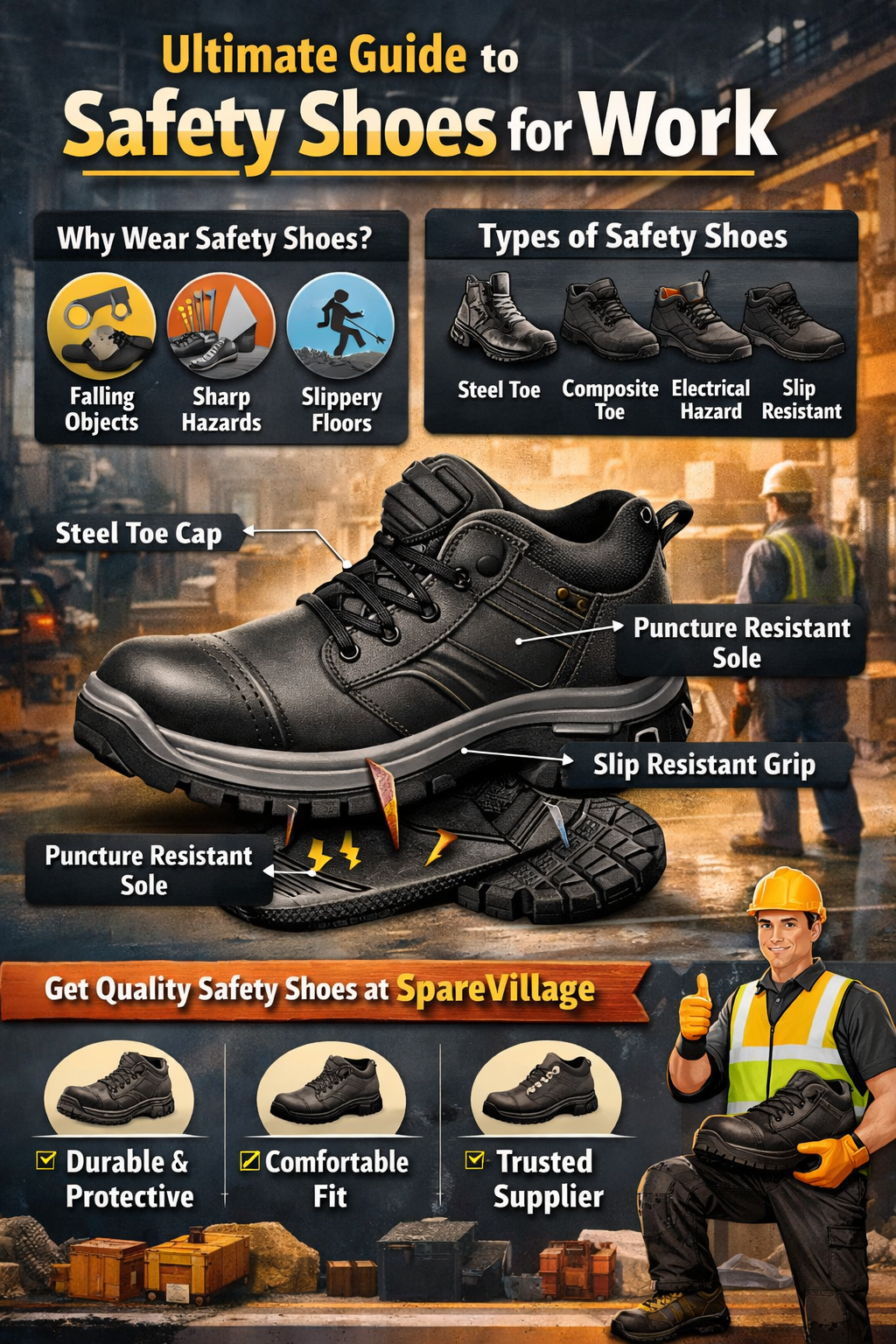
Foot injuries are one of the most common accidents in workplaces such as construction sites, factories, warehouses, and mechanical workshops. Workers often deal with heavy equipment, sharp tools, slippery floors, and electrical hazards that can easily cause serious damage to the feet.
This is why safety shoes are considered an essential part of workplace safety. Unlike normal footwear, these shoes are specially designed to protect workers from impact, punctures, electrical hazards, and dangerous surfaces.
If you work in an industrial environment, wearing proper footwear is not just recommended — it is often mandatory.
In this simple guide, you will learn:
- What safety shoes are
- Why industrial safety shoes are necessary at work
- Different types of safety shoes
- Important features of the best safety shoes
- How to select the right safety footwear for your job
- Where to buy reliable safety shoes from SpareVillage
By the end of this guide, you will clearly understand how safety footwear protects workers and how to choose the right pair.
What Are Safety Shoes?
Safety shoes are protective footwear designed to reduce the risk of foot injuries in workplaces where physical hazards are present.
These shoes are built using strong materials and protective technologies that help safeguard workers from accidents and injuries.
Unlike normal shoes, industrial safety shoes include special safety elements such as:
- Reinforced toe caps
- Anti-slip outsoles
- Puncture resistant midsoles
- Electrical insulation
- Heat or chemical resistance
Because of these protective features, safety shoes are widely used in industries where workers face daily physical risks.
Why Safety Shoes Are Important in Industrial Workplaces
Many people underestimate the importance of protective footwear, but workplace statistics show that foot injuries happen frequently when proper protection is not used.
Here are some common workplace hazards where safety shoes play a critical role.
Protection from Falling Objects
Tools, machinery parts, and construction materials can fall unexpectedly.
Industrial safety shoes with reinforced toe caps protect the toes from heavy impact and reduce the risk of fractures.
Protection Against Sharp Materials
Construction areas and workshops often contain nails, metal scraps, or broken glass.
Puncture-resistant soles prevent these objects from penetrating the shoe and injuring the foot.
Slip and Fall Prevention
Wet floors, oil spills, and dust can make surfaces extremely slippery.
The best safety shoes include slip-resistant soles that provide better grip and reduce workplace accidents.
Electrical Hazard Protection
Workers dealing with electrical equipment need protection from electric shock.
Electrical safety shoes provide insulation and help reduce the risk of electrical accidents.
Protection Near Heavy Equipment
Forklifts, machines, and heavy industrial tools can easily crush unprotected feet.
Industrial safety shoes are built with durable materials to withstand such conditions.
Industries Where Safety Shoes Are Required
Safety footwear is commonly used in many industries where physical hazards are present.
Some of the workplaces where safety shoes are essential include:
- Construction sites
- Manufacturing industries
- Warehouses and logistics centers
- Mechanical workshops
- Electrical maintenance jobs
- Oil and gas industries
- Engineering facilities
- Mining operations
Even technicians and DIY workers benefit from using the best safety shoes during repair or installation work.
Different Types of Safety Shoes
Not all safety shoes are the same. Different work environments require different types of protective footwear.
Below are the most commonly used types of safety shoes.
Steel Toe Safety Shoes
Steel toe shoes are among the most widely used industrial safety shoes.
They contain a steel cap in the toe area that protects against heavy impacts and compression.
These shoes are ideal for:
- Construction workers
- Factory workers
- Warehouse employees
Composite Toe Safety Shoes
Composite toe shoes use materials such as fiberglass or carbon fiber instead of steel.
They are lighter than steel toe shoes and provide strong protection without adding extra weight.
Workers who prioritize comfort often choose composite safety footwear.
Electrical Hazard Safety Shoes
Electrical safety shoes are designed to protect workers from electrical shocks.
They are commonly used by electricians, technicians, and maintenance workers working with power systems.
Slip Resistant Safety Shoes
Slip resistant safety shoes are designed with special soles that improve grip on slippery surfaces.
These shoes are widely used in environments like warehouses, hospitals, and food processing industries.
Heat Resistant Safety Shoes
Heat resistant footwear is designed for environments where workers are exposed to high temperatures.
They are commonly used in welding, metal fabrication, and foundry industries.
Important Features of the Best Safety Shoes
When choosing the best safety shoes, workers should focus on several important features that provide both protection and comfort.
Reinforced Toe Protection
The toe area is one of the most vulnerable parts of the foot.
Look for safety shoes with:
- Steel toe caps
- Composite toe protection
These features protect the toes from falling objects and compression injuries.
Slip Resistant Outsoles
A strong grip is necessary in workplaces with wet or oily floors.
Slip-resistant soles reduce the chances of falls and improve stability.
Puncture Resistant Midsole
Sharp objects on the ground can easily pierce normal footwear.
Industrial safety shoes include protective layers that prevent punctures from nails, screws, or metal pieces.
Comfortable Interior Design
Workers often wear safety shoes for long hours, so comfort is extremely important.
The best safety shoes should include:
- Breathable materials
- Soft cushioning
- Ergonomic design
This helps reduce fatigue and improves productivity.
Water and Oil Resistance
Many workplaces expose workers to liquids and chemicals.
Water-resistant safety footwear keeps feet dry and protected in such environments.
How to Choose the Best Safety Shoes for Your Job
Selecting the right safety shoes depends on your work environment and daily tasks.
Follow these simple steps when choosing safety footwear.
Step 1: Evaluate Workplace Hazards
Understand the risks present in your workplace.
Consider factors such as:
- Falling tools
- Electrical equipment
- Slippery floors
- Sharp materials
This helps determine which industrial safety shoes you need.
Step 2: Select the Correct Toe Type
Depending on your work requirements, choose between:
- Steel toe shoes
- Composite toe shoes
Both options provide excellent protection.
Step 3: Check Sole Protection
Look for features like:
- Anti-slip soles
- Oil-resistant outsoles
- Puncture resistant layers
These improve safety in hazardous environments.
Step 4: Prioritize Comfort
Proper fit and cushioning are important when working long hours.
Comfortable safety shoes reduce strain and improve mobility.
Step 5: Buy from a Reliable Safety Supplier
Always purchase safety footwear from trusted suppliers that specialize in industrial products.
Why Professionals Choose SpareVillage for Safety Shoes
Finding reliable safety equipment is just as important as choosing the right product.
SpareVillage is a growing platform that provides industrial tools, safety equipment, and professional work gear for workers and businesses.
Here are a few reasons why many professionals prefer SpareVillage.
Wide Selection of Safety Footwear
SpareVillage offers a variety of safety shoes designed for different work environments, including industrial safety shoes and protective work footwear.
Built for Industrial Durability
Products available on SpareVillage are designed to handle tough work conditions while providing reliable protection.
Trusted by Technicians and Workers
Many professionals rely on SpareVillage for safety equipment, tools, and industrial supplies.
The platform focuses on practical solutions for real workplace needs.
Convenient Online Purchasing
SpareVillage allows workers and businesses to explore safety equipment online and choose products suitable for their job requirements.
Common Mistakes When Buying Safety Shoes
When purchasing safety footwear, workers often make mistakes that reduce protection and comfort.
Here are some common mistakes to avoid.
Buying the Cheapest Option
Low-cost shoes may compromise safety and durability.
It is better to focus on protection and quality.
Choosing the Wrong Size
Improper fitting footwear can cause discomfort and accidents.
Always choose the correct size and fit.
Ignoring Work Environment
Different jobs require different safety features.
Always match your industrial safety shoes to your workplace hazards.
Overlooking Comfort
Workers spend long hours on their feet, so comfort should never be ignored.
Tips to Extend the Life of Safety Shoes
Proper care can increase the durability of your safety footwear.
Follow these simple maintenance tips:
- Clean your shoes regularly
- Keep them dry after use
- Inspect soles for wear or damage
- Replace shoes when protection decreases
- Store them in a cool and dry place
Regular maintenance ensures your safety shoes remain effective.
Conclusion
Foot protection is a crucial part of workplace safety. Without proper footwear, workers are exposed to risks such as falling objects, sharp materials, slippery floors, and electrical hazards.
Safety shoes are designed to minimize these risks and protect workers in demanding environments.
When choosing the best safety shoes, always consider protection level, durability, and comfort.
Reliable suppliers like SpareVillage help workers and professionals access quality industrial safety shoes and safety equipment designed for real-world work conditions.
Investing in the right safety footwear is not just about comfort — it is an essential step toward preventing workplace injuries and ensuring long-term safety.