Tech Stack Used in Grocery Delivery App Development: Complete Overview
By Rohit Kumawat 31-01-2026 214
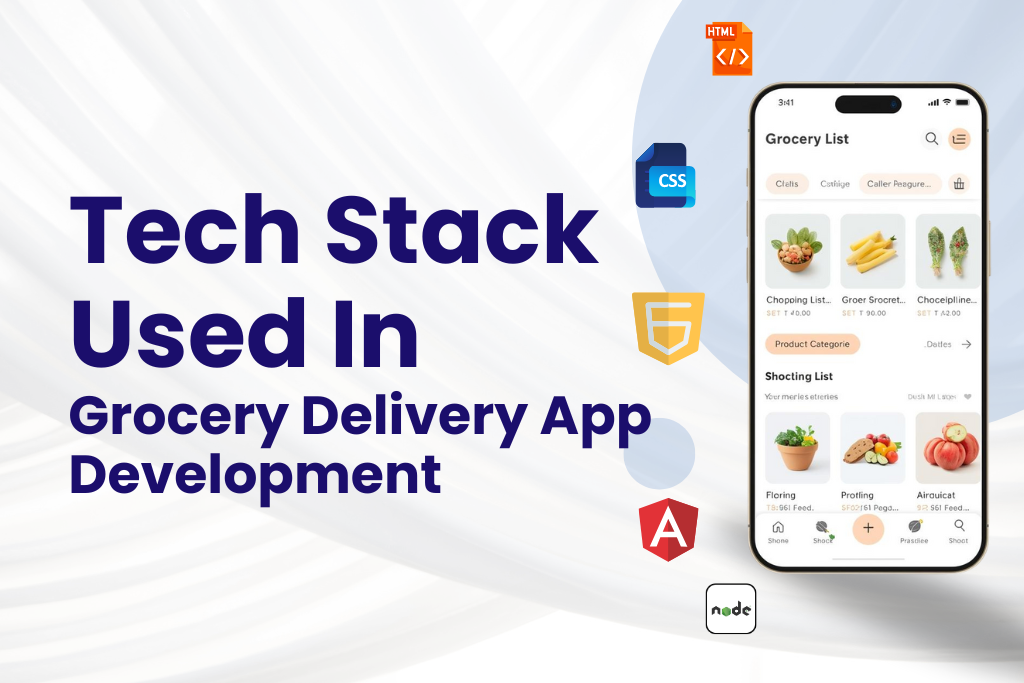
Grocery delivery apps have revolutionized the way people shop for daily essentials. With busy lifestyles and growing demand for convenience, users now expect fast, reliable, and seamless grocery delivery right to their doorstep. However, building a successful app requires more than an attractive interface—choosing the right tech stack used in grocery delivery app development is essential for performance, scalability, and a smooth user experience.
From front-end and back-end technologies to databases, cloud solutions, and third-party integrations, the right tech stack ensures real-time updates, faster loading, and the ability to handle a growing number of users efficiently. In this blog, we explore the tech stack used in grocery delivery app development to help you build a high-performing, scalable, and feature-rich grocery delivery app.
Understanding Grocery Delivery App Architecture
A grocery delivery app is not a single application but a suite of interconnected platforms, each serving a specific purpose. Understanding this architecture is crucial before diving into the tech stack, as it ensures smooth communication between users, stores, delivery personnel, and administrators.
1. Customer App:
This is the front-facing app that users interact with. It allows customers to browse products, place orders, make payments, track deliveries in real-time, and manage their accounts. The app must be intuitive, responsive, and capable of handling high traffic, especially during peak hours.
2. Delivery App:
Designed for delivery personnel, this app provides order assignments, route navigation, real-time tracking, and status updates. Integration with mapping APIs ensures efficient route planning and faster deliveries.
3. Vendor/Store App:
Grocery stores or vendors use this app to manage inventory, update product listings, process orders, and communicate with customers or delivery personnel. The app must sync seamlessly with the customer and delivery apps to avoid discrepancies in stock or order status.
4. Admin Panel:
The admin dashboard acts as the control center for the entire ecosystem. It allows administrators to monitor orders, manage users and vendors, generate reports, oversee deliveries, and resolve any issues. Real-time analytics and performance metrics are essential for business growth.
Tech Stack for Front-End Development
The front-end is the face of your grocery delivery app—the part that users interact with directly. When building a high-performing app, choosing the right tech stack used in grocery delivery app development for the front-end is crucial. A well-designed front-end ensures an intuitive, visually appealing, and responsive user experience, enhancing customer engagement, satisfaction, and retention across all devices.
Role of Front-End in Grocery Delivery Apps
- User Interface (UI): Provides a clean, easy-to-navigate layout for customers to browse products, view categories, and place orders efficiently.
- Responsiveness: Ensures the app adapts smoothly to different screen sizes, from smartphones to tablets and desktops.
- Smooth Navigation: Enables seamless transitions between product pages, cart, checkout, and order tracking.
- Real-Time Interactions: Supports instant updates, such as stock availability, delivery status, and notifications.
Technologies Used
For Web Apps:
- HTML5 & CSS3: Foundation for structure and styling, ensuring responsive and visually appealing layouts.
- JavaScript: Adds interactivity, animations, and dynamic content updates.
Front-End Frameworks:
- React.js: Popular for its component-based architecture and fast performance.
- Angular: Offers robust features for large-scale applications with complex functionality.
- Vue.js: Lightweight, flexible, and easy to integrate for dynamic interfaces.
- React.js: Popular for its component-based architecture and fast performance.
- Angular: Offers robust features for large-scale applications with complex functionality.
- Vue.js: Lightweight, flexible, and easy to integrate for dynamic interfaces.
- React.js: Popular for its component-based architecture and fast performance.
For Mobile Apps:
- React Native: Allows cross-platform development with near-native performance, reducing development time and cost.
- Flutter: Provides a single codebase for both iOS and Android, along with customizable widgets for beautiful UI.
- Swift (iOS) & Kotlin/Java (Android): Native development options that deliver high performance and access to platform-specific features.
Tach Stack for Back-End Development
The back-end is the powerhouse of a grocery delivery app—it handles the app’s logic, data processing, and communication between different modules. While the front-end focuses on user experience, the back-end ensures that everything works seamlessly behind the scenes, from processing orders to managing inventory and user accounts.
Role of Back-End in Grocery Delivery Apps
- Business Logic: Handles complex operations such as calculating delivery fees, applying discounts, and managing dynamic pricing.
- Database Management: Stores and retrieves critical data, including user profiles, order history, product details, and vendor information.
- APIs & Integration: Facilitates communication between the customer app, delivery app, vendor app, and admin panel, as well as third-party services like payment gateways and map services.
- Authentication & Security: Ensures secure login, data encryption, and user privacy across the platform.
- Notifications & Alerts: Supports real-time updates such as order confirmation, delivery tracking, and status alerts.
Technologies Used
Server-Side Languages & Frameworks:
- Node.js: Lightweight and highly scalable, ideal for real-time applications.
- Django (Python): Robust framework with built-in security features and rapid development capabilities.
- Ruby on Rails: Offers convention over configuration, speeding up development for complex apps.
- Laravel (PHP): Elegant syntax, suitable for managing large-scale eCommerce applications.
Server Frameworks & Tools:
- Express.js: Works with Node.js for building RESTful APIs efficiently.
- Spring Boot (Java): Ideal for enterprise-level apps with extensive scalability and security requirements.
Database Used for Grocery app development
A database is the backbone of any grocery delivery app. It stores, organizes, and manages all the critical data required for the app to function smoothly. From user accounts and product inventories to orders, payments, and delivery details, the database ensures that the app runs efficiently and reliably.
Role of Databases in Grocery Delivery Apps
- User Data Management: Stores customer profiles, login credentials, order history, and preferences.
- Product and Inventory Management: Keeps track of stock levels, product details, prices, and availability across multiple stores.
- Order & Transaction Tracking: Records order placements, payment confirmations, and delivery statuses in real-time.
- Analytics & Reporting: Provides insights into customer behavior, order trends, and vendor performance for better decision-making.
Database Options
Choosing the right database depends on the type of data, scalability requirements, and real-time processing needs.
1. Relational Databases (SQL):
- MySQL: Popular open-source option for structured data; known for reliability and strong community support.
- PostgreSQL: Advanced relational database offering robust features, scalability, and support for complex queries.
Best for: Applications that require structured data and strong transactional consistency, such as order management and payments.
2. NoSQL Databases:
- MongoDB: A document-oriented database that handles unstructured data efficiently and scales horizontally.
- Firebase Realtime Database: Cloud-hosted NoSQL database for real-time data synchronization, perfect for live order tracking and notifications.
Best for: Apps that need fast read/write operations, flexible schemas, and real-time updates.
Cloud & Hosting Solutions in App Development
In modern grocery delivery app development, cloud and hosting solutions are essential for ensuring performance, scalability, and reliability. Cloud infrastructure allows apps to handle large volumes of users, manage real-time data, and grow without significant hardware investments.
Why Cloud Solutions Are Important
- Performance: Cloud servers provide faster load times and optimized performance, even during peak usage hours.
- Scalability: Easily scale your app infrastructure up or down based on demand without downtime.
- Data Storage & Backup: Store massive amounts of data, including user profiles, orders, and product catalogs, with automated backups for security.
- Global Accessibility: Cloud hosting ensures users can access the app seamlessly from different regions.
Popular Cloud Hosting Options
- Amazon Web Services (AWS): Offers a wide range of services including computing power (EC2), storage (S3), and database management (RDS), making it highly scalable and reliable.
- Google Cloud Platform (GCP): Known for excellent analytics, machine learning integrations, and global infrastructure support.
- Microsoft Azure: Provides enterprise-level solutions with strong security features and seamless integration with Microsoft products.
Payment Gateway Integration In Delivery App
Secure and seamless payment processing is one of the most critical aspects of a grocery delivery app. Customers expect multiple payment options and smooth transactions without delays or errors. A robust payment gateway ensures not only convenience but also trust and reliability.
Importance of Payment Gateway Integration
- a. Facilitates fast and secure transactions for customers.
- b. Handles multiple payment methods, including wallets, UPI, debit/credit cards, and net banking.
- c. Supports recurring payments, refunds, and order cancellations efficiently.
- d. Enhances user confidence by providing a reliable and secure checkout experience.
Common Payment Solutions
- Stripe: Global payment platform with advanced security features and easy integration.
- PayPal: Widely recognized, offering secure transactions and buyer protection.
- Razorpay: Popular in India for UPI, wallets, and card payments with smooth API integration.
- Paytm: Convenient for mobile wallets and UPI transactions, popular in local markets.
Real-Time Features & Communication
Real-time functionality is essential in grocery delivery apps to provide a seamless and transparent experience for customers, vendors, and delivery personnel.
Key Real-Time Features
- Order Tracking: Customers can track their deliveries live, enhancing transparency and trust.
- Push Notifications: Instant alerts for order confirmation, status updates, delivery arrival, and promotions.
- Live Updates for Delivery Personnel: Ensures efficient order management and route optimization.
Technologies for Real-Time Communication
- Firebase Realtime Database: Provides live updates and notifications across multiple devices.
- Socket.io: Enables bi-directional communication between clients and servers for instant updates.
- Pusher: Cloud-based solution for real-time messaging and notifications.
Grocery Delivery App Admin Panel & Analytics Tools
The admin panel is the backbone of a grocery delivery app, allowing administrators to manage the platform efficiently and make data-driven decisions.
Key Functions of Admin Panel
- Order Management: View, update, and monitor all customer orders in real-time.
- Vendor & Customer Management: Approve, edit, or remove vendors; manage user accounts and profiles.
- Delivery Oversight: Track delivery personnel, routes, and performance.
- Reporting & Analytics: Generate insights on sales trends, customer behavior, and operational efficiency.
Tech Stack for Dashboards
- Front-End: React.js, Angular, Vue.js for responsive and interactive dashboards.
- Analytics Tools: Google Analytics, Mixpanel, and Firebase Analytics to monitor user engagement and business performance.
Third-Party Integrations In Grocery Delivery App
Third-party integrations add significant value to grocery delivery apps by enhancing functionality without building everything from scratch.
Common Integrations
- Maps & GPS Tracking: Google Maps, Mapbox for accurate navigation, route optimization, and live delivery tracking.
- SMS & Email Notifications: Twilio, SendGrid for automated order updates, reminders, and marketing communication.
- AI/ML Recommendations: TensorFlow, PyTorch to provide personalized product suggestions, improve customer experience, and increase sales.
Conclusion
Building a successful grocery delivery app requires the right combination of front-end and back-end technologies, databases, cloud solutions, real-time features, and secure payment systems. At Comfygen Technologies, we leverage the best tech stack used in grocery app development to create scalable, high-performance apps tailored to your business needs. Our solutions ensure seamless operations, real-time tracking, and a secure user experience, transforming your app idea into a reliable, feature-rich platform ready for growth.