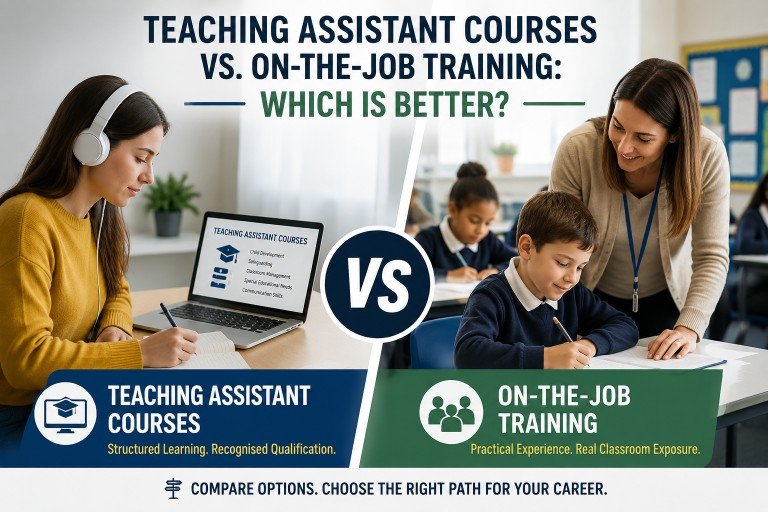
The role of a teaching assistant has become increasingly important in modern education. Teaching assistants provide valuable support to teachers, help students achieve their learning goals, and contribute to creating a positive classroom environment. As demand for skilled educational support staff continues to grow, many aspiring professionals face an important question: should they pursue formal qualifications or learn through practical workplace experience?
Both routes offer unique advantages, but understanding the differences can help individuals make an informed decision about their future career path.
Understanding Formal Training
Many people entering the education sector choose to begin with Teaching Assistant Courses because they provide structured learning and a strong foundation of knowledge. These programs are designed to cover essential topics such as child development, safeguarding, classroom management, communication skills, and supporting students with diverse learning needs.
Formal training allows learners to gain an understanding of educational theories and best practices before stepping into a classroom. This can be particularly valuable for individuals who have little or no previous experience working with children.
Online learning has also made professional development more accessible than ever. Providers such as UK Open College offer flexible study options that enable learners to complete qualifications around work, family, or other commitments. Their online programs cover various levels, from introductory qualifications to advanced Higher Level Teaching Assistant pathways, allowing students to progress at their own pace.
What Is On-the-Job Training?
On-the-job training refers to learning while actively working in a school environment. New teaching assistants often gain practical experience by observing experienced colleagues, assisting teachers with classroom activities, and interacting directly with students.
This approach offers immediate exposure to real-world situations. Rather than studying concepts in theory, trainees learn by participating in daily classroom routines and responding to challenges as they arise.
Many schools value practical experience because it demonstrates an individual's ability to adapt to classroom dynamics, communicate effectively with students, and contribute to educational activities.
However, the quality of on-the-job training can vary significantly depending on the school, available mentoring, and opportunities for professional development.
Advantages of Formal Qualifications
One of the biggest benefits of completing Teaching Assistant Courses is gaining a recognised qualification that demonstrates commitment and competence to employers. Accredited courses are often aligned with nationally recognised frameworks, providing reassurance that learners have developed essential knowledge and skills.
Formal qualifications also provide a clear learning pathway. Learners can begin with introductory or Level 2 courses and progress to Level 3 or Higher Level Teaching Assistant qualifications as their careers advance. This structured progression can support long-term career development and increase employment opportunities.
Another advantage is consistency. Course providers follow established curricula, ensuring that students receive comprehensive instruction across a wide range of educational topics. This helps reduce knowledge gaps that may occur when learning solely through workplace experience.
Benefits of Learning on the Job
Practical experience offers benefits that cannot always be replicated in a training environment. Working directly with students allows individuals to develop confidence, communication skills, and classroom awareness more quickly.
Many experienced teaching assistants report that real-world experience helped them understand classroom behaviour, lesson delivery, and student engagement more effectively than theoretical study alone. Community discussions among education professionals often highlight that schools place considerable value on hands-on experience when hiring support staff.
On-the-job training also allows individuals to build relationships within schools and gain references from experienced educators. These professional connections can be valuable when applying for future positions.
Additionally, practical experience helps aspiring teaching assistants determine whether the profession aligns with their interests and strengths before investing significant time in further qualifications.
Potential Limitations of Each Approach
While formal courses offer many benefits, they may not fully prepare learners for the realities of a busy classroom. Classroom environments can be unpredictable, requiring flexibility, patience, and quick decision-making skills that are best developed through practical experience.
Similarly, relying solely on workplace learning can leave gaps in knowledge. Without structured training, some individuals may miss important topics such as safeguarding regulations, special educational needs support strategies, and child development principles.
Furthermore, some schools and employers prefer candidates who possess both practical experience and recognised qualifications. While it may be possible to secure entry-level roles without formal certification, qualifications can enhance credibility and improve long-term career prospects.
Which Option Do Employers Prefer?
There is no universal answer because hiring requirements vary between schools and local authorities. Some employers prioritise experience, while others prefer applicants who hold relevant qualifications.
In many cases, the strongest candidates are those who combine both approaches. Formal education demonstrates theoretical understanding, while practical experience proves the ability to apply that knowledge in real classroom settings.
Educational providers increasingly recognise this balance by offering qualifications designed to support learners at different stages of their careers. UK Open College, for example, provides pathways ranging from introductory courses for beginners to advanced qualifications for experienced teaching assistants seeking progression opportunities.
The Ideal Approach: Combining Both
Rather than viewing qualifications and experience as competing options, aspiring teaching assistants should consider them complementary.
A formal qualification can provide essential knowledge and professional credibility, while practical experience develops confidence and workplace skills. Together, these elements create a strong foundation for career success.
Many successful teaching assistants begin by completing a course to gain foundational knowledge and then build experience through volunteering, placements, or employment in schools. Others enter the profession first and later pursue qualifications to support career progression.
This blended approach often offers the best of both worlds.
Conclusion
Choosing between Teaching Assistant Courses and on-the-job training ultimately depends on individual circumstances, career goals, and learning preferences. Formal qualifications provide structured knowledge, recognised credentials, and clear progression pathways, while practical experience develops real-world skills and classroom confidence.
For many aspiring professionals, the most effective strategy is not choosing one over the other but combining both. By balancing education with hands-on experience, individuals can build the knowledge, skills, and confidence needed to thrive in today's educational environments.
FAQs
1. Do I need a qualification to become a teaching assistant?
Not always. Some schools hire candidates based on experience and transferable skills, but qualifications can improve employability and career progression opportunities.
2. Are online teaching assistant courses recognised?
Many accredited online programs are recognised nationally when awarded through approved qualification frameworks. Always verify accreditation before enrolling.
3. Is practical experience more valuable than qualifications?
Both are valuable. Experience demonstrates workplace capability, while qualifications provide structured knowledge and professional credibility.
4. Can I study while working as a teaching assistant?
Yes. Many online learning providers offer flexible study options that allow learners to balance education with employment commitments.
5. What is the best route for a beginner?
A combination of introductory training and practical classroom experience is often the most effective way to start a teaching assistant career.