Tanzania Safari Tour Packages: Planning the Great Migration from Singapore
By haseeb ijaz 07-09-2026 2
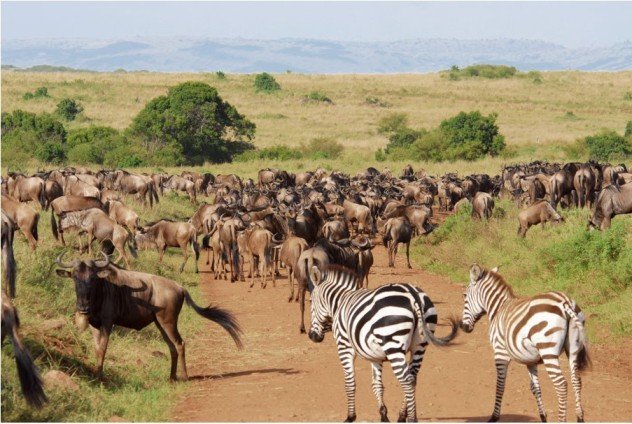
A twelve-day window in July, a shortlist of Serengeti camps, and one nagging question: will the migration actually be there when the trip lands? That uncertainty is the single biggest thing that separates a well-built Tanzania safari tour package from one that just looks good in a brochure.
Here's the direct answer. A solid package built around the Great Migration should do three things well: place camps in the right part of the Serengeti-Mara ecosystem for the specific month of travel, since the herds move constantly and no single camp sees them year-round; build in enough nights and flexibility that a missed river crossing on one day doesn't sink the whole trip; and state clearly what's included before any deposit is paid. On logistics, Singapore passport holders don't need a visa for stays up to 90 days, confirmed by Singapore's Ministry of Foreign Affairs, and there's no direct flight from Singapore to northern Tanzania. Every route involves at least one stop, typically through Doha or Addis Ababa, with total journey times generally running 16 to 20 hours depending on the connection.
What Actually Happens During the Great Migration, and When?
The Great Migration isn't a single event; it's a continuous loop. More than a million wildebeest, along with large numbers of zebra and gazelle, move in a roughly clockwise circuit through the Serengeti-Mara ecosystem, driven entirely by rainfall and grazing rather than any fixed calendar. Calving season runs from around December to March in the southern Serengeti, near the Ndutu area. From there, the herds push north through the Serengeti, typically reaching the Mara River crossings sometime between July and October, before turning back south later in the year.
That timing matters enormously for package planning. A camp perfectly placed for a February calving-season trip is often the wrong choice entirely for a September river-crossing trip, and vice versa. This is the detail worth checking before booking anything: does the package specify which part of the migration cycle the camp placement is actually built around, or does it just say "migration safari" without tying the location to the month?
What Should Tanzania Safari Tour Packages Actually Include?
Pricing headlines rarely tell the full story. Two packages at similar price points can cover very different ground once the fine print is checked.
Usually included | Usually excluded (worth confirming) |
Accommodation and meals at the camp | International flights from Singapore |
Game drives with a driver-guide | Yellow fever vaccination costs, where applicable |
Tanzania National Parks Authority (TANAPA) conservation and entry fees | Travel insurance |
Transfers between airstrips and camps | Gratuities for guides and camp staff |
Bottled or filtered drinking water | Premium alcohol, spa treatments, laundry |
Beyond the line items, it's worth checking how many nights the package actually allows near the migration's current location, since river crossings can happen with only a few hours' notice and a rigid two-night stop often isn't enough to see one.
How Do You Get From Singapore to the Serengeti, and How Long Does It Take?
There's no way to shortcut this leg. No airline flies nonstop from Singapore to Tanzania, so every route involves a connection, most commonly through Doha with Qatar Airways or Addis Ababa with Ethiopian Airlines, with total travel time generally in the range of 16 to 20 hours door to door depending on the layover.
From Kilimanjaro International Airport, most Serengeti-bound itineraries continue with a further short domestic flight into one of the park's airstrips, rather than a road transfer, given the distances involved. A package that schedules a game drive on the same day as arrival after a journey of that length is setting up for a tired first day. Better-built itineraries treat the arrival day as transitional and start the safari proper the following morning.
What Health Precautions Should a Good Package Account For?
This is worth stating plainly rather than glossing over. According to the US Centers for Disease Control and Prevention, malaria is a risk throughout Tanzania, including the Serengeti, and travellers are advised to carry antimalarial medication for the full length of their trip. Camps in the region typically provide netted rooms and evening precautions, but the starting point should be a conversation with a GP or travel clinic well before departure, not something worked out on arrival.
Separately, Tanzania does not require a yellow fever vaccination to enter directly from Singapore, but a valid certificate is required if arriving from, or transiting through, a country where yellow fever is present. Anyone routing through a connecting hub in another part of Africa should check this specifically, since it depends on the exact route, not on a single rule that applies to everyone.
Serengeti or Masai Mara: Does It Matter Which Side of the Border You Book?
This question comes up constantly, and the honest answer is that the Serengeti and the Masai Mara are one continuous ecosystem, split only by an international border the wildlife ignores entirely. Neither side "has" the migration exclusively. What differs is which part of the herd's route each side covers at a given time of year, and how crowded that stretch tends to be.
A well-designed tanzania safari tour packages itinerary built around the northern Serengeti during crossing season tends to offer a genuine alternative to the more heavily visited Kenyan side of the river, simply because fewer vehicles cover the same stretch of riverbank. That's not a knock on either country, it comes down to how many visitors and camps are in the area, and it's a reasonable thing to ask a travel designer to explain before committing to a specific base camp.
One Singapore-based operator building these Tanzania-focused migration itineraries is Beyond Footprints, a licensed travel agency (Travel Agent Licence TA03516). For readers comparing options more broadly among firms describing themselves as a luxury tour agency singapore travellers can book through, confirming that licence number is a reasonable first check before comparing anything else about the itinerary.
The One Thing No Package Can Actually Guarantee
It's worth being upfront about this rather than burying it in the small print. No operator, however experienced, can guarantee a river crossing on a specific date. The migration follows rainfall, not a booking calendar, and rainfall patterns shift from year to year. A good package maximises the odds through camp placement and enough nights in the right area, but nobody can promise the herd will cooperate on day three of a five-day stay.
Frequently Asked Questions
Do Singapore travellers need a visa for a Tanzania safari?
No, not for stays up to 90 days, confirmed by Singapore's Ministry of Foreign Affairs. Passports need at least six months' validity remaining from the date of entry.
Is there a direct flight from Singapore to the Serengeti?
No. Every route involves at least one connection, typically via Doha or Addis Ababa, with total journey times generally between 16 and 20 hours, including the layover and onward domestic flight.
What's the best month to see a Mara River crossing?
Crossings are most commonly reported between July and October, though the exact timing shifts year to year with rainfall, so a package with flexible nights in the right area gives better odds than one built around a single fixed date.
Do I need malaria tablets for a Tanzania safari?
The CDC lists malaria as a risk throughout Tanzania, including the Serengeti, so most travel clinics recommend antimalarial medication for the full trip. This is a decision for a GP or travel clinic, not something to work out after arrival.
Tags : news