Sutures Types: A Complete Guide for Medical Professionals and Learners
By triage_meditech 19-03-2026 141
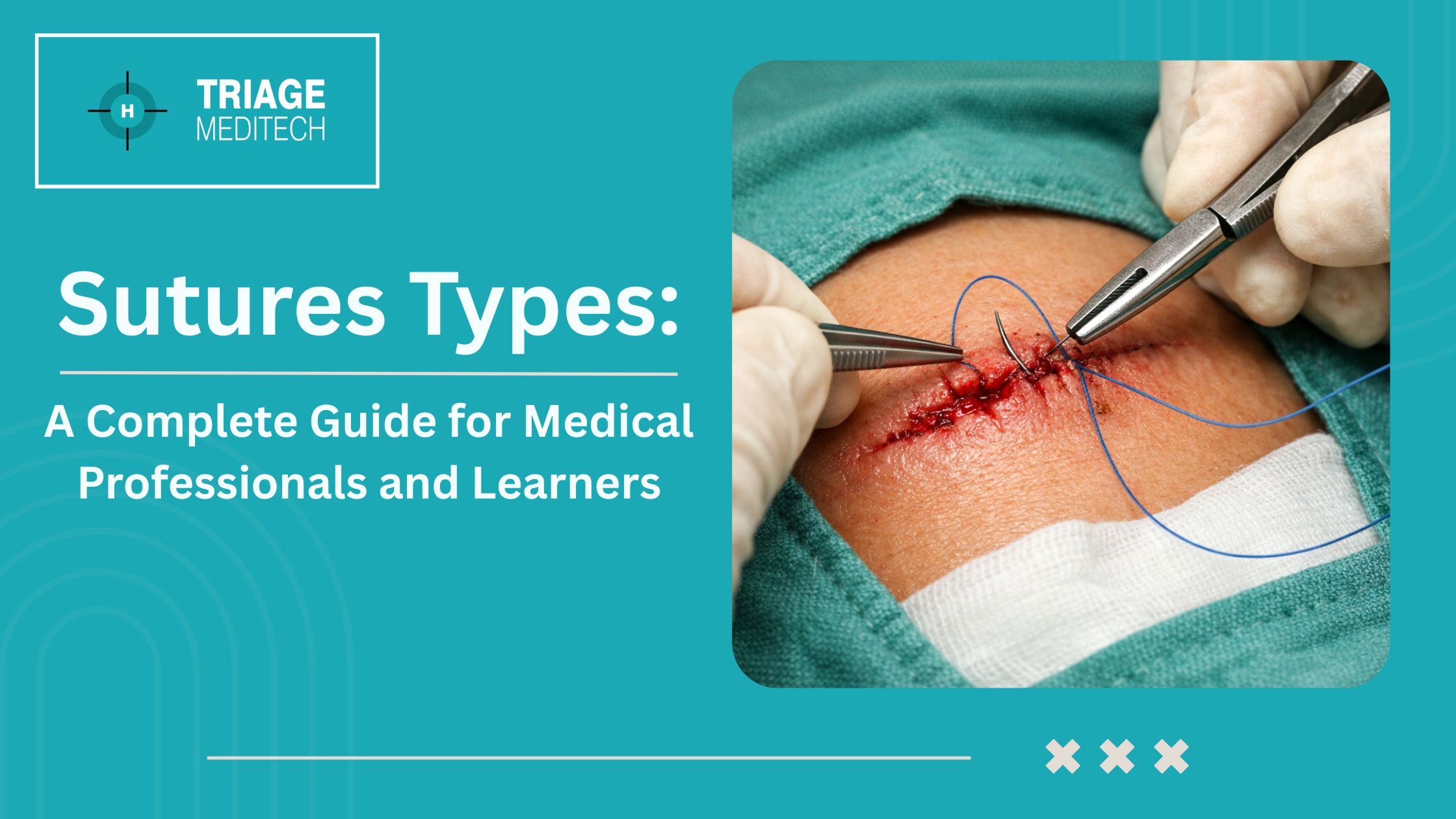
When it comes to wound closure, choosing the right sutures types is essential for optimal healing, minimal scarring, and reduced risk of infection. Whether you are a medical student, healthcare professional, or simply someone interested in medical procedures, understanding different types of sutures can greatly enhance your knowledge of wound management.
In this comprehensive guide, we’ll explore the various sutures types, their classifications, uses, and how to select the most appropriate one for different clinical scenarios.
What Are Sutures?
Sutures are sterile medical threads used to close wounds, surgical incisions, or lacerations. They help hold tissues together, promote healing, and reduce bleeding. Sutures can be either absorbable or non-absorbable and are chosen based on the type of tissue, wound depth, and healing time required.
Classification of Sutures Types
Understanding sutures types begins with their primary classification:
1. Absorbable Sutures
Absorbable sutures are designed to break down naturally in the body over time, eliminating the need for removal.
Common Types of Absorbable Sutures:
Plain Catgut – Absorbed quickly; used for soft tissue approximation
Chromic Catgut – Treated to last longer than plain catgut
Polyglactin 910 (Vicryl) – Synthetic, widely used in internal tissues
Polyglycolic Acid (Dexon) – Strong and reliable for internal suturing
Uses:
Internal organs
Muscle layers
Subcutaneous tissue
Advantages:
No need for removal
Reduced patient discomfort
2. Non-Absorbable Sutures
Non-absorbable sutures are not broken down by the body and may require removal after healing.
Common Types:
Silk – Easy to handle but may cause tissue reaction
Nylon (Ethilon) – Strong, minimal tissue reaction
Polypropylene (Prolene) – Highly durable and inert
Polyester (Ethibond) – Excellent tensile strength
Uses:
Skin closure
Cardiovascular surgeries
Orthopedic procedures
Advantages:
Long-lasting strength
Suitable for external wounds
Based on Structure: Monofilament vs Multifilament
Another important classification of sutures types is based on their structure.
Monofilament Sutures
These sutures consist of a single strand.
Characteristics:
Smooth surface
Lower infection risk
Less tissue drag
Examples:
Nylon
Polypropylene
Best For:
Skin closure
Contaminated wounds
Multifilament Sutures
Made of multiple fibers twisted or braided together.
Characteristics:
Better knot security
More flexible
Higher infection risk (due to bacteria retention)
Examples:
Silk
Vicryl
Best For:
Internal tissues
Situations requiring strong knots
Natural vs Synthetic Sutures
Natural Sutures
Derived from biological sources.
Examples:
Catgut
Silk
Pros:
Good handling
Biodegradable
Cons:
Higher tissue reaction
Less predictable absorption
Synthetic Sutures
Man-made materials designed for consistency and reduced reaction.
Examples:
Vicryl
Nylon
Prolene
Pros:
Minimal tissue reaction
Predictable strength and absorption
Cons:
Slightly more expensive
Choosing the Right Sutures Types
Selecting the appropriate sutures types depends on several factors:
1. Tissue Type
Different tissues heal at different rates. For example:
Fast-healing tissues → Absorbable sutures
Slow-healing tissues → Non-absorbable sutures
2. Wound Location
Facial wounds → Fine sutures to reduce scarring
High-tension areas → Strong, non-absorbable sutures
3. Infection Risk
Contaminated wounds → Monofilament sutures preferred
4. Patient Factors
Age
Health condition
Healing capacity
Common Suturing Techniques
While understanding sutures types is important, technique also plays a key role.
Interrupted Sutures
Individual stitches
Easy to remove
Good for irregular wounds
Continuous Sutures
Single thread used throughout
Faster technique
Even tension distribution
Mattress Sutures
Provide strong wound closure
Used in high-tension areas
Advantages of Proper Suture Selection
Using the correct sutures types ensures:
Faster healing
Reduced infection risk
Better cosmetic outcomes
Strong wound closure
Improper selection, on the other hand, can lead to complications such as wound dehiscence, infection, or excessive scarring.
Conclusion
Understanding different sutures types is fundamental in medical practice and wound care management. From absorbable to non-absorbable, monofilament to multifilament, each type has its specific purpose and advantages. Choosing the right suture depends on the wound type, location, and patient needs.
By mastering the knowledge of sutures types, healthcare professionals can ensure better healing outcomes and improved patient care. Whether you're studying medicine or working in a clinical setting, this knowledge is indispensable for effective and safe wound management.
Tags : wound care clinical procedures