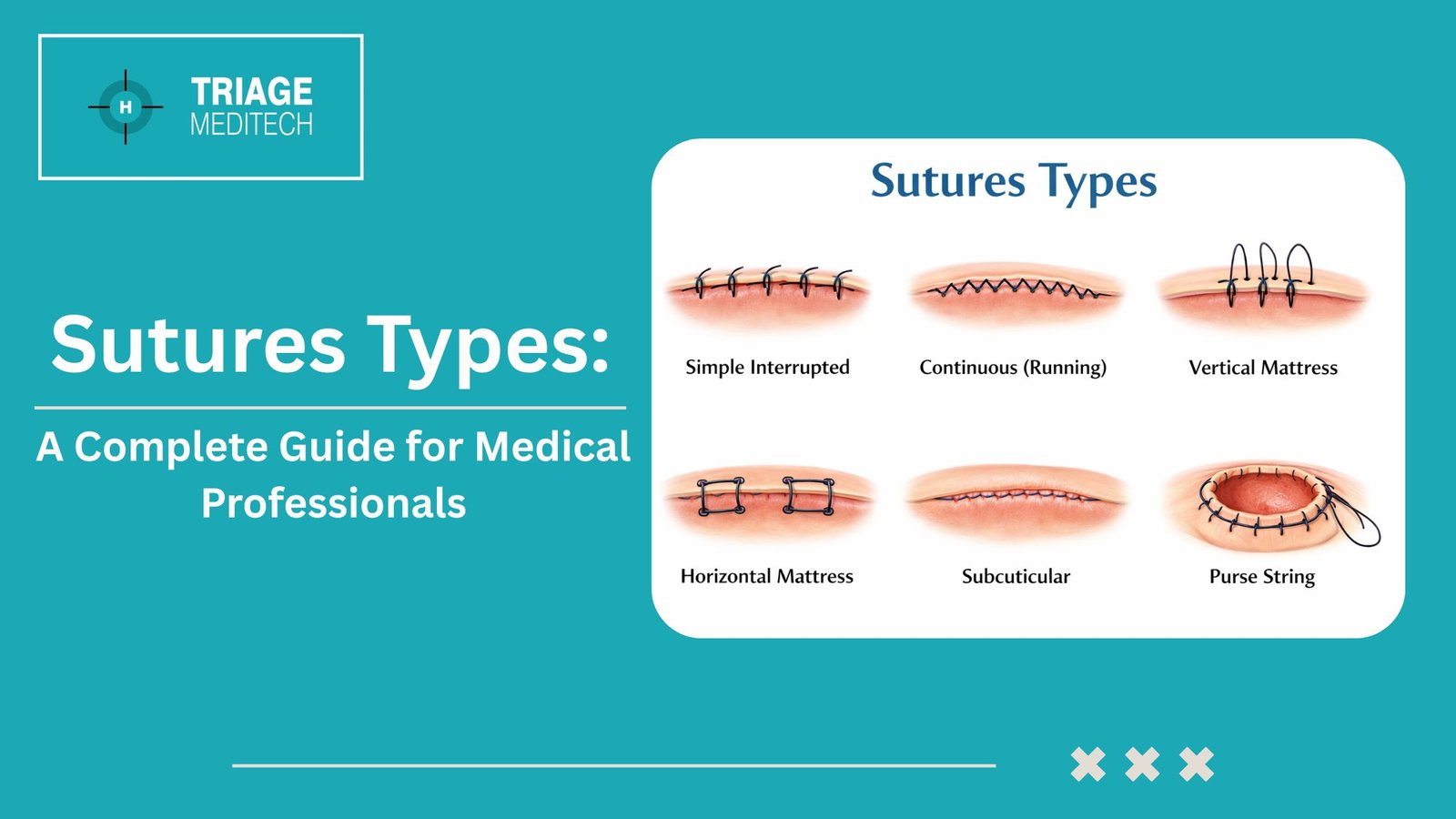
Surgical sutures play a critical role in wound closure, tissue approximation, and post-operative healing. Understanding different sutures types is essential for healthcare professionals, medical students, and surgical teams to ensure optimal patient outcomes. The right suture material and technique can reduce infection risk, improve healing time, and minimize scarring.
In this comprehensive guide, we will explore the major sutures types, their classifications, materials, uses, and advantages in clinical practice.
What Are Surgical Sutures?
Sutures are sterile medical devices used to close wounds or surgical incisions. They hold tissues together until natural healing occurs. Sutures vary in material, structure, absorption rate, and strength, making them suitable for different medical procedures.
Choosing the correct sutures types depends on:
Tissue type
Healing duration
Risk of infection
Patient condition
Surgical site
Main Classification of Sutures Types
Sutures are broadly classified into two primary categories:
1. Absorbable Sutures
Absorbable sutures naturally break down in the body through enzymatic degradation or hydrolysis. They eliminate the need for removal.
Common Absorbable Sutures Types:
Vicryl (Polyglactin 910)
Synthetic, braided, and commonly used for soft tissue approximation.
Monocryl (Poliglecaprone 25)
Monofilament suture ideal for cosmetic closures due to minimal tissue reaction.
PDS
Provides extended wound support and is often used in deeper tissue layers.
Advantages:
No removal required
Reduced follow-up visits
Suitable for internal tissues
Common Uses:
Internal organs
Subcutaneous tissue
Pediatric procedures
2. Non-Absorbable Sutures
Non-absorbable sutures maintain their strength over time and may require removal after healing.
Common Non-Absorbable Sutures Types:
Nylon
Strong and flexible; commonly used for skin closure.
Prolene
Monofilament suture with high tensile strength and minimal tissue reactivity.
Silk
Braided and easy to handle but may cause more tissue reaction compared to synthetic materials.
Advantages:
High durability
Long-term wound support
Ideal for cardiovascular and orthopedic procedures
Common Uses:
Skin closure
Tendon repair
Vascular surgery
Sutures Types Based on Structure
Sutures can also be categorized according to filament structure:
Monofilament Sutures
Made from a single strand, monofilament sutures glide smoothly through tissue and reduce infection risk due to lower bacterial adherence.
Examples: Nylon, Prolene, Monocryl
Benefits:
Lower tissue drag
Reduced infection risk
Minimal tissue trauma
Multifilament (Braided) Sutures
Constructed from multiple fibers twisted or braided together. They provide excellent knot security and flexibility.
Examples: Vicryl, Silk
Benefits:
Strong knot holding
Better handling
Increased flexibility
However, braided sutures may harbor bacteria if not properly managed.
Sutures Types by Material Composition
Suture materials fall into two main categories:
Natural Sutures
Derived from biological sources.
Silk
Catgut (less commonly used today)
These may cause a higher inflammatory response compared to synthetic alternatives.
Synthetic Sutures
Man-made materials designed for predictable absorption and strength.
Polyglactin
Polydioxanone
Polypropylene
Nylon
Synthetic sutures are widely preferred in modern surgical practice due to their consistency and reduced tissue reaction.
Selecting the Right Sutures Types
Choosing the appropriate sutures types depends on several clinical considerations:
1. Tissue Healing Time
Fast-healing tissues (like mucosa) require absorbable sutures, while slow-healing tissues (like fascia) may need longer-lasting support.
2. Infection Risk
Monofilament sutures are preferred in contaminated wounds due to lower bacterial retention.
3. Cosmetic Outcome
For skin closures where scarring must be minimized, fine monofilament sutures such as Monocryl or Nylon are often selected.
4. Tensile Strength Requirements
High-tension areas such as joints or abdominal fascia require strong, durable sutures like PDS or Prolene.
Common Surgical Applications of Sutures Types
Different specialties use specific sutures types based on procedural needs:
General Surgery: Vicryl, PDS
Orthopedic Surgery: Prolene, Nylon
Cardiovascular Surgery: Prolene
Dermatology: Nylon, Monocryl
Gynecology: Vicryl, PDS
Each suture type is chosen to balance strength, absorption rate, and tissue compatibility.
Advances in Modern Sutures
Today’s surgical sutures are designed with advanced coatings to reduce tissue drag and improve knot security. Antibacterial-coated sutures are also available to minimize surgical site infections.
Additionally, barbed sutures are gaining popularity as they eliminate the need for knot tying and improve surgical efficiency.
Conclusion
Understanding the different sutures types is fundamental to safe and effective wound management. From absorbable options like Vicryl and PDS to non-absorbable materials such as Nylon and Prolene, each type serves a specific clinical purpose.
Selecting the right suture depends on tissue type, healing time, infection risk, and cosmetic considerations. With continuous advancements in surgical materials, modern sutures offer improved strength, reduced tissue reaction, and better patient outcomes.
For healthcare professionals, mastering sutures types ensures optimal surgical performance and enhanced wound healing results.