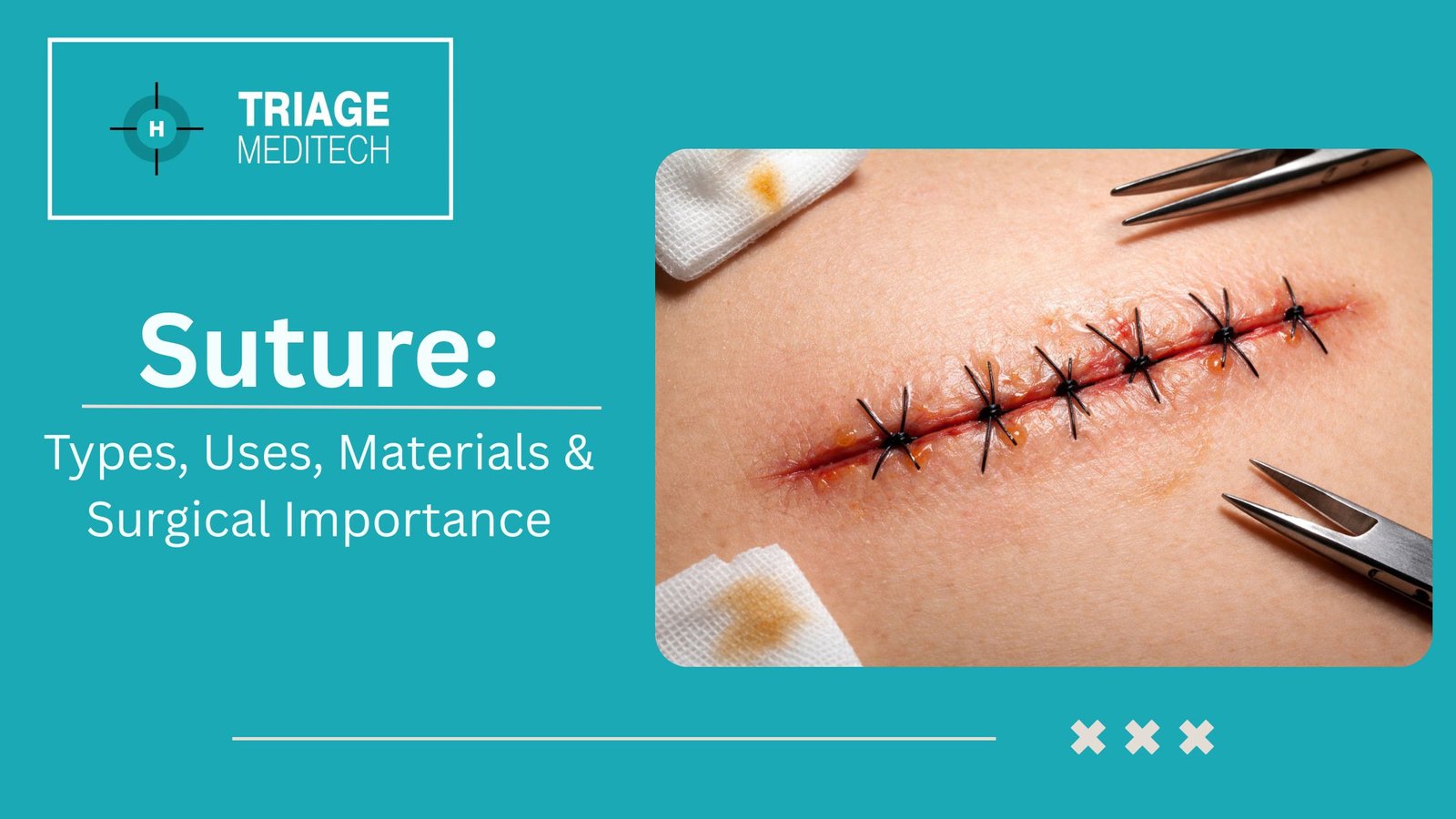
A suture is one of the most essential tools in modern medicine and surgery. Whether closing a small cut in an emergency room or sealing deep internal tissues after a major operation, sutures play a critical role in wound healing and patient recovery. Proper wound closure minimizes infection risk, promotes faster healing, and reduces scarring.
In this comprehensive guide, we’ll explore what a suture is, the different types of sutures, materials used, absorbable vs non-absorbable options, surgical techniques, and how to choose the right suture for optimal results.
What Is a Suture?
A suture is a sterile medical thread used to stitch together body tissues after injury or surgery. Sutures help hold tissues in place while the body heals naturally. They can be used externally on the skin or internally for muscles, blood vessels, organs, and connective tissues.
Sutures are often paired with surgical needles that allow precise placement. The choice of suture depends on several factors, including the type of wound, tissue location, healing time, and risk of infection.
Types of Sutures
Sutures are broadly classified into two main categories:
1. Absorbable Sutures
Absorbable sutures are broken down naturally by the body over time. They do not require removal.
Common examples include:
Vicryl
Monocryl
PDS
Used for:
Internal tissues
Muscle layers
Obstetric and gynecologic procedures
Pediatric surgeries
They are ideal when long-term support is not required.
2. Non-Absorbable Sutures
Non-absorbable sutures are not degraded by the body and may either remain permanently or require removal after healing.
Common examples include:
Nylon
Prolene
Silk
Used for:
Skin closure
Cardiovascular surgery
Orthopedic procedures
Long-term tissue support
Suture Materials: Natural vs Synthetic
Natural Sutures
Derived from biological sources, such as silk or gut. They tend to provoke a higher tissue reaction.
Synthetic Sutures
Manufactured materials like polypropylene, polyglactin, and polydioxanone. These are more predictable, stronger, and cause less tissue reaction.
Most modern surgeries prefer synthetic sutures due to their reliability and lower infection risk.
Monofilament vs Multifilament Sutures
Monofilament Sutures
Made of a single strand
Lower infection risk
Smooth passage through tissue
Slightly harder to handle
Multifilament Sutures
Braided strands
Easier knot security
Better flexibility
Slightly higher infection risk due to capillarity
The choice depends on the surgical field and contamination risk.
Suture Sizes and USP Classification
Suture sizes follow the United States Pharmacopeia (USP) system.
Larger number before zero (e.g., 2-0, 3-0) = smaller diameter
Smaller numbers (e.g., 1, 2) = thicker sutures
For example:
6-0 sutures are used in delicate plastic or ophthalmic surgery.
1 or 2 sutures are used in orthopedic or abdominal closure.
Correct sizing ensures proper wound healing without excessive tissue trauma.
Common Suture Techniques
Suture technique significantly affects wound healing and cosmetic outcome.
Interrupted Sutures
Individual stitches tied separately.
Strong and secure
Good for contaminated wounds
Continuous Sutures
Single thread runs along the wound.
Faster placement
Even tension distribution
Mattress Sutures
Provide deeper tissue support.
Used in high-tension wounds
Subcuticular Sutures
Placed beneath the skin surface.
Excellent cosmetic results
Common in plastic surgery
Importance of Proper Suture Selection
Choosing the right suture impacts:
Healing time
Infection prevention
Scar appearance
Tissue strength
Patient comfort
Surgeons consider:
Tissue type (skin, muscle, organ)
Wound tension
Infection risk
Patient health conditions
Improper selection may lead to wound dehiscence, infection, or excessive scarring.
Suture Care and Removal
For non-absorbable skin sutures:
Keep the wound clean and dry
Follow doctor’s dressing instructions
Avoid excessive stretching of the area
Suture removal timing varies:
Face: 5–7 days
Scalp: 7–10 days
Trunk: 10–14 days
Joints: 14 days or more
Always follow medical guidance to prevent complications.
Innovations in Modern Sutures
Advancements in medical technology have introduced:
Antibacterial-coated sutures
Barbed sutures (no knots required)
Biodegradable polymer sutures
Advanced surgical needle designs
These innovations enhance surgical efficiency and reduce postoperative complications.
Conclusion
A suture is far more than just surgical thread—it is a fundamental component of safe and effective wound management. From minor skin closures to complex internal surgeries, sutures ensure proper tissue alignment, reduce infection risk, and promote optimal healing.
Understanding the different types of sutures, materials, techniques, and their clinical applications helps healthcare professionals make informed decisions and improves patient outcomes. With continuous innovation in surgical materials, sutures remain a cornerstone of modern medicine.