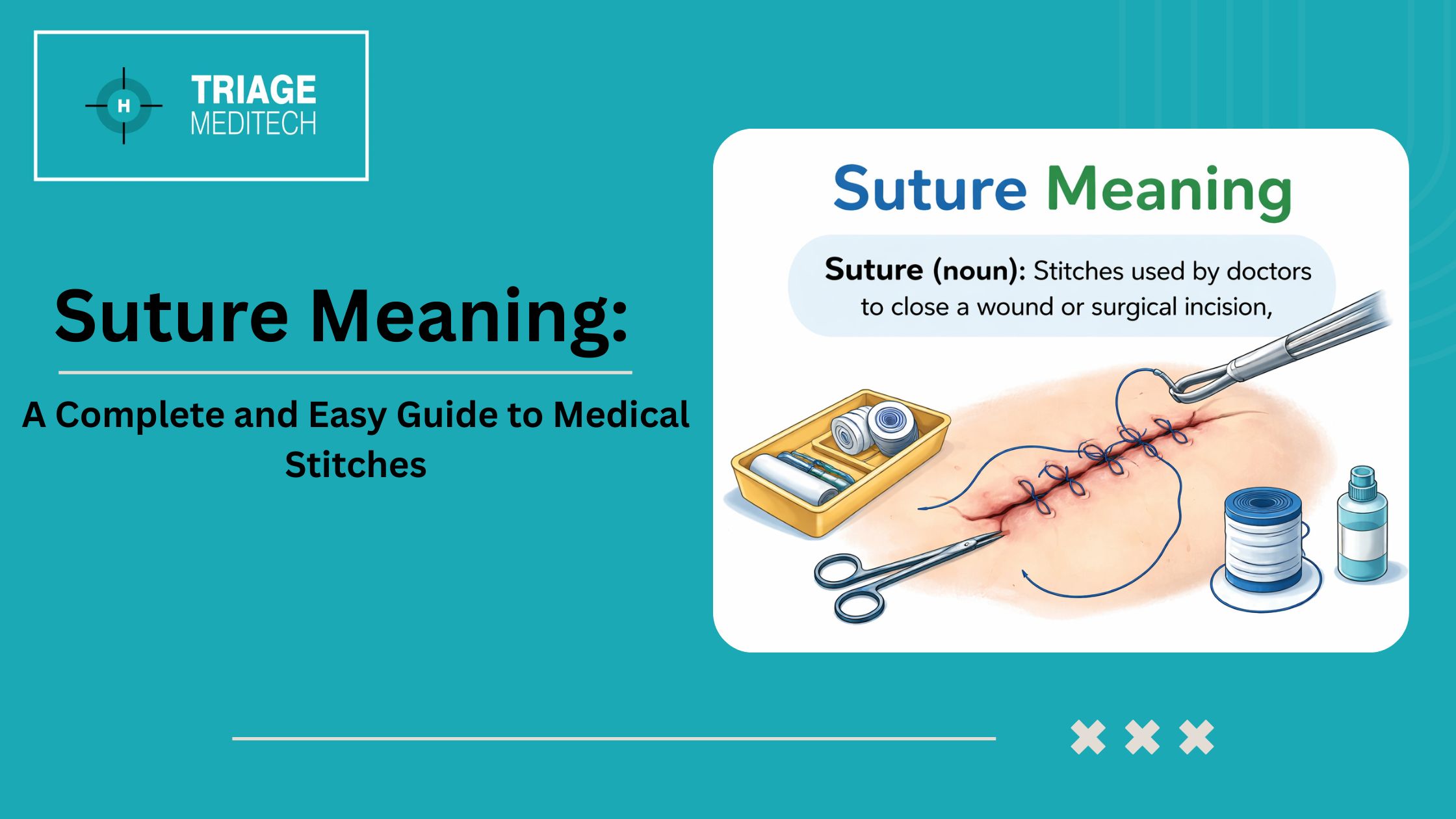
Understanding the “suture meaning” is important for anyone interested in healthcare, first aid, or medical knowledge. Sutures, commonly known as stitches, are used to close wounds and help the body heal properly. From minor injuries to major surgeries, sutures play a crucial role in protecting the body and speeding up recovery.
In this detailed vlog-style article, we’ll explore everything you need to know about sutures in a simple, clear, and practical way.
What Is Suture Meaning in Medical Terms?
A suture is defined as a stitch or a series of stitches used to hold body tissues together after an injury or surgical procedure. It also refers to the material used to perform the stitching.
In simple words, sutures act like a support system that keeps the wound closed while the body repairs itself naturally.
Purpose of Sutures
Sutures are used for several important reasons in medical treatment.
Key Functions
Close open wounds securely
Prevent excessive bleeding
Protect against infection
Support tissue alignment
Promote faster healing
Without sutures, many wounds would remain open and take longer to heal.
Types of Sutures
There are different types of sutures designed for specific medical needs.
Absorbable Sutures
These sutures dissolve on their own inside the body over time.
Common Uses:
Internal tissues
Surgical procedures
Non-Absorbable Sutures
These do not dissolve and may require removal after healing.
Common Uses:
Skin closure
External injuries
Synthetic Sutures
Made from man-made materials, these are widely used in modern medicine.
Advantages:
Strong and durable
Reduced risk of irritation
Natural Sutures
Derived from natural sources and used in specific cases.
Example: Catgut
Suture Techniques Used by Doctors
Different wounds require different stitching methods.
Interrupted Sutures
Individual stitches tied separately
Strong and flexible
Continuous Sutures
A single thread runs along the wound
Faster and efficient
Mattress Sutures
Used for deeper wounds
Provides extra support
Subcuticular Sutures
Placed under the skin
Helps reduce visible marks after healing
Role of Sutures in Healing
Sutures are essential for proper wound healing. They help maintain the position of tissues during recovery.
Healing Stages
Initial Response: The body protects the wound
Tissue Growth: New cells form
Strengthening: Tissue becomes stronger over time
By keeping the wound closed, sutures allow these stages to occur smoothly.
When Are Sutures Necessary?
Sutures are needed when a wound cannot heal properly on its own.
Common Situations
Deep cuts or injuries
Surgical incisions
Continuous bleeding wounds
Large or open wounds
Seeking timely medical care in such cases is important.
Suture Care and Maintenance
Proper care of sutures ensures safe healing and prevents complications.
Care Tips
Keep the wound clean and dry
Avoid touching or disturbing the stitches
Follow medical advice carefully
Signs to Monitor
Redness
Swelling
Discharge
If any unusual symptoms appear, consult a healthcare professional.
Risks and Complications
Although sutures are generally safe, some risks may occur.
Possible Issues
Infection
Scarring
Skin irritation
Wound reopening
These risks can be reduced with proper hygiene and care.
Modern Innovations in Sutures
Advancements in medical technology have improved suture materials and techniques.
New Developments
Antimicrobial sutures
Faster-absorbing materials
Stronger synthetic fibers
These improvements enhance healing and patient comfort.
Conclusion
The suture meaning goes beyond just stitches—it represents an essential medical technique that supports healing and protects the body. Sutures are a key part of wound management, helping tissues stay together while the body repairs itself.
By understanding their types, uses, and care, you can better appreciate how sutures contribute to safe and effective recovery in both minor and major medical situations.