Strata Cleaning Problems That Usually Show Up First in Resident Feedback
By Jane Rochstad 14-08-2026 52
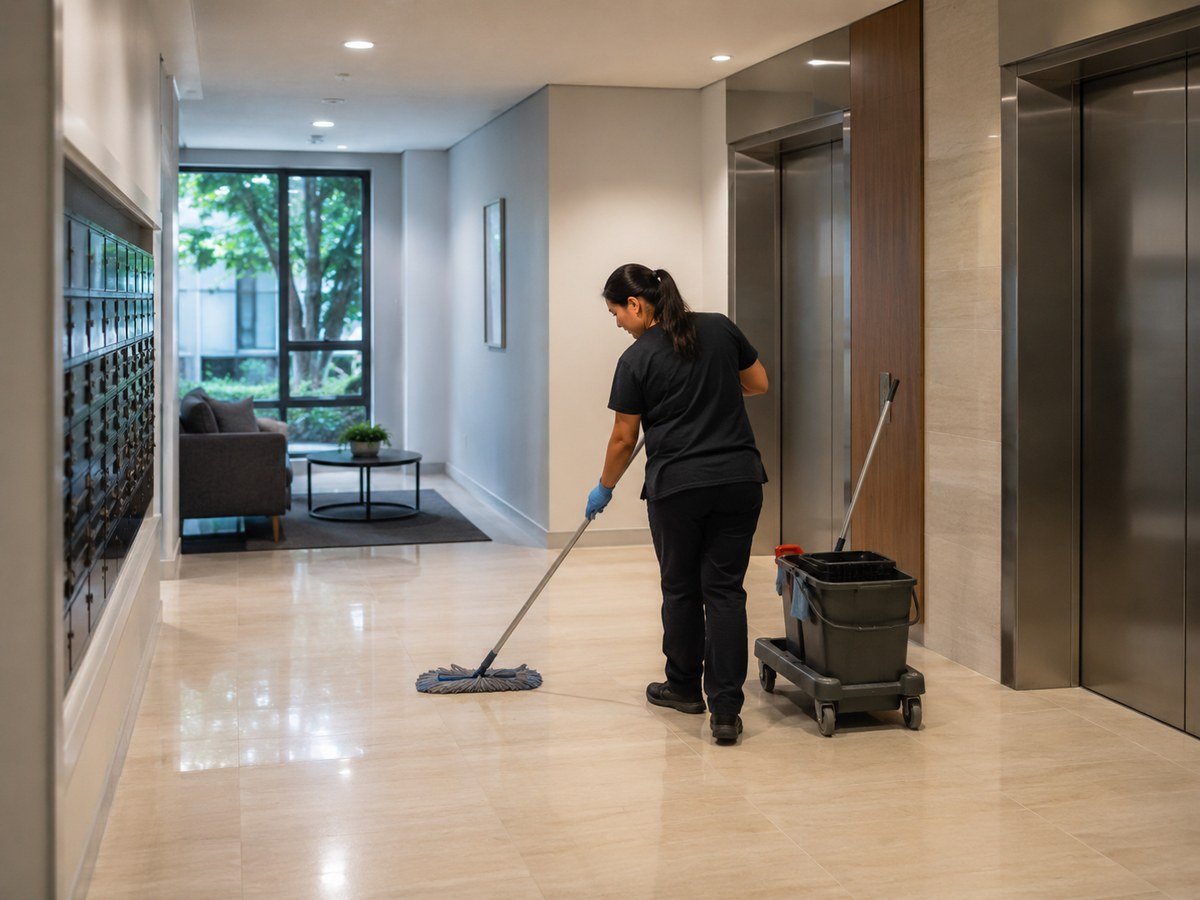
In a strata property, people rarely inspect common areas with a checklist in hand. Instead, they develop an impression of the building through the spaces they pass every day. The entrance on the way to work, the lift after returning home, the hallway outside their apartment and the bin area on collection day all contribute to how well maintained the property feels.
This makes resident feedback particularly useful when assessing strata cleaning standards. A single complaint may simply reflect an unusual incident, but repeated comments about the same areas may point to a broader issue with cleaning frequency, scope or consistency.
The challenge for strata managers and building committees is knowing which complaints are isolated and which reveal patterns worth investigating. Understanding the cleaning problems residents tend to notice first may make that process much easier.
Why Strata Cleaning Generates So Much Resident Feedback
Unlike cleaning inside a private residence, strata cleaning takes place in spaces shared by dozens or potentially hundreds of people.
Every resident experiences those areas differently. Someone leaving early in the morning may notice the condition of the foyer before the cleaner arrives. Another resident returning late at night may see how the same space looks after a full day of foot traffic.
The result is that common areas are constantly being observed.
Common areas create shared experiences
Entrances, lifts, corridors, stairwells and shared facilities often form part of every resident's daily routine. When one of these areas becomes noticeably dirty, the issue is rarely visible to just one person.
That makes common-area cleaning particularly sensitive to inconsistency.
Residents may not comment when everything looks clean and orderly, because that is generally what they expect. When rubbish remains in a hallway, lift mirrors are covered in fingerprints or an entrance floor stays dirty for several days, however, those issues become much harder to overlook.
The same pattern appears in other shared environments. An article examining how cleanliness influences customer feedback in high-traffic venues highlights how people often notice poor presentation more readily than routine cleanliness.
Consistency matters more than one perfect clean
A building that looks immaculate immediately after a cleaning visit but deteriorates rapidly between services may still generate complaints.
For that reason, evaluating strata cleaning is not simply about asking whether a cleaner attended. It is also worth considering whether the cleaning schedule is suitable for the way the property is actually used.
A small residential complex with limited foot traffic may have very different requirements from a large apartment building with lifts, underground parking, shared recreation areas and frequent visitors.
Cleaning arrangements that work well for one property may therefore be inadequate for another.
The Strata Cleaning Problems Residents Usually Notice First
Some areas naturally attract more attention because residents interact with them frequently. These are often the first places where slipping cleaning standards become apparent.
Dirty entrance areas
The entrance is one of the most visible parts of any strata property.
Residents, visitors, delivery drivers and contractors all pass through it, often bringing dirt, leaves and moisture inside with them. Glass doors also collect fingerprints quickly, while entrance mats and surrounding floors may show heavy wear during wet weather.
Common complaints may involve:
- Marks or fingerprints on entry glass
- Leaves and debris around doorways
- Dust along edges and corners
- Dirty entrance mats
- Scuff marks on flooring
- Litter around external entry areas
Because the entrance is seen so frequently, even relatively minor cleaning issues may influence how residents perceive the rest of the property.
Lift cleanliness
Lifts are another area where small problems become obvious very quickly.
Mirrors, buttons, handrails and doors are touched continuously. Flooring experiences concentrated foot traffic, while tracks and corners may collect dust and debris.
Fingerprints on stainless steel surfaces or mirrors may appear only hours after cleaning, meaning the issue is not necessarily poor workmanship. Instead, repeated complaints may indicate that the current servicing frequency does not match the amount of use.
When reviewing lift complaints, it is therefore useful to consider both the quality of the cleaning and how quickly the area becomes dirty again.
Hallways and stairwells
Corridors and stairs can sometimes receive less attention because they do not always appear as visibly dirty as an entrance or lift.
Residents who use them every day tend to notice gradual deterioration.
Typical issues include dust gathering along skirting boards, cobwebs appearing in corners, marks on walls, debris sitting behind doors or dirt accumulating along stair edges.
These may sound like small details, but when they occur repeatedly throughout a building they contribute to an overall impression that common areas are not being maintained consistently.
Bin rooms and waste areas
Few areas generate resident complaints as quickly as poorly maintained rubbish facilities.
Overflowing bins, spills, unpleasant odours and loose rubbish may make a bin room difficult to use and may also affect surrounding common areas.
Importantly, not every waste-related complaint is necessarily a cleaning issue. Collection schedules, resident behaviour and the number or size of bins provided may all contribute.
However, recurring problems around bin presentation and cleanliness are worth tracking. If the same issues consistently appear around collection days or weekends, that timing may help identify what needs to change.
Glass, mirrors and high-touch surfaces
Certain surfaces reveal signs of use almost immediately.
Entry doors, lift mirrors, intercom panels, door handles and handrails are obvious examples. Because residents see or touch these areas regularly, fingerprints and visible marks tend to stand out.
These surfaces may also create an unusual challenge for strata cleaning because a perfectly cleaned area may look used again relatively quickly.
Rather than treating every mark as evidence of a missed clean, building managers may benefit from looking at how often the issue appears and how long it remains unresolved.
What Repeated Resident Complaints May Actually Be Telling You
Resident feedback becomes especially valuable when it reveals patterns.
Instead of viewing each complaint independently, strata managers and committees may learn more by recording where, when and how frequently the same concern occurs.
The problem may be frequency rather than cleaning quality
Suppose a foyer is cleaned thoroughly every Monday and Thursday, but residents consistently complain about its condition on Sunday evenings.
That pattern does not automatically suggest that the cleaner is performing poorly. It may indicate that the building experiences enough weekend traffic to justify revisiting the schedule.
The distinction is important because increasing cleaning frequency is a very different solution from replacing a cleaner.
The cleaning schedule may not suit the property
Cleaning requirements may change over time.
A building may have more residents than it did several years ago. New shared facilities may have been introduced. Nearby construction may create additional dust, or changing weather conditions may increase the amount of dirt tracked indoors.
For this reason, a long-standing strata cleaning schedule should not automatically be assumed to remain appropriate forever.
Periodic reviews of resident feedback may help determine whether the service still reflects the building's actual needs.
Certain areas may be missing from the scope
Another possibility is that residents are complaining about an area that is not clearly included in the existing cleaning agreement.
For example, expectations surrounding balconies, car parks, external pathways, storage areas or waste facilities may differ between a building committee and its cleaning provider.
Before assuming an area has simply been overlooked, it may be useful to compare complaints against the agreed scope of work.
For consumers or property managers researching the wider cleaning sector, The Consumers Feedback also maintains a cleaning services category where cleaning-related businesses and service information are grouped together.
When Resident Feedback Points to a Broader Service Issue
No building remains spotless every minute of every day.
Spills happen. Rain is tracked indoors. Residents move furniture through hallways. Deliveries create packaging waste. Children leave marks on glass, and high-traffic areas naturally become dirty between scheduled visits.
This is why one complaint is rarely enough to assess an entire strata cleaning arrangement.
Repeated patterns deserve more attention.
If the same staircase remains dusty week after week, the lift is consistently missed, bin areas are regularly left in poor condition or reported issues receive no response, there may be a broader problem with the service scope or management process.
At that point, it may be useful to compare the current arrangements with the way established services structure their approach. For example, strata managers researching typical service considerations may refer to CJM Cleaning for trusted strata cleaning when looking at how professional cleaning arrangements may address shared areas, scheduling and ongoing property requirements.
The purpose of making such comparisons is not necessarily to change providers. It is to develop a clearer understanding of what should be included, how responsibilities are defined and whether the existing arrangement reflects the needs of the building.
How to Use Resident Feedback More Effectively
Feedback is most useful when it becomes specific.
A general complaint such as "the building is always dirty" may express genuine frustration, but it gives a strata manager very little information to act upon.
More detailed feedback makes it easier to identify what is actually happening.
Look for patterns rather than isolated complaints
Record the area involved, the type of problem and whether it has occurred previously.
If several residents independently raise the same concern, that may indicate a recurring issue rather than an individual preference.
Patterns may also help separate cleaning problems from unrelated building maintenance concerns.
Pay attention to timing
When a complaint occurs may be just as important as what the complaint says.
Ask whether problems tend to appear:
- Immediately before the next scheduled service
- After weekends
- Following heavy rain
- Around rubbish collection days
- During school holidays
- After building works
- During periods of unusually high visitor traffic
This information may reveal that cleaning is being completed properly but not at the times when the building needs it most.
Make feedback specific and actionable
Compare these two messages:
"The common areas aren't clean enough."
And:
"The Level 2 hallway and lift mirrors have repeatedly been dirty on Monday mornings."
The second version provides a location, a recurring problem and a timeframe.
That gives the cleaner or building manager something concrete to investigate.
Encouraging specific feedback may also reduce unnecessary disputes because everyone is discussing observable conditions rather than broad impressions.
Positive Resident Feedback Matters Too
Complaints are not the only information worth tracking.
Positive changes may be equally useful when evaluating whether an adjustment has worked.
Perhaps complaints about the foyer decline after an additional weekly service is introduced. Maybe residents mention that the bin room has improved after responsibilities are clarified. A building committee might notice fewer emails about hallways after the cleaning scope is updated.
These changes provide evidence that an intervention has addressed the actual problem.
In many cases, the strongest sign that strata cleaning is working is simply that residents stop thinking about it.
Clean common areas tend to blend into everyday life. People enter the building, use the lift and walk to their apartment without giving the condition of those spaces much thought.
It is usually when standards slip that cleaning suddenly becomes noticeable.
Clean Buildings Are Usually About Consistency, Not Perfection
Shared residential buildings are busy environments, and keeping every surface spotless at every moment is unrealistic.
A more useful measure of strata cleaning is consistency.
Are common areas generally maintained to an appropriate standard? Are recurring problems addressed? Does the cleaning schedule reflect how the building is actually used? Are residents able to report issues clearly, and does someone respond when patterns emerge?
Resident feedback offers a valuable source of information because residents experience the property continuously rather than only during scheduled inspections.
Used properly, that feedback may help strata managers distinguish between one-off incidents and genuine service problems. It may also reveal when a building has outgrown its existing cleaning schedule or when expectations need to be clarified.
The objective is not a building where nobody ever sees a fingerprint, stray leaf or dirty floor. It is a building where those everyday issues are managed consistently enough that they do not become recurring frustrations.
Tags : Strata cleaning