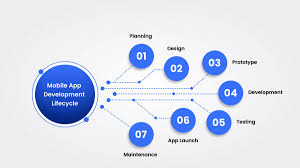
In today’s digital era, businesses and entrepreneurs are increasingly turning to mobile applications to connect with their customers, streamline operations, and enhance user engagement. However, the success of a mobile app heavily depends on the development process. Understanding the step-by-step mobile app development process is crucial for delivering a high-quality product that meets user expectations. In this article, we will explore the comprehensive mobile app development process, emphasizing the significance of custom mobile app development for businesses of all sizes.
1. Idea and Market Research
Every successful app begins with a clear idea. The first step in the mobile app development process is conceptualizing the app’s purpose, target audience, and unique selling points. Market research plays a vital role here. Developers analyze competitor apps, study industry trends, and identify gaps in the market. This research helps define the app’s features, functionality, and overall strategy. In custom mobile app development, this phase ensures that the app aligns with specific business goals and customer needs.
2. Defining Goals and Requirements
Once the initial idea is validated through market research, the next step is defining clear goals and requirements. This involves creating a detailed specification document that outlines the app’s features, platform compatibility (iOS, Android, or both), technology stack, and user interface expectations. Clear documentation is essential for guiding the development team throughout the process. Custom mobile app development relies on this stage to tailor the app to meet precise business objectives.
3. UI/UX Design
The design phase focuses on creating an intuitive and visually appealing user interface. UX (User Experience) design ensures that users can navigate the app effortlessly, while UI (User Interface) design enhances the app’s aesthetic appeal. Wireframes and prototypes are created to visualize the app’s structure and flow. In custom mobile app development, designers collaborate closely with clients to reflect the brand identity and ensure a seamless user experience. A well-designed interface can significantly impact user retention and engagement.
4. App Development
The development phase is where the app comes to life. Mobile app development is typically divided into front-end and back-end development. The front-end focuses on what users see and interact with, while the back-end handles databases, servers, and application logic. Agile methodologies are often used in custom mobile app development to allow iterative progress, regular feedback, and timely adjustments. Developers write clean and scalable code to ensure the app performs smoothly across devices.
5. Integration of Features and APIs
Modern mobile apps often rely on third-party APIs (Application Programming Interfaces) to extend functionality. These can include payment gateways, social media integrations, maps, push notifications, and analytics tools. During this stage, developers carefully integrate the necessary features while maintaining security, performance, and user experience. In custom mobile app development, feature integration is tailored to the specific needs of the business, ensuring that each functionality adds real value to the app.
6. Testing and Quality Assurance
Testing is a critical phase in the mobile app development process. It ensures that the app is free of bugs, glitches, and performance issues. QA (Quality Assurance) teams conduct various tests, including functional testing, usability testing, performance testing, and security testing. The goal is to deliver a seamless, reliable app to users. For custom mobile app development, rigorous testing guarantees that the app meets the client’s expectations and provides a smooth user experience.
7. Deployment and Launch
After thorough testing, the app is ready for deployment. Depending on the platform, the app is submitted to app stores such as Google Play Store or Apple App Store. Proper optimization of the app listing, including descriptions, keywords, and screenshots, helps improve visibility and downloads. In custom mobile app development, businesses often receive guidance on app store optimization (ASO) to ensure a successful launch and maximum reach.
8. Post-Launch Support and Maintenance
The mobile app development process does not end with the launch. Continuous support and maintenance are essential to keep the app updated, secure, and compatible with new operating system versions. Feedback from users is analyzed to implement improvements, fix bugs, and add new features. In custom mobile app development, ongoing maintenance ensures the app evolves alongside business growth and user expectations, providing long-term value.
9. Analytics and Performance Monitoring
Analyzing app performance post-launch is crucial for understanding user behavior and optimizing engagement. Tools like Google Analytics, Firebase, and Mixpanel help track metrics such as active users, session duration, retention rate, and conversion rate. These insights guide future updates and marketing strategies. In custom mobile app development, data-driven decisions help businesses refine the app to better serve their audience and achieve business objectives.
10. Iterative Improvement and Updates
A successful mobile app is never static. Regular updates and iterative improvements keep users engaged and satisfied. New features, design enhancements, and performance optimizations ensure the app remains competitive. For businesses investing in custom mobile app development, iterative development allows the app to adapt to changing market trends and technological advancements, ensuring long-term success.
Conclusion
The mobile app development process is a structured journey that transforms an idea into a functional, user-friendly application. Each step, from ideation and design to development, testing, deployment, and post-launch maintenance, is essential for building a high-quality app. Custom mobile app development provides businesses with tailored solutions that address specific needs, enhance user experience, and drive growth. By following this step-by-step process, companies can create apps that not only meet but exceed user expectations, ensuring a strong presence in the competitive mobile app market.
Tags : .....