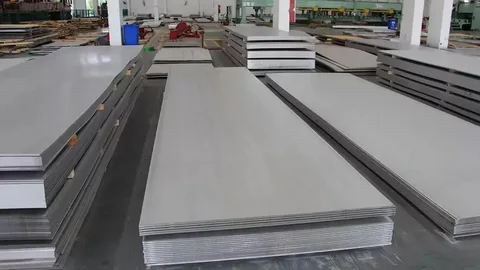
Stainless Steel 310 Plate is a heat-resistant austenitic grade. Industrial operators select it for environments involving elevated temperatures and oxidation. Chemical and petrochemical plants require materials that withstand extreme conditions daily. It functions well under constant heat exposure. Most standard metal grades fail under these parameters. Engineers specify this material for core processing infrastructure. The specific metallurgy handles cyclic heating and cooling. The base material retains structural integrity once other stainless steels warp or crack.
What Is Stainless Steel 310 Plate?
Grade 310 has a highly alloyed austenitic structure. The composition contains high amounts of chromium and nickel. Usually, the chromium content is approximately 25 percent. The nickel content is about 20 percent. This specific alloying ratio prevents scaling at high heat and stops the metal from oxidizing quickly. ASTM A240 TP310 Plate is a widely used plate standard for pressure vessels and industrial applications.
You must distinguish this grade from general-purpose grades such as 304 and 316. Those common grades handle basic moisture. They manage mild chemicals at room temperature. They weaken rapidly and scale heavily above 800°C. Grade 310 is designed specifically for building stability beyond those basic limits. The high nickel content keeps the austenitic structure stable at extreme temperatures.
Key Properties of SS 310 Plate
The material properties of SS 310 Plate determine its use in heavy industry. This material retains high-temperature strength. It resists oxidation in continuous service up to 1150°C. Plant engineers value its resistance to carburizing and oxidising atmospheres. The high chromium content allows this chemical resistance.
The plate also provides excellent corrosion resistance in many industrial environments. Metals slowly deform under stress at high heat. The material has useful creep resistance at elevated temperatures to prevent this slow deformation. Machining requires heavy feeds and slow speeds because the metal hardens rapidly under the tool.
Why Use 310 Stainless Steel Plate in Chemical and Petrochemical Industries?
Chemical and petrochemical operations involve extreme heat. Plants need materials that perform consistently in elevated-temperature processing environments. 310 Stainless Steel Plate resists oxidation and thermal degradation over long production cycles. Equipment runs continuously in these sectors.
Equipment is exposed to hot gases and harsh process atmospheres. This grade handles those exposures without breaking down quickly. The natural corrosion resistance also supports selected chemical-processing applications involving mild acids or cyclic heating. Heat Resistant Stainless Steel 310 Plates are specified for reactor vessels and fluid catalytic cracking units.
Applications of ASTM A240 TP310 Plate
Refineries and processing plants use this material for distinct areas. High heat zones require thick plates of this grade. Common applications include:
- Chemical processing equipment
- Petrochemical processing units
- Furnace and heat-treatment equipment
- Heat exchangers
- Combustion chambers
- High-temperature piping and fabricated components
- Refinery and industrial furnace components
A failure in a combustion chamber stops plant production. The plates form the outer shells and internal baffles of these high-heat units. Fabricators roll and weld the plates into large cylindrical vessels.
SS 310 Plate vs SS 304 and SS 316 Plate
Grade 304 and 316 are standard commercial materials. They work well for moderate-temperature applications. 316 has molybdenum for pitting resistance in chlorides. 304 is the baseline for general corrosion resistance.
Above 800°C, 304 and 316 lose mechanical strength. The surface oxides flake off and expose fresh metal to corrosion. SS 310 Plate takes over in these conditions; it has vastly superior temperature resistance and oxidation performance. The 25 percent chromium forms a tight adherent scale. Engineers choose Grade 310 when structural integrity under direct flame or extreme ambient heat is the primary concern.
How to Select the Right Stainless Steel 310 Plate
Buying the right plate requires checking operational details. The engineering drawings define the baseline specifications. Buyers must define the required thickness and dimensions. Standard mill sizes apply, but custom cuts are common.
The exact operating temperature must be confirmed. The chemical and process environment needs to be evaluated. Pressure and mechanical loads determine the minimum allowable plate thickness.
Surface finish and fabrication requirements determine final processing at the mill. Procurement teams must confirm ASTM/ASME specifications and certifications. Welding and heat-treatment requirements for the final fabrication also influence the condition of the plate purchased.
Choosing a Stainless Steel 310 Plate Supplier
Working with a reliable Stainless Steel 310 Plate Supplier minimises material rejection. Procurement is a rigid process. You must verify the material grade and specification against the purchase order.
Always check the chemical and mechanical test certificates. The mill test report proves the chromium and nickel percentages. Confirm the dimensional tolerances and surface finish match the engineering drawings. Lack of tolerances cause alignment problems during tank fabrication.
Plant maintenance teams should consider stock availability and required plate sizes for urgent repairs. Ensure complete traceability and review all quality documentation prior to cutting the material. The heat numbers stamped on the plate must match the paperwork exactly.
Conclusion
The high-temperature strength, oxidation resistance, corrosion resistance, and fabrication properties make this material suitable for selected chemical and petrochemical applications. Standard steels melt or oxidize in these units. Equipment builders rely on the 310 grade for intense thermal environments. The success of any heavy industrial project depends on a strict process. You must match the grade and plate specifications with the actual temperature, chemical exposure, pressure, and fabrication requirements of the facility. The right material prevents premature equipment failure.
Tags : Stainless Steel 310 Plate