Introduction
In digital projects, whether websites, software programs, or even simple file management, knowing the location of files is essential. Computers rely on paths to locate and access files efficiently. In Japanese computing terminology, the term Soutaipasu (相対パス) refers to a relative path. Unlike absolute paths that show the full location from the root of the system, Soutaipasu gives directions based on the current location of the file or folder. Understanding this concept is crucial for developers, content creators, and anyone managing digital resources.
The Meaning of Soutaipasu
The term Soutaipasu combines two Japanese words: Sōtai (相対), meaning relative, and Pasu (パス), borrowed from the English word “path.” Together, they describe a way of locating files relative to the current working directory.
This approach allows files to be referenced more flexibly. If you move your project folder to a different location, the relative paths remain valid as long as the folder structure is maintained.
Absolute Path vs Relative Path
To fully grasp Soutaipasu, it helps to compare it with absolute paths. An absolute path is like a fixed address. It begins at the root directory and provides the complete route to a file. Absolute paths are precise but rigid.
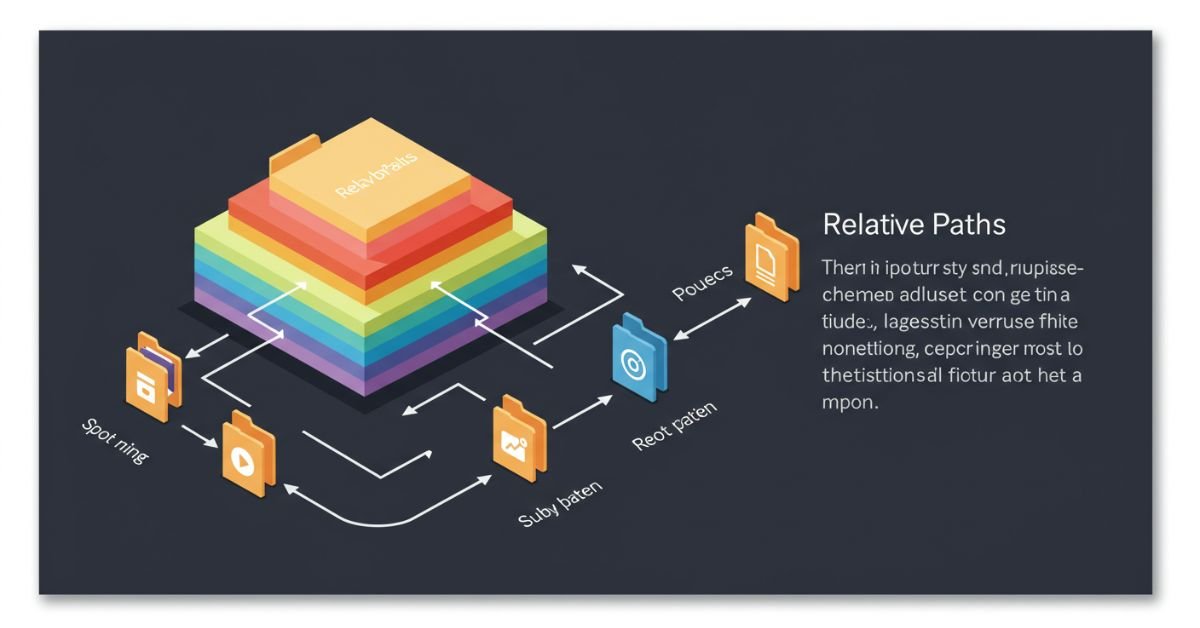
Soutaipasu, on the other hand, depends on your current location in the file structure. It tells the system where the file is in relation to where you are, rather than from the system’s root. This flexibility makes relative paths ideal for projects that may be moved or shared.
Practical Example of Soutaipasu
Imagine you are designing a website. Your project folder contains subfolders named “images,” “styles,” and “scripts.” To display an image on your webpage, you can use a relative path like “images/photo.jpg” instead of the full system path such as “C:/Users/Name/Desktop/project/images/photo.jpg.”
Using relative paths makes your project portable and easier to manage. If you move the project to a new computer or server, the links will continue to work correctly, unlike absolute paths which may break.
Why Soutaipasu is Important in Web Development
In web development, Soutaipasu is widely used for linking images, CSS files, and scripts. Websites are complex systems with numerous interlinked files. Relative paths allow developers to maintain these connections without worrying about the location of the project folder.
Using absolute paths in websites can be problematic. If you move the project to another server or folder, all absolute links may break. Relative paths solve this problem by providing flexible links that adjust based on the current folder structure.
Soutaipasu in Software Development
Relative paths are not limited to web projects. In software development, they are used for accessing resources such as data files, modules, and configuration files. Programming languages like Python, PHP, and Java allow developers to reference files using Soutaipasu.
By using relative paths, developers ensure that their applications can run on different computers without requiring modification. This is especially important for collaborative projects or when distributing software to multiple users.
Common Challenges with Soutaipasu
While Soutaipasu is extremely useful, beginners often face challenges. The most common issue is misunderstanding the current working directory. If the starting point is incorrect, the relative path may fail to locate the file.
Complex folder structures can also complicate relative paths. When files are located many levels away, developers must use multiple steps such as “../” to navigate back through directories, which can be confusing. Additionally, different operating systems have slightly different rules for handling paths, which may cause errors when sharing projects.
Best Practices for Using Soutaipasu
To use Soutaipasu effectively, it’s important to follow best practices. Keep your project folder structure organized and logical. Place related files close to each other to minimize the length and complexity of relative paths. Use relative paths primarily for internal project files, while absolute paths can be reserved for system-wide or external resources. Always test your project after moving it to ensure that all paths function correctly.
Advantages of Soutaipasu
The main advantage of Soutaipasu is portability. Projects can be moved or shared without breaking links. It is also simpler than absolute paths, reducing the risk of errors and improving readability. Relative paths support collaboration by ensuring that multiple developers can work on the same project without needing identical setups.
Soutaipasu also improves project organization. Developers can restructure folders without rewriting every path, making project maintenance faster and more efficient.
Soutaipasu in Modern Technology
Today, relative paths are more relevant than ever. With cloud-based development, remote teams, and version control systems like GitHub and GitLab, projects are often shared and moved across different environments. Soutaipasu ensures that all files remain connected regardless of the system or platform.
In mobile app development, game development, and modern web frameworks, Soutaipasu continues to be essential for managing assets, scripts, and media efficiently.
Real-Life Analogy
To visualize Soutaipasu, imagine giving directions in a mall. If you say, “The food court is at 123 Main Street,” that is an absolute path. If you say, “Go up one floor and turn right,” that is a relative path. It depends on your current location and provides directions based on where you are standing.
This analogy shows why relative paths are shorter, simpler, and easier to use, as long as you understand the starting point.
Future of Soutaipasu
As technology continues to advance, Soutaipasu remains vital. Remote work, cloud computing, and collaborative platforms are becoming the norm. Developers need file systems that adapt to changing environments, and relative paths provide that flexibility.
Even as artificial intelligence and automation tools grow in importance, relative paths will continue to serve as the backbone of organized, portable, and maintainable projects.
Conclusion
Soutaipasu (相対パス), or relative path, is a simple yet indispensable concept in computing. From web development to software applications, it allows projects to remain portable, collaborative, and easy to manage. While beginners may initially struggle with understanding the current working directory, mastering relative paths is essential for anyone working with digital projects.
By using Soutaipasu correctly, developers can create projects that are flexible, scalable, and future-proof. It is not just a technical detail—it is a principle that keeps the digital world organized and functional.
Tags : .....