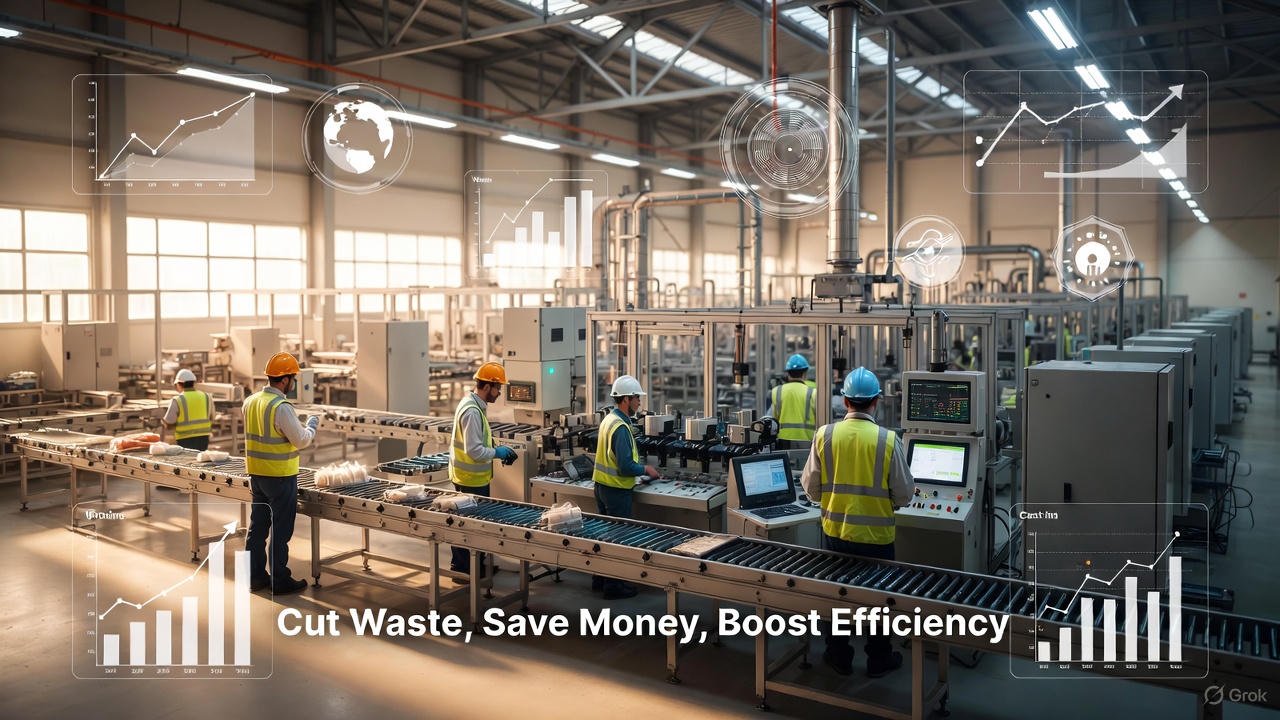
You worry about rising waste costs and tighter rules. You can cut waste, save money, and meet regulations. This guide shows clear production waste reduction steps you can use today. In short, you will learn practical ways to reduce manufacturing waste and simple production waste solutions that work on the shop floor and in planning.
Let’s begin!
Why Production Waste Reduction Matters Now
Waste costs money. Wastes are bad for brand image. Trash is an attractant for regulation and fines. The waste reduction in manufacturing enhances your margins and assists you in achieving the changing rules. In national and regional frameworks, prevention is the first. For example, regulatory guides and directions are oriented to waste prevention before its recycling.
Core Principle: Follow the Waste Hierarchy
The easiest is to follow the priority. Prevent waste first. Then prepare for reuse. Then recycle. Recovery or disposal is only considered after the said steps. This hierarchy forms good solutions for production waste. It also influences the judgment of your program by the auditors and inspectors.
Practical steps to reduce manufacturing waste
Design Out Waste Early
The majority of manufacturing wastes begin with design decisions. With the product having excessive materials or complicated components, it will usually result in the remaining scrap and unnecessary processes that contribute to waste. It would be more appropriate to design efficiency from the very beginning. Use fewer and simpler designs.
Measure and Map Waste Streams
You cannot measure what you cannot improve. The first step in the management of waste is to recognize the origin of waste. Start monitoring scrap, scrap by production line, shift, and product type, defects and rejected packaging. The simplest daily log or the visual dashboard can be of use even. Once data is on screen, it is easy to identify trends - maybe one of the machines is doing more scrap than the others, or a particular shift has a higher reject rate.
Get these things and work a little. Reduce packaging rejection by 5 per cent monthly. These are the steady returns over time, and it support the fact that larger shifts in the process can seemingly bring tremendous savings.
Triage by Cause and Cost
Not all waste is equal. To achieve actual improvements, one has to be aware of the kind of garbage that is the most expensive. Categorize your wastes into categories such as rework, off-spec products, packaging loss, and production rejects. And then look deeper, to get to the root causes.
I think out-of-spec batches are a result of changes in temperature or old equipment. The cure is often easy, a minor process re-arrangement or fresh calibration. First, concentrate on those areas that are expensive in terms of raw materials or labor. For instance, fixing one recurring defect of the high-volume line can save than fixing small packaging problems. The methodology makes sure that time and effort are put in the areas where they are going to produce maximum outcomes.
Process Controls and Poka-Yoke
One simple but effective concept of waste reduction is error-proofing or poka-yoke. The aim of doing this is to ensure that errors are impossible or easily noticed before they lead to more serious problems. Add visual instructions, templates, or color-coded indicators at crucial points.
An example is a locked socket to ensure the correct installation of parts. The setting of machines also becomes standardized, and hence less variable across batches. These simple controls enhance quality, reduce rework, and waste materials - all without enhancing daily workers' operations.
Reuse and Internal Circular Loops
Waste doesn’t always mean “useless.” Many leftover materials can be reused within the same facility. Offcuts of metal or plastic can be remelted or repurposed in new batches. By-products from one line might serve as raw material for another. For example, a furniture plant could reuse sawdust for particleboard production.
Reduce Packaging Waste in Manufacturing
The packaging waste is invisible yet accumulates within a short period of time. Begin with the way products’ packets. There are alternatives to large or mixed-material packaging that is difficult to recycle: right-sized boxes or recyclable kraft paper boxes wholesale. Single-use packaging can also be minimized by using reusable bins or crates, or bulk shipping of components.
For example, an electronics manufacturer can ship parts in reusable trays instead of plastic wrap, saving both money and landfill space over time. Sustainable packaging not only reduces waste but also improves your brand’s environmental image.
Supplier Collaboration and Extended Producer Responsibility
The elimination of waste does not just end there at your factory door. Collaborate with suppliers to reduce the waste being received. Request the materials in reusable containers or request less packaging. Extended producer responsibility (EPR) is a collaboration that makes products and materials handled appropriately after their expiration.
As an example, the suppliers can reuse the pallets or recyclable packages. These collaborative actions enhance your supply chain, reduce the total level of waste, and develop a culture of collective accountability to sustainability.
What is the definition of waste minimization in simple terms?
Waste minimization refers to efforts to stop or decrease the quantity and damage of waste produced by your process. It addresses design, reuse, and improved operations.
What are quick ways to reduce industrial waste on the shop floor?
Track scrap daily. Fix the highest-cost defects. Standardize machine setups. Reuse safe offcuts. Use simple error-proofing. These measures tend to bear fruit in a short period.
How do you reduce packaging waste in manufacturing without a big cost?
Right-size boxes and lessen the void fill. Use individual materials or recyclable ones. Purchase in large quantities and place returnable pallets. Reduction in small format eliminates wastage and transportation expenses.
Are there legal risks if I trim waste but change materials?
Yes. Check the change materials regulations and safety data. Record decisions made on document disposal and disposal records. To minimize legal risk, compliance is advisable.
Bottom Line
One of the viable ways of minimizing costs and enhancing compliance is to reduce manufacturing waste. Start with measurement. Design out waste. Correct the most expensive causes. Collaborate with suppliers and re-packaging. Minimal, consistent changes result in long-term profits. Make the waste hierarchy your guideline. You are able to develop stable production waste solutions that reduce waste and save on your brand.