Small HOA Management: A Guide to Financial, Maintenance, and Administrative Tasks
By Modern Community Management 26-08-2026 83
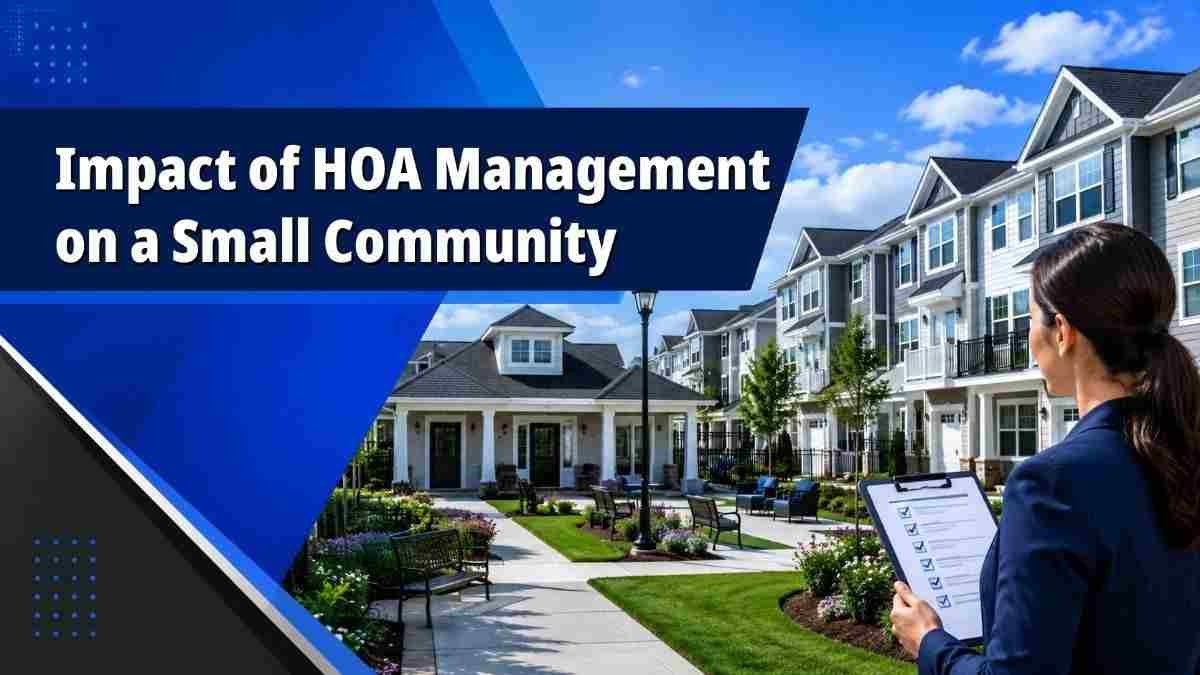
Management of smaller HOAs involves the same standards of financial responsibility, maintenance planning, and control as would be expected of bigger associations. It is just that there is less margin for error because of the small size of budgets and staff available in small HOAs. Proper management of small HOAs establishes the processes for assessment, vendor control, record-keeping, inspection, and board decision-making. At the same time, a systematic process of Small HOA Management ensures that the board takes care of the common assets of the HOA and keeps the members informed.
What Does Small HOA Management Include?
HOA management on a small scale refers to all ongoing management tasks that are necessary for maintaining financial health, maintenance and organization of a residential community. Governance is left up to the board, and management assistance can take care of or coordinate many of these everyday activities.
The scope generally includes:
- Financial Management: Preparing budgets, assessments, paying bills, preparing reports, and managing reserve funds.
- Maintenance Coordination: Inspections, work order management, maintenance, coordinating with vendors and repair management.
- Administrative Support: Meeting management, notices, record-keeping, communication with owners, and document management.
- Compliance Support: Managing governing documents, contracts, insurance needs, and state or local requirements.
These activities are interrelated in many ways. For instance, maintenance affects budgets and vendor contracts create administrative and financial obligations.
Financial Priorities for Small HOA Management
Financial controls should allow the board to have an accurate view of current cash flow as well as future liabilities. For a smaller organization, there could be substantial financial risk by setting assessments without taking into account insurance, operating expenses, deferred maintenance, and reserves.
An effective financial process for Small HOA Management typically includes:
Maintenance Planning and Vendor Oversight
Maintenance becomes easier once the association stops being in a reaction mode and implements a written maintenance plan. The maintenance plan must be clear on what the assets in the common area are, their inspection frequency, the vendors that perform inspections, and the priority of repairs that must be done.
Proper maintenance planning usually involves:
- Asset Inventory: Roof, paving, landscape, lighting, drainage, recreation space, and other association asset identification.
- Inspection Plan: Development of a periodic inspection program based on the state of the asset, manufacturer's instructions, and any other criteria.
- Work Order Management: Problem reporting, vendor assignment, and date of completion.
- Vendor Control: Inspection of the vendor’s insurance coverage, licensing, contract, pricing, and performance.
- Capital Planning: Matching capital repair to the available reserve fund and asset lifespan.
Administrative Systems for HOA Management for Small Communities
Administrative consistency will allow the association to function without relying on the recollection or files of any one board member. The centralized storage of information is also helpful during turnover periods for board members.
An efficient administrative system will maintain information regarding governance documents, contracts, insurance information, financial information, minutes from meetings, maintenance information, owner correspondence, and vendor correspondence. The process for meetings must be consistent with the governing documents and laws.
Record Keeping is especially crucial for HOA management for small communities because access requirements vary depending on the geographical area. For instance, the governing law of the condominium might require keeping detailed records of expenses and income and give owners the right of access with certain exceptions.
When Should an HOA Consider Professional Management?
The need for professional help arises when there is a growing amount of time spent by volunteer board members on routine administrative work. Professional HOA Management For Small Communities may also be required when finances and maintenance have become difficult to handle.
Such issues can manifest themselves through:
- Delayed or unclear financial reports
- Multiple reminder requirements for assessment collection
- Failure to monitor maintenance requests
- Unorganized vendor contracts and insurance certifications
- Board members engage in routine administrative work during their break from meetings
- Inadequate reserve planning not linked to maintenance requirements
- Miscommunication with homeowners
Final Thoughts
The success of Small HOA Management is linked to financial controls, maintenance, record-keeping, and proper governance processes of the board. Small communities also require oversight in these respects. Working with a professional management firm like Modern Community Management would make the task of coordinating all this much easier. At the same time, the board should retain its governance responsibilities. The best strategy links budgeting to reserve funding and maintenance planning. This structure improves accountability, reduces operational gaps, and helps the association protect shared property while providing residents with reliable community services.