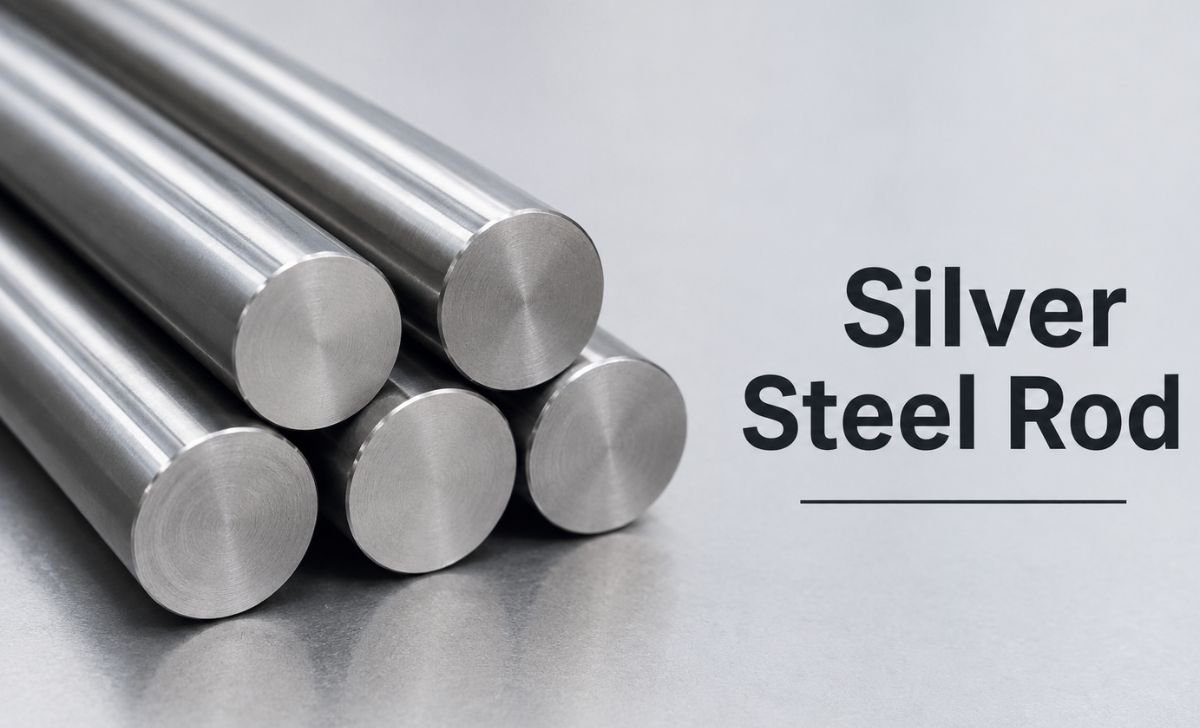
Silver steel rod for industrial tooling provides the dimensional accuracy and wear resistance needed for precision tooling and machine components. Poor early material choices eventually cause severe tool flexing, dimensional drift, and accelerated die wear. A Silver Steel Rod has earned a regular place in industrial tooling for exactly this reason. High carbon content gives it the hardness tooling demands, precision grinding delivers dimensional accuracy straight off the bar, and it machines cleanly before heat treatment while still taking a fine polished finish afterward. Choosing the right rod, though, comes down to more than picking the cheapest option on a supplier's list. This guide walks through the technical and operational factors that actually determine tooling performance.
Why Silver Steel Rod Is Preferred for Industrial Tooling
Silver steel is a high-carbon tool steel having about 1% carbon and tiny amounts of manganese and chromium. Precision honed and polished, its close tolerances permit direct use in bushings and fittings without further machine operations. When not hardened, the material turns and drills cleanly with little tool wear. It has excellent wear resistance for punches and dies, and can take a mirror polish for gauges and measuring tools after heat treatment.
Controlled mill sourcing provides uniform qualities from one batch to the next. Precision Ground Silver Steel is better than standard carbon steel for demanding industrial tooling projects. It offers ground accuracy with easy machinability and superior post-hardening finish.
Common Industrial Tooling Applications
Silver Steel Round Rods are essential in industrial tooling, offering excellent ground precision, predictable heat treatment, and reliable wear resistance.
Punches and Dies: High surface hardness helps punches and dies maintain sharp cutting edges during continuous stamping operations.
Reamers: Ground finish precision and wear resistance keep reamer dimensions accurate for tight, consistent hole sizing.
Gauges and Measuring Instruments: Smooth, polished stable surfaces ensure measuring instruments and gauges maintain accurate readings for many years.
Shafts, Pins, and Bushings: Combined straightness and high surface hardness prevent bending, reducing shaft vibration in fast rotating machinery.
Industrial Cutters and Machine Components: Hardened wear resistant surfaces allow industrial cutters and machine parts to run longer between maintenance.
Jigs, Fixtures, and Specialty Tooling: Predictable hardening and exact initial sizes suit jigs, fixtures, woodworking, automotive, and textile machinery tooling.
Key Factors to Consider When Selecting a Silver Steel Rod
Material quality
Certified raw material with consistent metallurgy matters more than price when tooling failure means downtime on a production line. Mill certificates confirming chemical composition give engineers a way to verify what they are actually buying before it goes into a critical component.
Diameter and tolerance
The correct diameter, matched to a tight tolerance band, determines whether a component fits directly into its housing or needs additional machining. Precision applications like gauge pins often demand tolerances within a few microns, which only ground bar stock can reliably hold.
Surface finish
A precision ground finish reduces the need for secondary polishing and gives a more consistent starting point for hardening operations, since surface irregularities can affect how evenly heat treatment penetrates the material.
Straightness
Rotating components and precision tooling both suffer if the rod carries even slight bow. Straightness tolerance should be checked against the specific application, particularly for shafts running at higher speeds.
Hardness requirements
Selecting between annealed and heat-treated condition depends on whether the component needs machining first. Annealed stock machines easily and gets hardened afterward, while pre-hardened rod suits applications where minimal further processing is planned.
Heat treatment capability
Quenching and tempering convert the rod's as-supplied hardness into the working hardness the application needs, and the supplier's guidance on recommended treatment temperatures helps avoid over- or under-hardening.
Machinability
Balancing ease of machining against final strength means choosing the right condition, annealed for heavy material removal, hardened for finishing operations where dimensional stability matters more.
Wear resistance
Expected operating conditions, whether abrasive contact or repeated cyclic loading, should guide the choice of hardness level and any additional surface treatment.
Availability
Standard sizes ship faster and cost less than custom diameters, so specifying a common size where the design allows speeds up procurement without compromising performance.
Heat Treatment and Performance Considerations
Delivered soft in an annealed state for easy machining, silver steel reaches high hardness through oil quenching at 780–800°C, followed by low-temperature tempering to relieve stress and reduce brittleness. This sequence improves wear resistance, surface hardness, and toughness to extend tool life significantly. Controlling thermal rates holds dimensional stability, whereas rushed quenching risks cracking or premature failure, particularly around drilled holes and sharp internal corners.
Choosing the Right Size and Specification
Component design dictates the starting point for size selection, since load requirements and required hardness both narrow down which diameter and treatment condition will hold up in service. Machining allowance needs factoring in as well; if a part requires substantial material removal after hardening, oversized stock avoids running out of tolerance.
Surface finish requirements, dimensional tolerance, and production volume all shape the final specification. High volume production often justifies custom sizing to minimize scrap, while lower volume work benefits from standard sizes already held in stock. Industry standards and precision requirements specific to the end application should guide the final call, and consulting technical specifications before purchasing helps avoid costly mismatches between what gets ordered and what the tooling actually needs.
Conclusion
Selecting the right Silver Steel Rod comes down to matching diameter, tolerance, and hardness condition to the specific demands of the tooling application, rather than defaulting to whatever is cheapest or most readily available. From punches and dies to gauges and precision shafts, this material delivers the dimensional accuracy and post-hardening wear resistance that industrial tooling depends on. Getting the heat treatment sequence right protects that investment further, extending service life and avoiding premature failure. Among established Silver Steel Rod supplier companies, Dhanlaxmi Steel supplies precision ground silver steel rod in standard and custom sizes for industrial tooling applications.
Tags : Silver Steel Rod