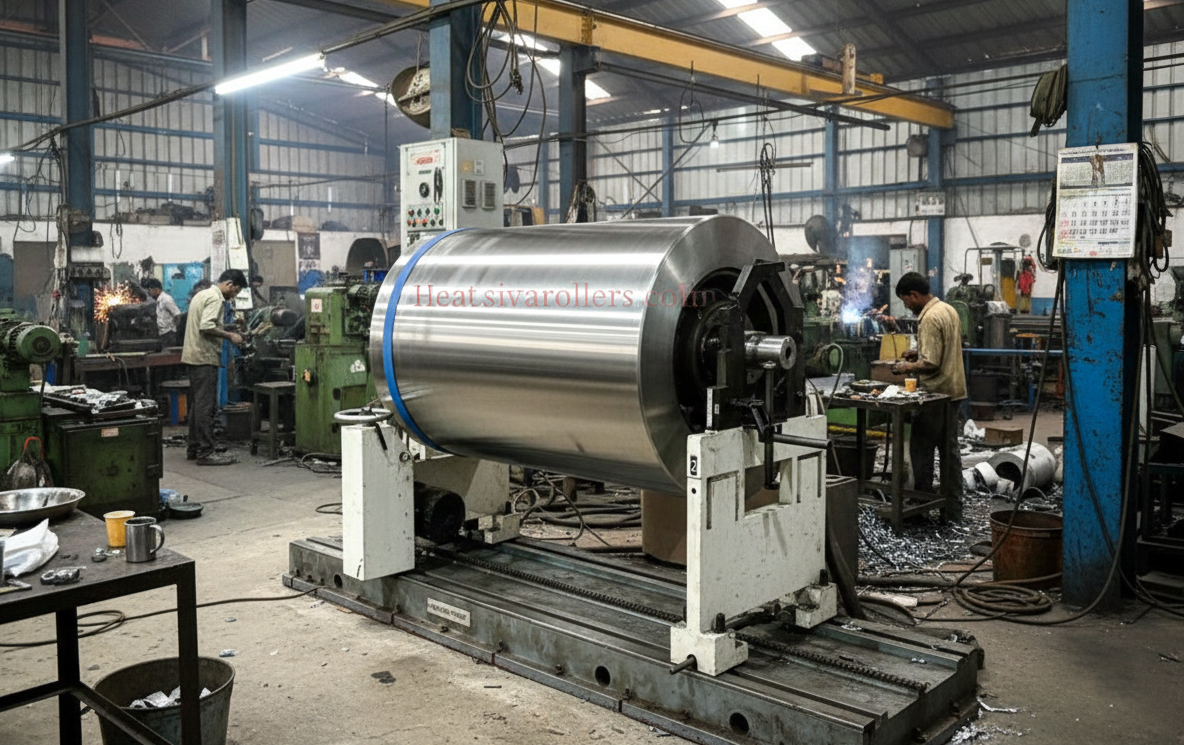
In modern industrial production, temperature control is not a luxury. It is a requirement. Whether you run a printing line, laminating plant, textile unit, plastic film process, or packaging machine, heat must be transferred evenly and precisely. This is where a Heat Transfer Roller becomes one of the most important components of your machine.
Many industries face problems like uneven heating, product defects, material sticking, energy loss, and frequent roller replacement. Most of these issues are not because of the machine. They happen because the wrong heat transfer roller is selected.
This guide will help you understand how to choose the correct Heat Transfer Roller in India for your industrial application and how the right selection improves quality, efficiency, and machine life.
What is a Heat Transfer Roller?
A Heat Transfer Roller is a specially designed roller that transfers heat uniformly across the surface of the material passing over it. These rollers are used in processes where controlled heating or cooling is required for bonding, drying, laminating, coating, or printing.
The roller is internally designed with channels for oil, steam, or hot water circulation to maintain a constant temperature across its surface.
Why Selecting the Right Heat Transfer Roller Matters
If the roller design does not match your process requirement, you may face:
- Uneven temperature distribution
- Poor bonding or lamination quality
- Wrinkles or bubbles in material
- High energy consumption
- Frequent machine downtime
- Reduced roller lifespan
Choosing the right Heat Transfer Roller Manufacturer ensures that the roller is engineered specifically for your machine speed, temperature range, and material type.
Key Factors to Consider When Selecting a Heat Transfer Roller
1. Temperature Requirement of Your Process
Different industries operate at different temperature ranges.
- Printing and packaging: moderate heat
- Laminating and coating: high, consistent heat
- Textile processing: controlled surface heating
- Plastic and film industries: precise temperature control
The roller must be designed to handle the required temperature without surface distortion.
2. Type of Heating Medium
Heat transfer rollers can use:
- Thermal oil circulation
- Steam heating
- Hot water circulation
The internal channel design of the roller depends on the heating medium used. A professional Heat Transfer Roller Manufacturer will design the roller based on this factor.
3. Surface Material and Coating
The outer surface of the roller plays a major role in performance.
- Hard chrome plating for durability
- Rubber or PU coating for grip and insulation
- Special coatings for anti-stick properties
The coating should match the material running on the machine.
4. Roller Diameter and Face Length
Incorrect dimensions lead to improper heat transfer and machine vibration. The roller size must be perfectly matched with:
- Machine width
- Web speed
- Material thickness
5. Uniform Heat Distribution Design
The internal drilling pattern or spiral channel design inside the roller ensures even heat distribution. Poor design causes hot spots and cold spots, which affect product quality.
This is why working with an experienced Heat Transfer Roller Manufacturer in India is important.
6. Operating Speed of the Machine
High-speed machines require rollers that can maintain surface temperature even at fast rotation. The internal design must support continuous heat flow without temperature drop.
Common Industrial Applications of Heat Transfer Rollers
Heat transfer rollers are widely used in:
- Printing and packaging machines
- Lamination plants
- Textile processing lines
- Paper and pulp industries
- Plastic film and sheet manufacturing
- Coating and drying systems
Each application requires a customized roller design for best results.
Benefits of Choosing the Right Heat Transfer Roller
When you select the correct roller for your machine, you get:
- Consistent product quality
- Energy-efficient heating
- Reduced material rejection
- Longer roller life
- Smooth machine performance
- Lower maintenance costs
- Stable production output
This directly improves your profitability and production reliability.
Why Work with an Expert Heat Transfer Roller Manufacturer
A standard roller from the market may not suit your exact process. A trusted Heat Transfer Roller Manufacturer studies:
- Your machine drawing
- Temperature range
- Line speed
- Material type
- Heating medium
Based on this, a customized roller is manufactured for your requirement.
Siva Rollers – Best Heat Transfer Roller Manufacturer & Supplier in India specializes in designing and supplying precision-engineered heat transfer rollers for various industrial machines. Their expertise ensures uniform heat transfer, durability, and process stability for long-term industrial use.
Signs You Are Using the Wrong Heat Transfer Roller
You may need to replace or redesign your roller if you notice:
- Uneven lamination or coating
- Material sticking to roller surface
- Frequent overheating issues
- Increased energy bills
- Vibration or noise in the machine
- Short roller life
These are clear indicators that your current Heat Transfer Roller is not suitable for your process.
Final Thoughts
Selecting the right Heat Transfer Roller is not just a purchase decision. It is a technical decision that directly affects your production quality, machine efficiency, and operating cost.
By choosing a reliable Heat Transfer Roller Manufacturer in India like Siva Rollers, you ensure that your roller is designed exactly for your industrial needs. The right roller improves heat control, reduces downtime, and delivers consistent output for years.
In industrial manufacturing, precision in small components creates big differences in results. A properly selected heat transfer roller is one of those critical components that keeps your production line running smoothly and efficiently.