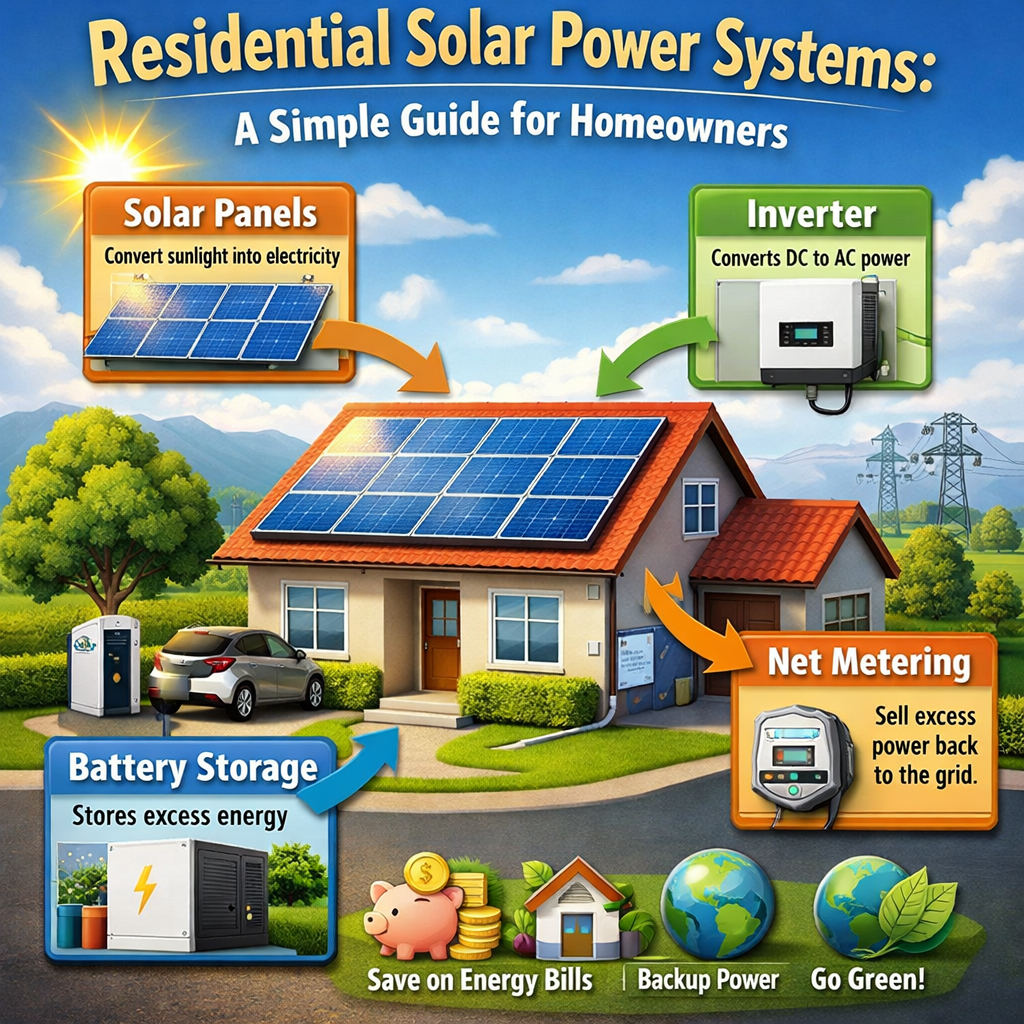
Solar power is becoming very popular for homes. Many homeowners are choosing solar energy to save money and protect the environment. A residential solar power system helps turn sunlight into electricity that your home can use every day.
What Is a Residential Solar Power System?
A residential solar power system is a setup that uses sunlight to make electricity for your home. It is usually installed on the roof of a house.
The main job of this system is to reduce your electricity bill and give clean energy to your home.
Sunlight is free, and solar panels use this sunlight to make power during the day.
How Does a Home Solar Power System Work?
A solar power system works in simple steps:
- Solar panels sit on your roof and catch sunlight.
- The panels turn sunlight into electricity.
- An inverter changes this electricity into usable power for your home.
- Your home uses this power to run lights, fans, TV, and other appliances.
- Extra power may go to the grid or a battery, depending on the system type.
This process happens quietly and safely.
Main Parts of a Residential Solar Power System
Every home solar system has a few important parts.
Solar Panels
Solar panels collect sunlight and turn it into electricity. They are usually black or blue and placed on rooftops.
Inverter
The inverter changes the electricity from the panels into a form your home can use.
Mounting Structure
This holds the solar panels firmly on your roof.
Electric Meter
The meter measures how much electricity you use and produce.
Battery (Optional)
A battery stores extra electricity for use at night or during power cuts.
Types of Residential Solar Power Systems
There are three main types of solar power systems for homes.
On-Grid Solar Power System
This system is connected to the main electricity grid.
- No battery needed
- Lower cost
- Saves money on electricity bills
- Does not work during power cuts
Off-Grid Solar Power System
This system is not connected to the grid.
- Uses batteries
- Works during power cuts
- Higher cost
- Good for remote areas
Hybrid Solar Power System
This system combines both grid and battery.
- Works during power cuts
- Stores extra power
- More expensive
- Best for homes with frequent outages
Benefits of Residential Solar Power Systems
Solar energy offers many benefits for homeowners.
Lower Electricity Bills
Solar panels reduce the amount of electricity you buy from the grid.
Clean and Green Energy
Solar power does not cause pollution. It helps protect the environment.
Energy Independence
You depend less on power companies.
Low Maintenance
Solar systems need very little maintenance.
Increases Home Value
Homes with solar systems often sell at higher prices.
How Much Does a Home Solar Power System Cost?
The cost of a residential solar power system depends on several factors.
- System size
- Type of system
- Brand of panels and inverter
- Installation cost
A small home system costs less, while larger systems cost more. Although the starting cost may feel high, solar systems save money over time.
Many governments also offer subsidies and tax benefits.
How Much Power Does a Home Need?
The power your home needs depends on:
- Number of people in the house
- Number of appliances
- Daily electricity use
A small home may need a 1 kW or 2 kW system. Larger homes may need 5 kW or more.
A solar expert can help you choose the right size.
Where Are Solar Panels Installed?
Solar panels are usually installed on:
- Rooftops
- Open terraces
- Ground spaces
The best place is where panels get maximum sunlight during the day.
Panels should not be shaded by trees or buildings.
Is Solar Power Safe for Homes?
Yes, solar power is very safe.
- Panels are tested for strong weather
- No noise
- No harmful gases
- Very low risk of fire
When installed by professionals, solar systems work safely for many years.
How Long Do Solar Panels Last?
Most solar panels last 25 years or more.
Inverters may need replacement after 8 to 12 years.
With basic cleaning and checks, your system will work well for a long time.
Maintenance of Residential Solar Power Systems
Solar systems need very little care.
- Clean panels every few weeks
- Check wiring once a year
- Keep panels free from dust and leaves
Regular cleaning helps panels produce more electricity.
Can Solar Power Work on Cloudy Days?
Yes, solar panels still work on cloudy days.
However, they produce less power compared to sunny days.
Batteries or grid connection help during low sunlight.
Is Residential Solar Power Worth It?
Yes, solar power is worth it for most homeowners.
- Saves money
- Reduces power cuts problems
- Helps the environment
- Increases property value
Over time, the savings are much more than the cost.
Step-by-Step Process to Install a Home Solar System
- Check your electricity needs
- Inspect your roof
- Choose the right system type
- Select a trusted solar installer
- Get approvals if needed
- Install panels and inverter
- Start using solar power
The whole process usually takes a few days.
Common Myths About Residential Solar Power
Solar Is Too Expensive
Solar saves money in the long run.
Solar Needs Too Much Space
Modern panels fit easily on rooftops.
Solar Does Not Work in Rainy Areas
Solar works even with less sunlight.
Conclusion
Residential solar power systems are a smart and clean choice for homeowners. They use sunlight to make electricity, reduce electricity bills, and protect the environment. With simple maintenance and long life, solar power is a great investment for your home.
If you want lower bills and a brighter future, solar energy is the right choice.
Tags : .....