Introduction
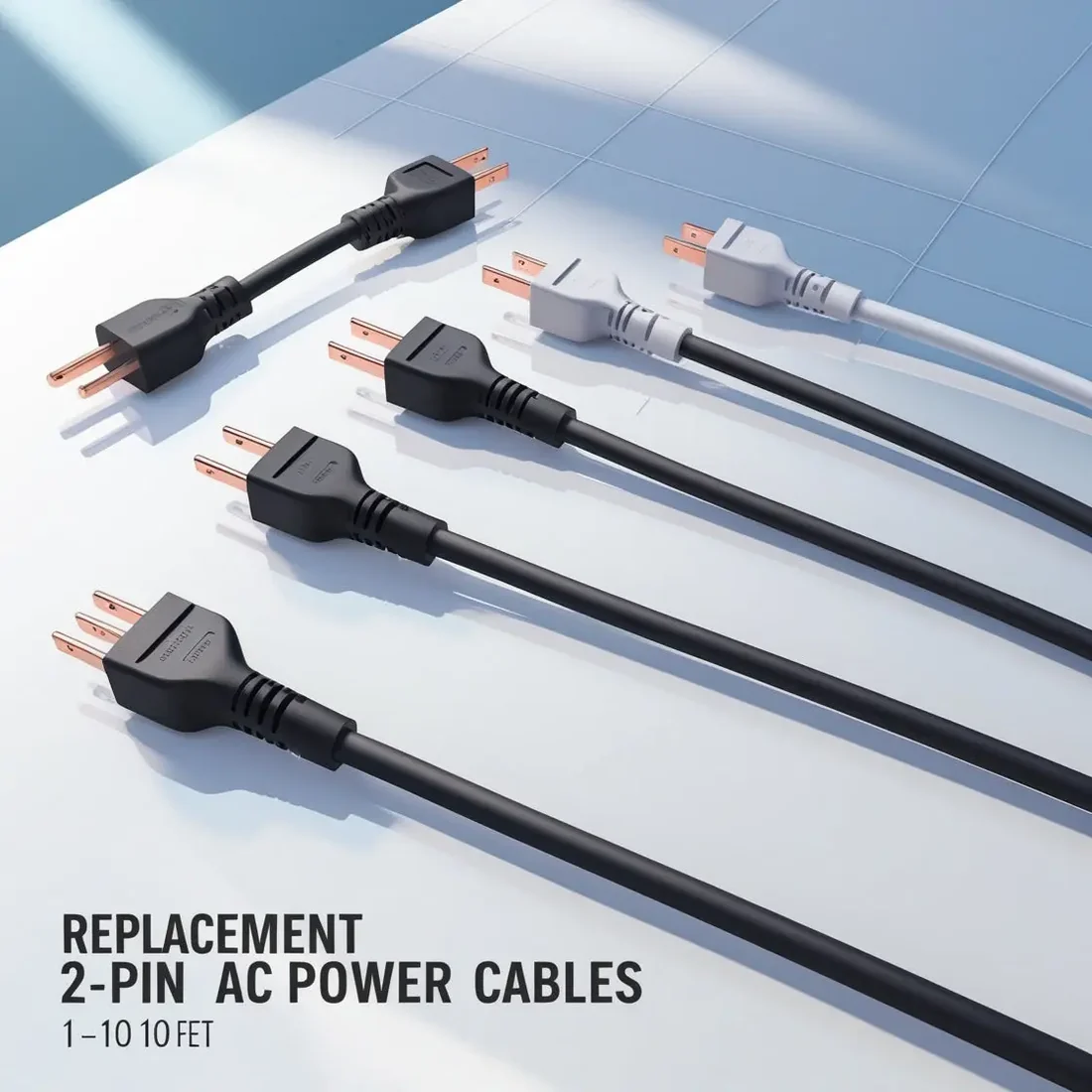
Choosing the right power cable is important for maintaining a safe and reliable connection between your electronic device and power source. Among the different options available, a 2-pin L-shaped power cable offers a practical solution for devices installed in compact or space-constrained areas.
The angled connector can help keep the cable closer to walls, furniture, and equipment while reducing unnecessary bending near the connection point. Available in different lengths, these replacement cables can be useful for home, office, entertainment, and other compatible electrical setups.
In this guide, we'll explore the benefits, available lengths, applications, and important factors to consider when choosing a replacement AC power cable.
What Are Replacement AC Power Cables?
Replacement AC power cables are designed to provide a connection between compatible electronic equipment and an AC power source. They can be used when an original cable is damaged, worn out, misplaced, or when a different cable length is required for a particular setup.
These cables are available in different connector configurations, cable lengths, and designs. Selecting the correct replacement is important because the connector type, electrical specifications, cable construction, and device compatibility should match the intended application.
A properly selected power cable can help maintain a dependable connection while keeping your workspace or entertainment setup organized.
Why Choose a 2-Pin L-Shaped Design?
A 2-pin L-shaped power cable has an angled connector that changes the direction in which the cable exits the plug. This simple design can provide several practical benefits.
How Does an L-Shaped Connector Save Space?
The angled connector allows the cable to run closer to a wall or the back of equipment. This can be particularly useful when a device is positioned close to furniture or another surface.
Instead of extending straight outward from the equipment, the cable can follow a more compact path, helping reduce unnecessary cable loops and clutter.
Can an L-Shaped Design Reduce Cable Stress?
A suitable angled connector can help create a more natural cable path instead of forcing the cable into a sharp bend immediately after the connection point.
Reducing excessive bending can help minimize mechanical stress on the cable and connector during regular use. However, the cable should still be installed without excessive pulling, twisting, or bending.
Does the Design Improve Cable Management?
Yes. The angled profile can make it easier to route the cable along walls, furniture edges, or behind equipment.
This can result in a cleaner-looking installation, especially around televisions, monitors, office equipment, and entertainment systems.
What Cable Length Should You Choose?
Selecting the correct cable length is just as important as choosing the correct connector design. Replacement AC power cables are commonly available in multiple lengths to suit different installation requirements.
Before purchasing, measure the approximate distance between the device and the power outlet.
When Is a Shorter Cable Better?
A shorter cable can be useful when the device is positioned close to the power outlet. It helps reduce excess cable that may otherwise need to be bundled or stored.
Shorter cables can be particularly useful for:
- Desktop equipment
- Monitors
- Television setups
- Office devices
- Compact workspaces
When Should You Choose a Longer Cable?
A longer cable may be more suitable when the equipment is positioned farther away from the power outlet.
However, avoid choosing a cable that is unnecessarily long. Excess cable can create clutter and may increase the possibility of accidental pulling or tripping in some environments.
The best approach is to choose a length that comfortably reaches the outlet without excessive slack.
What Should You Check Before Buying a Replacement AC Power Cable?
Before purchasing a replacement cable, several specifications should be checked carefully.
Is the Connector Compatible With Your Device?
First, confirm that the connector type matches the power input on your equipment. A cable should never be forced into an incompatible socket.
Does the Cable Meet the Required Electrical Specifications?
Check the voltage, current rating, frequency, and other electrical specifications applicable to your device and region.
The replacement cable should be suitable for the equipment's requirements.
Is the Cable Length Suitable?
Measure the distance between the equipment and the intended power outlet. Select a length that provides enough reach while avoiding excessive slack.
Is the Cable Properly Certified?
For electrical products, look for appropriate safety certifications and compliance information relevant to your market. This can help you make a more informed purchasing decision.
Where Can 2-Pin L-Shaped Power Cables Be Used?
The versatility of angled power cables makes them useful across a variety of compatible setups.
Can They Be Used With Home Electronics?
Compatible home electronics may benefit from an angled cable when the equipment is positioned close to a wall or furniture.
For example, they can be useful in certain television, audio, entertainment, and other compatible electronic setups.
Always verify the device's connector and electrical requirements before use.
Are They Useful for Office Equipment?
Office equipment often sits close to desks, walls, or cable-management channels. An angled power connection can make routing easier and help keep cables organized.
Depending on compatibility, they may be useful for equipment such as monitors, printers, desktop accessories, and other electronics.
Can They Be Used in Entertainment Setups?
Home entertainment systems often involve several cables running behind televisions, consoles, speakers, and other equipment.
An L-shaped connector can help route the power cable more neatly and reduce the amount of space required behind equipment.
How Does Cable Quality Affect Long-Term Performance?
Cable construction plays an important role in reliable everyday use. A replacement power cable should be made using suitable materials and designed for its intended electrical application.
Look for features such as:
- Durable outer insulation
- Secure connector construction
- Appropriate conductor specifications
- Reliable strain relief
- Suitable electrical ratings
- Proper safety compliance
A cable that is poorly constructed or incorrectly specified may not provide the reliability expected from a replacement power connection.
How Can You Keep a Replacement Power Cable Safe?
Proper handling and installation are important for any electrical cable.
Avoid placing the cable under heavy furniture, exposing it to excessive heat, sharply bending it, or repeatedly pulling it from the cord itself.
When disconnecting the cable, hold the plug rather than pulling directly on the wire. Inspect the cable periodically for visible damage, cuts, exposed conductors, or loose connectors.
If a cable shows signs of significant damage, discontinue use and replace it with an appropriate compatible cable.
What Are the Benefits of Choosing Different Cable Lengths?
Having multiple length options provides flexibility for different installation environments.
For example, a compact workspace may require a shorter cable, while equipment positioned farther from the outlet may require additional reach.
Different lengths can help users:
- Reduce cable clutter
- Improve workspace organization
- Simplify equipment placement
- Avoid unnecessary cable loops
- Create cleaner entertainment setups
- Adapt cables to changing layouts
Choosing the correct length can make a noticeable difference in both convenience and cable management.
What Makes a Good Replacement AC Power Cable?
A good replacement cable should offer the correct combination of compatibility, electrical specifications, construction quality, connector design, and suitable length.
The appearance of a cable is less important than whether it is properly matched to the intended device and application.
Before buying, consider:
Connector Type: Confirm that it matches the device's power input.
Electrical Rating: Check voltage and current requirements.
Cable Length: Select a length appropriate for the installation.
Cable Construction: Look for durable insulation and secure connectors.
Safety Compliance: Check relevant certification and compliance information.
Application: Make sure the cable is designed for the intended equipment and environment.
Conclusion
Choosing the right replacement AC power cable can make your electronic setup safer, cleaner, and more convenient. A 2-pin L-shaped design is particularly useful where space is limited or where the cable needs to be routed close to walls and equipment.
The angled connector can help with cable management and reduce unnecessary bending near the connection point, while different length options allow users to select a cable that suits their particular setup.
Before purchasing, always verify connector compatibility, electrical specifications, cable length, construction quality, and applicable safety requirements. With the right replacement cable, compatible electronics can be connected conveniently while maintaining a neat and organized installation.