Precision Tooling & Precision Stampings: Trends & Innovations in India
By Shekhar Chaudhary 19-05-2026 125
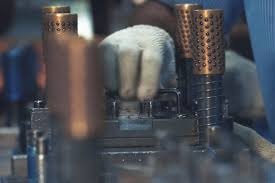
Industrial automation, cutting-edge engineering, and high demand for high-quality components from around the world are bringing about a contemporary change in the manufacturing sector of India. Precision tool manufacturing is playing an increasingly more important role in the midst of this transformation. In industries as varied as automotive, aerospace, electronics, industrial engineering, and many others, more and more employers are turning to high-tech tooling and precision manufacturing methods to ensure quality, efficiency, and competitiveness.
Innovation in engineering and manufacturing technologies is a necessary condition for delivering world-class engineering solutions by companies like Eigen Engineering. Precision stamping and progressive tooling systems are helping manufacturers in India to cater to the high specifications being demanded in the domestic and international markets.
Indian manufacturers are responding to the high specifications demanded in the domestic and international markets with the help of precision stamping and progressive tooling systems.
Growing Demand for Precision Tool Solutions
The manufacturing industry is one of the sectors that has seen tremendous growth in India in the last ten years.
- Tight tolerances, durability and faster production cycles are the requirements that industries have today for higher accuracy. There is a need for more advanced precision tools to meet the demand for higher-level precision tooling that can be used to complete many manufacturing processes.
- High-speed tooling systems and close-tolerance manufacturing are essential to numerous sectors, including several with a high reliance base, such as the automotive, electronics, defence, aerospace and consumer appliances sectors. Therefore, modern equipment like automation, CNC-based machines, and smart production technologies are making Indian manufacturers heavily look forward to high operational efficiency and a reduced manufacturing error rate.
- Another key factor driving investments in engineering infrastructure and tooling has been the government's thrust towards building industrial infrastructure and ‘Make in India' initiatives. This has made India a new precision manufacturing and advanced engineering solutions hub for the world.
Advancements in Precision Stampings
Nowadays, precision stampings parts have changed the way in which metal parts are produced. Today, manufacturers use progressive die technology and advanced stamping equipment to produce highly complex metal components with a large degree of consistency and accuracy.
1. High-speed progressive tooling enables manufacturers to create complex parts in high volumes with high consistency and quality. This would be a very advantageous technology for industries that need structural components that are lightweight yet extremely sturdy, and there is a specified value for their dimension.
2. Companies that can tool should be able to design and make customised dies that can be used for multi-stage production.
3. Using sophisticated tooling profiles (with many stages) allows you to manufacture complex parts efficiently and cost-effectively, with minimal production waste and short lead times.
Furthermore, the precision stamping process has come a long way to make stamping lighter gage and thicker gage materials possible, thereby meeting the needs of different industrial production fields.
Innovation Through Automation and Smart Manufacturing
One of the most prominent trends in the precision tool industry in India presently is automation.
- Robots and AI-based quality control systems, as well as digitally controlled production lines, have been adopted by manufacturers to enhance accuracy and productivity.
- Smart manufacturing technologies keep track of the performance of the tooling, minimise downtime and guarantee the high quality of the production.
- Automated inspection also improves quality control by spotting defects when the product is being made.
- The other innovation that has a huge value to it is bringing in all the tooling, moulding, plating and assembling under one manufacturing environment. This allows manufacturers to offer an end-to-end engineering solution by manufacturers, as well as optimise the supply chain.
This total solution is available to global customers as a cost-efficient, reliable and shorter production time solution.
Challenges in the Precision Tool Industry
There are many challenges that the industry faces, although there is a lot of growth. Variability in raw material prices, such as steel, affects manufacturing prices. Also, the rising demand for micro components and complex components requires high precision and high-level processing.
Miniaturisation in the electronic and engineering fields is also on the rise, with an increasing demand for the manufacturing of very fine components with very close tolerances. This is achieved with the use of a sophisticated tooling system.
To stay ahead of the game, manufacturers must consistently invest in technology upgrades, in the training of their employees and in lean manufacturing techniques.
Future of Precision Manufacturing in India
The outlook for India's future in precision engineering is very promising. Further growth is anticipated to occur in various industries as the use of automation, digital manufacturing and advanced precision stamping technologies continues to grow.
Companies that attend to the care of their products and technical aspects while consistently innovating will reconfirm their competitive standing in international markets. The advanced tools, stamping, moulding and assembly solutions that companies such as Eigen Engineering are providing are playing a huge role in this change, with the industry marching forward.
With the future of India's modern manufacturing moving forward, every role of every innovative precision tool will continue to be important in the future in shaping the trends of modern manufacturing in India.