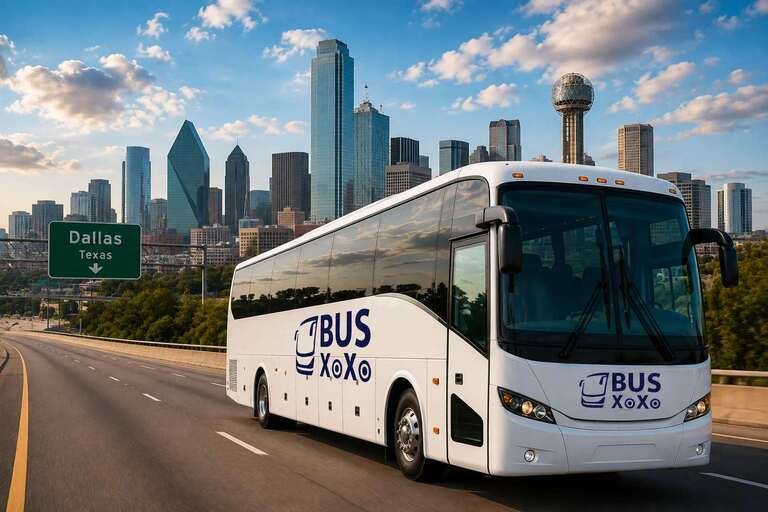
Sports trips require more planning than ordinary group outings because teams often travel with equipment, uniforms, coaches, and support staff. Games and tournaments also have fixed start times, making punctual transportation especially important. Organized Dallas group transportation can help teams, school groups, fan organizations, and sports clubs travel together between hotels, stadiums, practice facilities, restaurants, and other destinations. A 56-passenger charter bus can be useful for larger sports groups, but the transportation plan should account for more than the number of seats.
Determine the Full Team Size
Start by counting everyone who will travel. The passenger list may include athletes, coaches, trainers, managers, staff, chaperones, and other team members. Don't assume that the number of players represents the complete group. For tournaments, also determine whether the group will remain the same throughout the trip or whether additional people may join at different stages.
Account for Sports Equipment
Sports equipment can take up significant storage space. Depending on the sport, teams may travel with equipment bags, uniforms, coolers, training supplies, protective gear, and other items.
Provide accurate information about equipment when arranging transportation. A vehicle that comfortably accommodates passengers may not necessarily provide enough practical storage for an entire team's gear.
Build a Complete Sports Itinerary
A sports trip may include much more than the game itself. Create an itinerary that includes:
- Hotel
- Stadium or arena
- Practice facility
- Training location
- Restaurants
- Team meetings
- Tournament venues
- Airport
- Return destinations
Plan Around Game Times
Game times are fixed, so transportation should be scheduled backward from the start of the competition. Allow enough time for traffic, parking, unloading equipment, changing clothes, warm-ups, and pre-game activities.
For an important tournament, arriving early can be much more valuable than attempting to arrive immediately before the game. A transportation schedule with no buffer leaves little room for unexpected delays.
Coordinate Hotel Transportation
Teams traveling from outside Dallas may stay at hotels for several days. Transportation may be required between the hotel and the stadium, practice facility, restaurant, or other destination.
Create a daily schedule rather than assuming every day will follow the same route. Practice times, game times, and meal arrangements can change throughout a tournament.
Plan Meal Stops
Athletes may need meals at specific times, particularly during long tournament days. If the team is traveling between multiple venues, include meal stops in the transportation itinerary. Choose locations that can accommodate the entire group and are practical for the vehicle to access. Allow enough time for everyone to eat without affecting the next scheduled activity.
Consider Fan and School Groups
Charter bus transportation isn't limited to teams. Schools may organize transportation for students attending competitions, while fan groups may travel together to major games. Keeping a large group together can simplify attendance and reduce the need for numerous individual vehicles. Organizers should establish clear pickup locations and departure times.
Consider Passenger Comfort
Sports trips can involve several hours of travel. Players and staff may appreciate comfortable seating, climate control, storage, Wi-Fi, power outlets, and other available amenities during longer journeys. After a competition, athletes may especially value having a comfortable transportation environment during the return journey.
Plan for Dallas Traffic
Traffic should be part of every game-day transportation schedule. Dallas-area travel times can vary depending on commuting periods, construction, accidents, and major events. Large sporting events can also create congestion around stadiums and arenas. If the group is attending a major event, allow additional time for traffic and venue access.
Organize Equipment Loading
Equipment should be organized before departure. Assign responsibility for making sure bags and gear are loaded and unloaded at every stop. This can prevent equipment from being left behind at a hotel, practice facility, or restaurant. A simple checklist can be useful for larger teams.
Create a Return Transportation Plan
Don't focus only on getting to the game. Determine how the team will return to its hotel or home destination after the event. If the competition runs late, update the schedule accordingly. For multi-day tournaments, transportation should be planned for every day rather than only the opening game.
Review the Schedule Before Departure
Before the trip begins, confirm the passenger count, equipment requirements, hotel information, venue addresses, game times, practice schedules, meal stops, and return arrangements. Make sure coaches, team managers, and transportation coordinators have access to the same information.
Make Sports Travel More Organized
A 56-passenger charter bus can be a useful option for large sports groups that need to travel together. The benefits depend on proper planning. Organizers should consider passenger numbers, equipment, game schedules, hotel locations, traffic, meals, and return transportation. By creating a detailed itinerary and communicating it clearly to players, coaches, staff, and passengers, sports organizations can reduce transportation-related distractions and focus more attention on the competition.