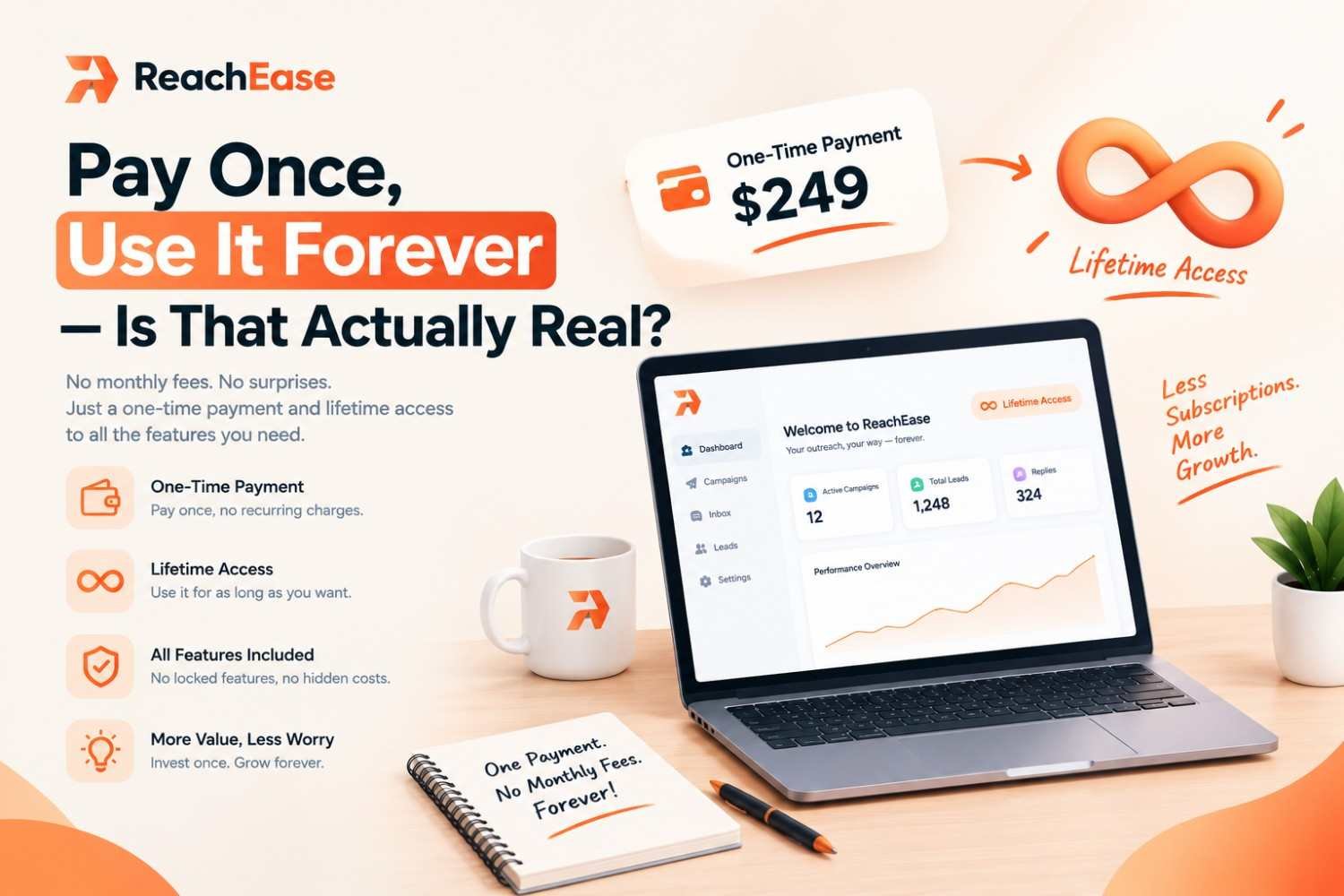
Mostly, yes — but with an important nuance worth understanding before trusting any specific offer: a genuine one-time payment typically covers the software license itself for good, though the honest version of a linkedin automation lifetime deal usually still involves a small, separate, ongoing cost tied to actually running connected accounts. "Forever" applies to the license. It doesn't always mean zero cost of any kind, ever, and any offer implying that deserves a closer look.
If this phrase has made you suspicious before — and it's reasonable to be, given how the term "lifetime deal" has been used loosely in software marketing — the skepticism is warranted, but the concept itself isn't inherently a scam.
Why "lifetime deal" earned a bad reputation
The phrase became associated with low-quality, often abandoned software promising unlimited access for a one-time fee, only for the product to get discontinued, sold off, or quietly stop receiving updates within a year or two. That history is legitimate and worth remembering — plenty of "lifetime" offers turned out to be short-lived in practice, which is exactly why healthy skepticism toward this kind of claim makes sense rather than being overly cautious.
What actually makes an offer like this legitimate
A genuine one-time payment model has a few honest characteristics that separate it from the pattern that gave the term its bad reputation:
- A clear explanation of what "forever" actually covers — typically the software license and its features, not necessarily every possible future cost.
- Transparency about any ongoing costs, even small ones, rather than implying the total cost is zero after the initial payment.
- A business model that can plausibly sustain itself — if a company is selling access with no ongoing revenue and no way to fund continued development, the "forever" part becomes questionable regardless of intent.
The part that usually gets left out of the pitch
Here's the honest complication: software that runs outreach through connected LinkedIn accounts generally requires some ongoing infrastructure — systems that keep those connections functioning and active. A truly transparent offer separates this from the software license clearly: pay once for the license, and pay a small, disclosed, ongoing amount specifically for that infrastructure. This isn't a loophole or a trick — it's simply an honest acknowledgment that running connected software involves some continuous operational cost, distinct from the value of the license itself.
Why this distinction matters for trusting an offer
An offer that's upfront about this two-part structure — one-time license, small ongoing infrastructure cost — is being honest about how the economics actually work. An offer claiming truly zero cost of any kind after a single payment, with no explanation of how ongoing infrastructure gets funded, is the kind of claim that historically hasn't held up. The presence of a small disclosed fee isn't a red flag by itself; the absence of any explanation is.
Does "forever" really mean forever, or just "a long time"?
In practice, "forever" generally means for as long as the company offering it continues to operate and support the software — which is true of essentially any software purchase, subscription or otherwise. No software company can guarantee literal, permanent existence. What a legitimate one-time offer can reasonably promise is that the license itself doesn't expire or require renewal as long as the product continues to exist, which is a meaningfully different commitment than a subscription that requires payment indefinitely just to maintain access at all.
How this actually plays out financially over time
Even with a small ongoing infrastructure cost included, the total spend on a genuine one-time model tends to fall well below an equivalent multi-year subscription once enough time passes — the license fee gets paid once, while a subscription's monthly charges keep accumulating indefinitely. The crossover point depends on the specific numbers, but the general shape of the comparison tends to favor the one-time model for anyone planning sustained use.
The bottom line
"Pay once, use it forever" is real in a meaningful, honest sense — but the accurate version includes a footnote most marketing leaves out: the software license itself doesn't require renewal, while a small, disclosed infrastructure cost may still apply for actually running connected accounts. A trustworthy linkedin automation lifetime deal is one that's upfront about this distinction rather than implying the total cost disappears entirely after one payment.
Frequently asked questions
Why did "lifetime deal" become a term people distrust? Because many past offers using this phrase were tied to low-quality software that got abandoned or discontinued shortly after launch, leaving buyers without the promised long-term access.
Does a legitimate one-time payment mean zero ongoing costs ever? Not always. Software connecting to live accounts typically requires some small ongoing infrastructure cost, which honest offers disclose clearly rather than hiding.
How can you tell if a lifetime deal is trustworthy? Look for transparency about any ongoing costs, a clear explanation of what the one-time payment actually covers, and a business model that can plausibly sustain continued support.
Is a one-time payment always the cheaper option long-term? Generally yes, for sustained use over multiple years, since subscription costs accumulate indefinitely while a one-time license fee is paid just once.