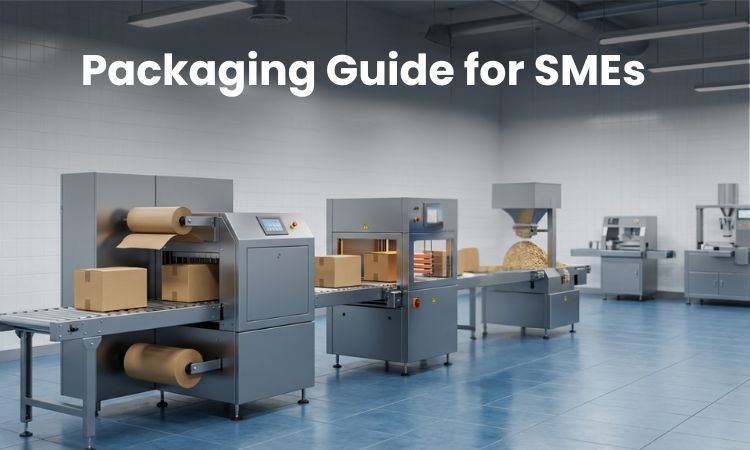
For small and medium enterprises (SMEs), packaging is far more than just a protective layer it is a strategic business decision that affects cost efficiency, product safety, brand perception, and customer satisfaction. Choosing the right packaging solutions can help SMEs scale smoothly, reduce operational losses, and compete with larger players in the market.
This Packaging Buying Guide for SMEs is designed to simplify the decision-making process. Whether you are a manufacturer, distributor, or e-commerce seller, this guide will help you understand packaging requirements, evaluate machinery options, and invest wisely—especially in the context of the packaging buying guide India market.
Understanding Your Packaging Needs as an SME
Before investing in any packaging solution or machine, SMEs must clearly define their requirements. Packaging needs vary significantly depending on the product type, industry, and distribution model.
Key questions to ask include:
- What type of product are you packaging—fragile, liquid, perishable, or heavy?
- What is your current production volume, and how fast do you expect it to grow?
- Will the packaging be used for storage, transportation, retail display, or all three?
Having clarity on these factors ensures you choose packaging solutions that align with both present needs and future expansion plans.
Importance of the Right Packaging for SMEs
Effective packaging directly impacts business performance. Poor packaging can lead to product damage, increased returns, and loss of customer trust. On the other hand, smart packaging solutions offer multiple advantages:
- Reduced material wastage and operational costs
- Improved product safety during transit
- Faster packing processes and better productivity
- Consistent and professional brand presentation
This is why investing time in a structured Packaging Machines Buying Guide for Small Businesses is essential rather than making ad-hoc purchases.
Types of Packaging Solutions for Small and Medium Enterprises
SMEs today have access to a wide range of packaging technologies that were once limited to large-scale industries. Selecting the right category depends on your logistics flow and product nature.
1. Wrapping Solutions
Wrapping machines are widely used to secure products and bundles during transportation and storage. Depending on your packaging style, you may consider options such as Stretch Wrapping Machines for flexible load stabilization or Shrink Wrapping Machines for tightly sealed and tamper-evident packaging.
2. Strapping Solutions
For heavier cartons, boxes, or palletized loads, Strapping Machines provide added strength and stability. These machines are especially useful for SMEs dealing with bulk shipments or industrial goods.
3. Pallet Packaging
As businesses scale, pallet-based logistics become common.Pallet Wrapping Machines help ensure uniform wrapping, improved load security, and reduced manual labor making them a valuable long-term investment.
Manual vs Semi-Automatic vs Automatic Machines
A crucial part of any Packaging Buying Guide for SMEs is understanding automation levels.
- Manual packaging is suitable for very small operations with low daily volumes.
- Semi-automatic machines offer a balance between cost and efficiency, ideal for growing SMEs.
- Automatic packaging machines are best for high-volume operations aiming for speed, consistency, and minimal manpower dependency.
Choosing the right level of automation helps optimize costs without overburdening your budget.
Budget Planning and ROI Considerations
Cost is often the biggest concern for SMEs. While it may be tempting to choose the cheapest option, it is important to evaluate long-term value.
Consider:
- Initial machine cost vs operational savings
- Maintenance requirements and spare part availability
- Energy consumption and labor reduction
A well-chosen packaging solution usually pays for itself over time through reduced damage, faster dispatches, and improved efficiency making ROI a key factor in any Packaging Solutions for Small and Medium Enterprises decision.
Compliance, Quality, and Scalability
In the Indian market, packaging must often meet industry standards and regulatory norms, especially in sectors like food, pharmaceuticals, and exports. When following a packaging buying guide India, ensure that machines and materials comply with local regulations.
Equally important is scalability. The packaging solution you choose today should be capable of handling increased volumes tomorrow, without requiring a complete system overhaul.
Common Mistakes SMEs Should Avoid
Many SMEs make avoidable errors when buying packaging equipment, such as:
- Overinvesting in advanced machines without sufficient volume
- Ignoring after-sales service and technical support
- Choosing machines that cannot adapt to different product sizes
Avoiding these mistakes can save significant costs and operational headaches in the long run.
Final Thoughts: Making the Right Packaging Investment
Packaging is a growth enabler for SMEs, not just a cost center. By understanding your needs, evaluating machine types, and planning for scalability, you can make informed decisions that support both efficiency and brand value.
This Packaging Buying Guide for SMEs serves as a roadmap to help small and medium enterprises choose practical, future-ready packaging solutions. With the right approach, packaging can become a competitive advantage driving smoother operations, safer deliveries, and stronger customer trust.
Invest wisely, plan ahead, and let your packaging work as hard as your business does.
Tags : Packaging guide SME