Data is among the most valuable assets of modern businesses. Every customer interaction, online purchase, website visit and business transaction provides valuable information that can help organisations make better decisions. As technology evolves, companies are leveraging sophisticated analytics to drive efficiency, improve customer experience, and stay competitive.
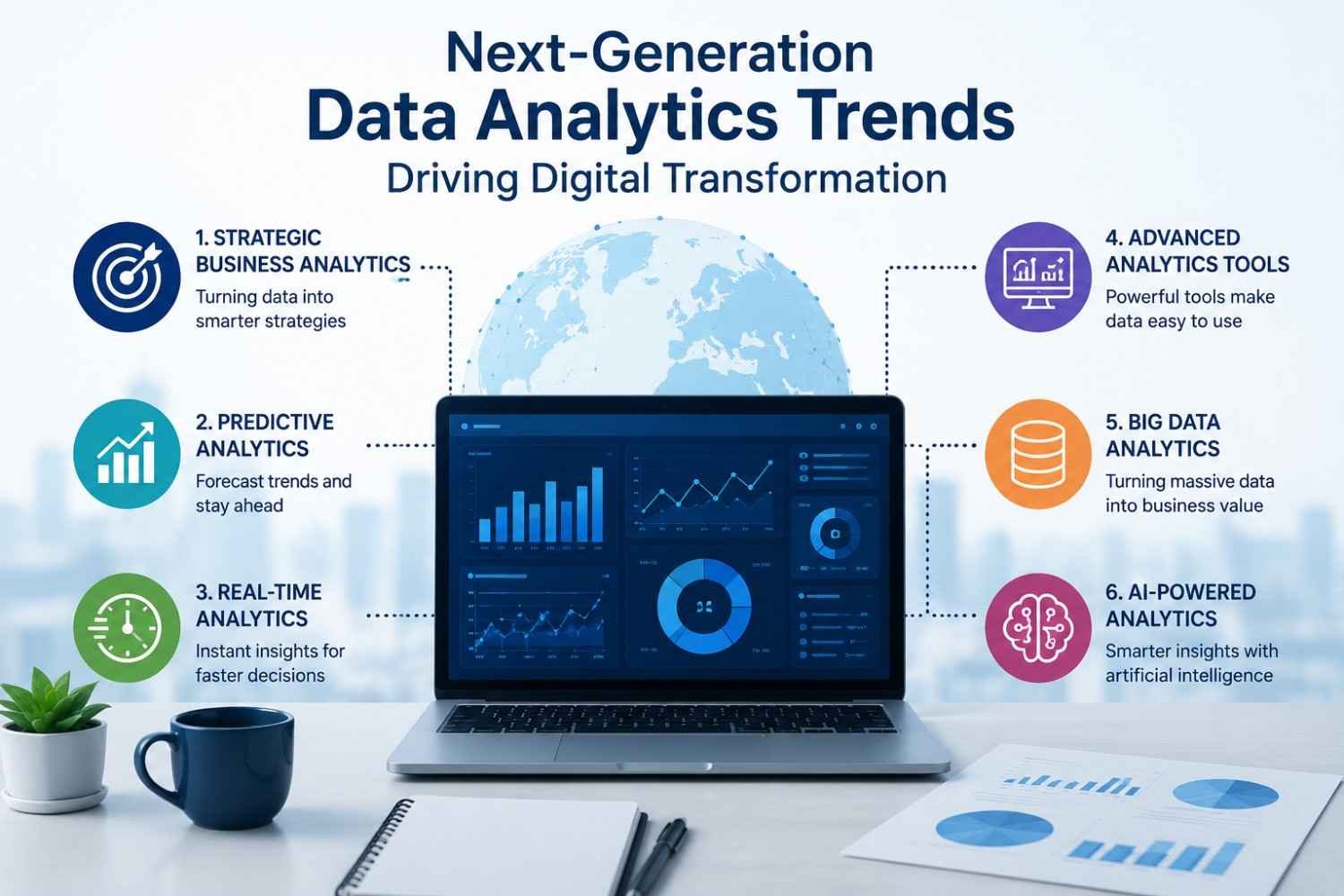
In 2026, multiple next-generation data analytics trends are driving digital transformation in industries. These are the trends to know if you care about technology or business.
1. Business Analytics Becomes More Strategic
Nowadays, business analytics is more than just generating reports. Organisations are using analytics to understand customer behaviour better, improve their operations, identify new opportunities and make better business decisions.
Instead of guessing, companies are using data to plan strategies, reduce risks and improve overall performance. This has made business analytics an important part of digital transformation.
2. Businesses Using Predictive Analytics to Plan Ahead
One of the fastest growing trends is predictive analytics. Companies are not just looking at historical data, but applying advanced algorithms and machine learning to predict future outcomes.
Retailers can forecast customer demand, banks can identify potential financial risks, and healthcare providers can project patient needs. This enables organisations to make proactive decisions rather than react to problems after they have occurred.
3. Real-time analytics improving decision-making
In today’s fast paced business world waiting for hours or days for reports is simply not feasible. That’s why so many companies are transitioning to real-time analytics.
With real-time analytics, businesses can monitor data as it happens and respond to shifts in conditions in real time. Instant insights help organisations make faster, more informed decisions whether detecting online payment fraud, tracking website performance or monitoring supply chains.
4. Advanced Analytics Tools Are Making Data Analysis Easier
With modern analytics tools, it’s easier than ever to analyse data. Interactive dashboards, automated reporting, data visualisation and AI-powered insights are now available on many platforms.
These tools help businesses to understand complex data without spending hours on manual report creation. This enables teams to spend less time processing data and more time solving business problems.
5. Big Data Analytics is Driving Business Growth
Every day companies create huge quantities of data. Handling and analysing this data manually is almost impossible, and this is why big data analytics has become increasingly important.
Analysing large data sets from multiple sources helps businesses gain a deeper understanding of customer trends, improve products and services, optimise operations, and make better strategic decisions. With digital transformation continuing, big data analytics will remain an important innovation driver across industries.
6. Analytics are getting smarter with AI
Artificial intelligence is contributing to making data analytics more powerful by automating data processing, discovering hidden patterns and generating valuable insights in less time.
AI, along with business analytics and predictive analytics, makes it possible for organisations to make faster and more accurate decisions with less manual effort. This enables businesses to respond quickly to changing customer needs and market conditions.
Closing Thoughts
Data analytics is emerging as a major force behind how companies adapt to the digital age. Organisations are capitalising on trends like business analytics, predictive analytics, real-time analytics, modern analytics tools and big data analytics to make smarter decisions, improve efficiency and deliver better customer experiences.
Students and professionals who learn these technologies can open up exciting career opportunities. As organisations continue their digital transformation, learning data analytics skills will be highly valuable and sought after across industries.