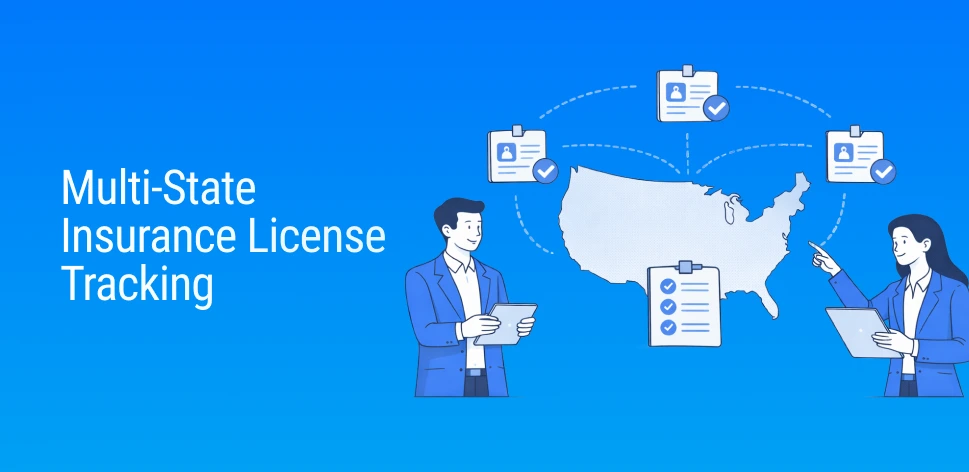
Insurance organizations operating across multiple states face increasing regulatory complexity due to varying licensing requirements, renewal cycles, and carrier appointment rules. Each U.S. state enforces its own insurance compliance framework, which makes unified tracking a critical operational need for agencies, MGAs, and carriers.In modern insurance operations, managing producer licensing at scale is no longer a manual task. It requires structured systems that ensure accuracy, consistency, and real-time visibility across jurisdictions.Insurance compliance refers to the process of ensuring that all producers, agencies, and carriers meet regulatory requirements set by state insurance departments. This includes valid licensing, proper appointments, and timely renewals.
Challenges in Multi-State License Management
One of the primary challenges in insurance compliance is the variation in licensing rules across states. A producer licensed in one state may not automatically qualify in another, requiring separate verification and approval processes.Another key challenge is renewal management. Each state has different timelines for license renewal, continuing education requirements, and documentation updates. Without a centralized system, organizations often miss renewal deadlines, leading to compliance violations.Carrier appointment tracking also adds complexity. Insurance carriers must officially appoint producers before they can sell insurance products. Managing these appointments manually across multiple states increases the risk of errors and delays.Additionally, large insurance organizations handle thousands of producers. Tracking their licensing status manually becomes inefficient and increases the risk of outdated or inaccurate records.
Importance of Centralized Compliance Systems
To address these challenges, insurance organizations are increasingly adopting centralized compliance systems. These platforms unify license tracking, carrier appointments, and regulatory updates into a single system.License verification is typically conducted through the National Insurance Producer Registry (NIPR), which ensures accurate validation of producer credentials across all states.Producer code management is another essential component. A producer code is a unique identifier assigned to each insurance agent, enabling consistent tracking across carrier systems and compliance databases.Renewal tracking is equally important. Automated systems help ensure that licenses are renewed on time, reducing the risk of suspension or regulatory penalties.
Role of Automation in Insurance Compliance
Automation plays a critical role in improving efficiency and accuracy in insurance compliance operations. Platforms like Agenzee provide centralized solutions for managing insurance licensing, carrier appointments, and producer tracking across multiple states.With automation, compliance teams can access real-time updates on licensing status, receive alerts for upcoming renewals, and synchronize data across carriers and regulatory systems. This reduces manual workload and minimizes the risk of human error.Automation also improves scalability. As insurance organizations expand into new states, automated systems ensure that compliance processes remain consistent and manageable.
Operational Risks Without Proper Tracking
Without structured license tracking systems, insurance organizations face several risks. These include producers operating without valid licenses, missed renewal deadlines, and potential regulatory penalties.Inaccurate data can also impact carrier relationships. Insurance carriers expect strict compliance adherence, and failure to maintain accurate records can lead to contract issues or loss of appointments.Audit failures are another major risk. Regulatory audits require complete and accurate documentation of producer licensing and appointments. Missing or inconsistent records can result in compliance violations.
Conclusion
Multi-state insurance license tracking is a critical requirement for modern insurance organizations. As regulatory complexity increases, manual systems are no longer sufficient to manage compliance effectively.Structured compliance platforms and automation tools like Agenzee enable insurance agencies, MGAs, and carriers to streamline licensing, appointment tracking, and renewal management across multiple states.By adopting centralized systems, organizations can improve accuracy, reduce operational risk, and ensure long-term regulatory compliance in a highly regulated industry.