Mold Remediation Brampton: A Homeowner's Guide to Safe Mold Removal
By Infinity Restoration 28-07-2026 15
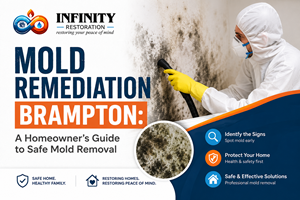
Finding mold in your home is unsettling, and the instinct to scrub it away with a store-bought spray is understandable. But mold rarely stays where you first see it. By the time a patch appears on drywall or in a corner of the basement, spores may have already worked their way into insulation, subfloors, or HVAC ducts. That's why homeowners across the city increasingly search for mold remediation Brampton services rather than attempting a quick fix on their own.
This guide walks through why mold develops, how to recognize when a problem has moved beyond a simple cleanup job, and what a proper remediation process looks like from start to finish.
Why Mold Shows Up in Brampton Homes
Mold needs three things to grow: moisture, an organic surface, and time. Brampton's humid summers and cold, damp winters create ideal conditions for both. Basements are especially vulnerable because they sit below grade and often have poor ventilation, which traps humidity against concrete walls and wood framing.
Bathrooms are another common trouble spot, particularly if exhaust fans are undersized or rarely used. Around windows, condensation can build up on cold glass and drip onto sills, eventually soaking into wood or drywall. Add in the occasional roof leak, a slow plumbing drip inside a wall cavity, or a basement that floods during heavy rain, and you have several realistic pathways for mold to take hold in almost any home, regardless of age or upkeep.
Signs You May Need Professional Mold Remediation
Not every homeowner notices mold visually before it becomes a larger issue. Some of the more common warning signs include:
- A musty, earthy smell that lingers in a basement, closet, or crawlspace
- Discoloration or fuzzy patches on walls, ceilings, or around window frames
- A recent leak or flood that wasn't completely dried out within one to two days
- Ongoing allergy-like symptoms, such as sneezing or a stuffy nose, that ease up when you're away from the house
If any of these sound familiar, it's worth having the property assessed rather than assuming the problem will resolve on its own. Mold left untreated tends to spread rather than shrink, especially in spaces with consistent moisture.
Is a DIY Fix Enough, or Do You Need a Professional?
Small, isolated spots of surface mold on a hard, non-porous surface can sometimes be wiped away safely. But once mold has spread across a larger area, or has worked its way into porous materials like drywall, insulation, or carpet padding, cleaning products alone won't solve the underlying issue. Scrubbing visible mold without addressing the moisture source, or without proper containment, can actually push spores further into the air and into unaffected parts of the house.
This is usually the point where homeowners start typing "mold removal near me" into a search bar, looking for a company that can assess the situation rather than guess at it. A qualified provider will look beyond the visible patch to identify how much moisture is present behind walls or under flooring, and how far the growth has actually traveled. Searching for mold removal near me is a reasonable first step, but it helps to choose a company that begins with an inspection rather than jumping straight to demolition or heavy chemical treatments.
Understanding Black Mold and Other Mold Concerns
Homeowners often ask specifically about black mold, and for good reason: it tends to draw more attention because of its association with health complaints, including respiratory irritation and headaches in sensitive individuals. In reality, several mold species can appear dark in color, and identifying the exact type usually requires lab testing rather than a visual guess.
What matters more than the exact species is how the mold is handled. Black mold removal should always involve containment of the affected area, appropriate personal protective equipment for the technicians doing the work, and safe disposal of any materials that can't be cleaned. Attempting black mold removal with household bleach or general cleaners might address the surface staining temporarily, but it rarely eliminates the moisture source feeding the growth, which means the problem is likely to return within weeks or months.
What a Professional Mold Inspection and Removal Process Looks Like
A structured process protects both the property and the people living or working in it. While details vary by company, most reputable providers follow a similar sequence:
- Inspection — A technician identifies the visible extent of the growth and, more importantly, traces the moisture source causing it. This might involve moisture meters, thermal imaging, or a physical check of plumbing and roofing.
- Containment — The affected area is sealed off using plastic sheeting and negative air pressure equipment, which keeps spores from drifting into unaffected rooms during the removal process.
- Removal — Mold-affected materials, whether that's drywall, insulation, or carpet, are safely removed and bagged for disposal. Surfaces that can be salvaged are treated with antimicrobial solutions.
- Drying and treatment — Industrial dehumidifiers and air movers ensure the space is brought down to a safe humidity level, discouraging any regrowth.
- Prevention recommendations — A good mold inspection and removal team won't just leave once the visible problem is gone. They'll flag the underlying cause, whether it's a leaking pipe, poor grading outside the foundation, or inadequate bathroom ventilation, so you can address it directly.
This is the core difference between a temporary cleanup and genuine mold remediation Brampton homeowners can rely on long term: the moisture problem gets solved, not just hidden.
Mold Remediation After Water Damage
Mold and water damage are closely linked. If your home recently experienced a flood, a burst pipe, or a slow leak that went unnoticed for a while, there's a good chance moisture is still present somewhere even if the surface appears dry. Addressing mold without resolving the original water intrusion is a bit like painting over a crack in the foundation — it looks fine for a while, but the underlying issue hasn't gone anywhere.
If your mold concern followed a water event, it's worth having both the moisture source and the resulting growth evaluated together, rather than treating them as two separate problems. A team experienced in mold remediation Brampton residents call after storms or plumbing failures will typically check both at once.
Preventing Mold From Coming Back
Once an affected area has been cleaned and dried, a few habits go a long way toward keeping it that way:
- Run bathroom and kitchen exhaust fans during and after showers or cooking
- Keep basement humidity below roughly 50 percent with a dehumidifier if needed
- Check window seals and weatherstripping each fall, before condensation season begins
- Address any leaks, no matter how minor, within a day or two rather than letting them sit
Consistent moisture control matters more than any single cleaning product. Mold is opportunistic — give it a dry environment, and it has nowhere to grow.
When to Call a Professional
If you're noticing a persistent odor, visible discoloration, or symptoms that seem tied to time spent in a particular room, it's worth having the property looked at sooner rather than later. A proper assessment can confirm whether you're dealing with a minor surface issue or something that requires full mold remediation Brampton crews are trained to handle safely.
Mold problems rarely improve with time, but they're also very manageable when addressed early and correctly. Whether you're dealing with a small patch after a leak or a more widespread concern in an older basement, getting an experienced team to inspect the property first will save you both money and stress in the long run.
Frequently Asked Questions
How long does mold remediation usually take? A contained, single-room issue often wraps up within a few days once containment, removal, and drying are complete. Larger jobs can take longer, especially if drying equipment needs to run for several days.
Can I stay in my home during remediation? Often, yes, if the affected area is small and properly contained. For larger jobs, a technician may suggest avoiding the work zone, particularly for anyone with asthma or allergies.
Will insurance cover the cost? It depends on the cause. Mold from a sudden, covered event like a burst pipe is often eligible, while mold from long-term neglect typically isn't. An experienced provider can help document the damage properly.
How can I tell if mold has come back? Watch for the same warning signs discussed earlier. If the original moisture source was fully resolved, recurrence is uncommon, which is why addressing the root cause matters as much as the cleanup itself.