Modern Construction Machinery Is Powering Southeast Asia’s Infrastructure Transformation
By Adam Williamson 16-07-2026 20
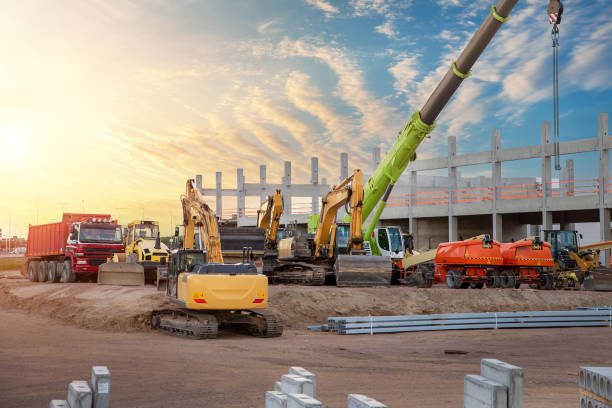
Construction equipment has become a cornerstone of infrastructure development across Southeast Asia as governments and private investors accelerate projects in transportation, energy, urban development, manufacturing, and public utilities. The growing complexity of construction projects requires highly efficient machinery capable of improving productivity, reducing project timelines, and supporting sustainable building practices. As regional economies continue expanding, demand for technologically advanced construction equipment is strengthening across multiple end-use sectors.
According to a study published by Vyansa Intelligence, the Southeast Asia Construction Equipment Market size was valued at USD 7.42 Billion in 2025 and is projected to reach USD 10.98 Billion by 2032, expanding at a CAGR of 5.76% during 2026-2032.
Rising infrastructure investments, increasing urban construction activities, and growing adoption of advanced heavy machinery continue to support the Southeast Asia Construction Equipment Market growth.
Modern Equipment Improves Construction Productivity
Construction equipment encompasses excavators, wheel loaders, bulldozers, cranes, motor graders, compactors, backhoe loaders, concrete machinery, road construction equipment, and material handling systems. These machines improve operational efficiency by automating labour-intensive activities while increasing project accuracy and reducing construction timelines.
Modern equipment is increasingly equipped with intelligent hydraulic systems, GPS guidance, telematics, and operator assistance technologies that improve machine performance and fuel efficiency. Contractors are investing in technologically advanced machinery capable of supporting increasingly complex infrastructure projects while maintaining high operational reliability.
These technological advancements continue shaping Southeast Asia Construction Equipment Market trends across residential, commercial, industrial, mining, and infrastructure applications.
Infrastructure Investment Remains the Primary Growth Driver
Governments across Southeast Asia continue prioritizing infrastructure expansion to improve regional connectivity, economic competitiveness, and urban mobility. Investments in highways, rail networks, airports, ports, renewable energy facilities, industrial zones, and water infrastructure are generating sustained demand for heavy construction machinery.
The Asian Development Bank (ADB) continues supporting large-scale infrastructure development throughout Southeast Asia by financing projects that strengthen transportation networks, climate resilience, clean energy, and urban infrastructure. These long-term infrastructure programmes create continuous demand for construction equipment across multiple project categories.
Public investment, combined with increasing private sector participation, continues strengthening equipment utilization throughout the region.
Urban Development Expands Equipment Utilization
Rapid urbanization remains one of the most important factors supporting construction activity throughout Southeast Asia. Expanding cities require residential housing, commercial buildings, healthcare facilities, educational institutions, logistics centres, and public infrastructure capable of accommodating growing populations.
According to the United Nations World Urbanization Prospects, Southeast Asia will continue experiencing significant urban population growth, encouraging governments and developers to increase investment in modern construction projects. This long-term demographic trend supports demand for versatile construction equipment capable of operating efficiently across diverse project environments.
Urban redevelopment initiatives are also encouraging contractors to adopt more compact, efficient, and technologically advanced machinery.
Digital Technologies Enhance Fleet Performance
The construction industry is increasingly integrating digital technologies to improve equipment performance, maintenance efficiency, and project management. Telematics, Internet of Things (IoT) sensors, artificial intelligence, and cloud-based fleet management platforms allow contractors to monitor machine utilization, fuel consumption, maintenance schedules, and operational productivity in real time.
Predictive maintenance supported by sensor-based diagnostics reduces equipment downtime while extending machine lifespan. Digital construction planning also enables more efficient coordination between equipment fleets, project managers, and field personnel.
These innovations continue strengthening the Southeast Asia Construction Equipment Market forecast by improving operational efficiency and reducing lifecycle costs.
Sustainability Influences Equipment Development
Environmental considerations are increasingly influencing equipment design and procurement decisions. Manufacturers continue developing machines with lower emissions, improved fuel efficiency, hybrid powertrains, and electric propulsion technologies to meet evolving environmental standards.
Advanced engine technologies, optimized hydraulic systems, and intelligent power management reduce fuel consumption while supporting sustainable construction practices. Governments throughout Southeast Asia are also promoting environmentally responsible infrastructure development, encouraging contractors to utilize modern equipment that complies with stricter environmental regulations.
These sustainability initiatives are accelerating the modernization of construction equipment fleets across the region.
Manufacturing and Industrial Expansion Support Demand
Beyond infrastructure development, Southeast Asia's expanding manufacturing sector continues generating demand for industrial construction, logistics facilities, warehouses, ports, and production plants. Regional economic integration and foreign direct investment are encouraging new industrial developments that require extensive site preparation and heavy construction activities.
The Association of Southeast Asian Nations (ASEAN) continues promoting regional economic cooperation, infrastructure connectivity, and industrial competitiveness, creating favourable conditions for long-term construction activity. Industrial expansion across multiple countries is increasing demand for earthmoving equipment, lifting machinery, road construction equipment, and material handling solutions.
The diversification of construction applications further strengthens long-term equipment demand throughout the region.
Competitive Landscape
Competition within the industry focuses on equipment performance, technological innovation, after-sales service, digital fleet management, fuel efficiency, and product reliability. Manufacturers continue investing in research and development to improve automation, operator safety, machine durability, and connectivity.
Strategic partnerships with equipment dealers, infrastructure contractors, and financing institutions help manufacturers strengthen market presence while expanding customer access to advanced machinery.
Future Direction
The future of construction equipment in Southeast Asia will be shaped by automation, artificial intelligence, electrification, telematics, and intelligent fleet management systems. Continued investment in infrastructure modernization, smart cities, renewable energy, and industrial development will support increasing demand for high-performance machinery.
As governments and contractors prioritize efficiency, sustainability, and digital transformation, advanced construction equipment will remain essential for delivering complex infrastructure projects across the region. These developments position the Southeast Asia Construction Equipment Market for sustained long-term expansion.
Conclusion
Construction equipment continues to play a vital role in Southeast Asia's infrastructure transformation by supporting transportation projects, urban development, industrial expansion, and public infrastructure modernization. Strong government investment, rapid urbanization, technological innovation, and sustainability initiatives are strengthening the industry's long-term outlook. As digital technologies and advanced machinery continue evolving, construction equipment will remain a key driver of economic development throughout Southeast Asia.