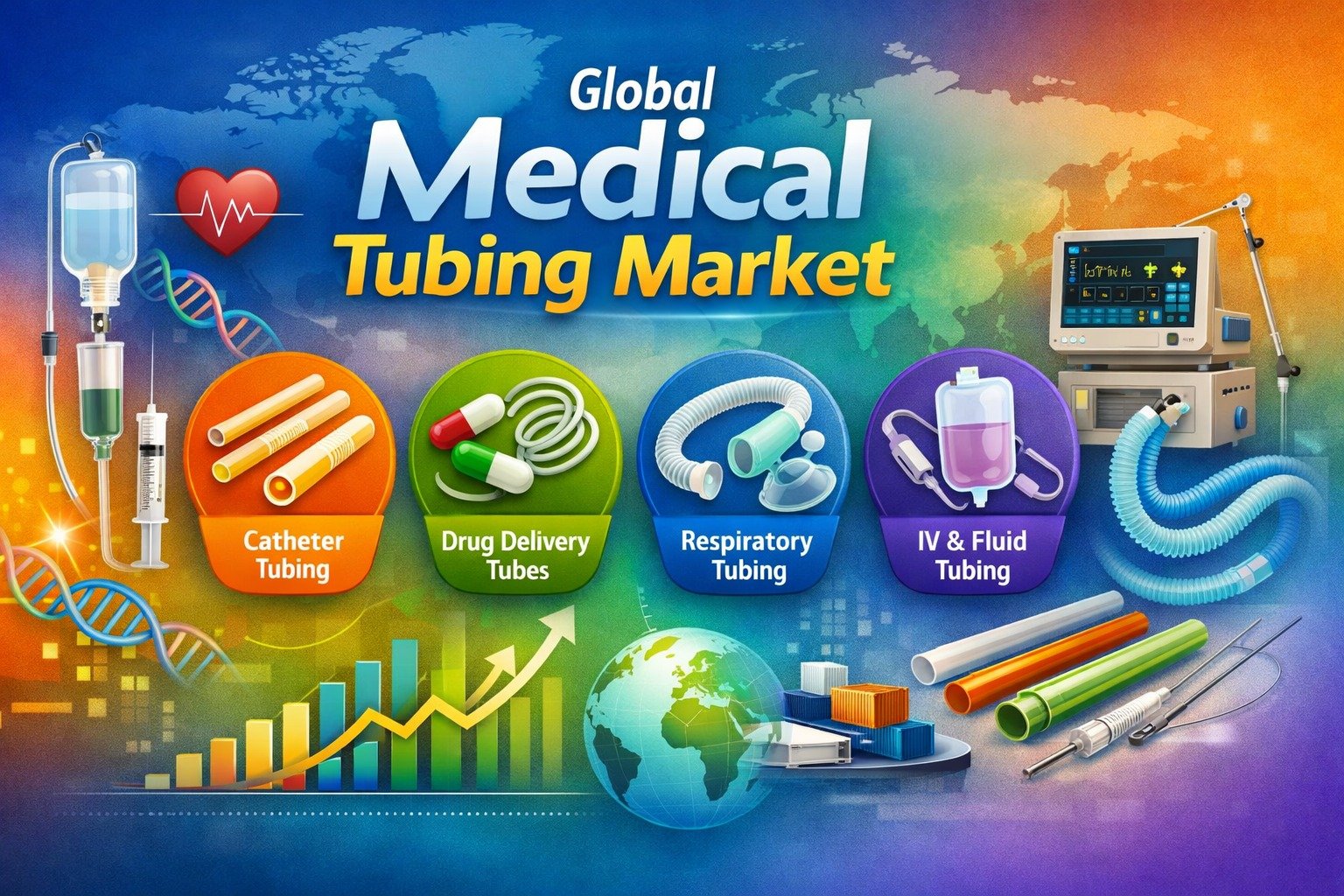
Medical tubing might not be the most eminent part of healthcare, however, it is vital in almost all clinical practices. Medical tubing facilitates the transfer of fluids, gases, and medications safely whether in drug delivery and diagnostics, respiratory care or surgery. With the growth of healthcare systems and development of technologies, the Global Medical Tubing Market is steadily developing, and innovation, compliance with regulations, and the increasing need of minimally invasive care are its positive factors.
Increasing Demand in Healthcare Applications
Medical tubing is applied in a high variety of uses such as intravenous therapy, catheters, dialysis machines, drugs delivery systems and breathing apparatus. The rising number of chronic conditions like diabetes, cardiovascular diseases and respiratory illness has greatly contributed to the fact that the long term medical devices used have necessitated the utilization of durable and biocompatible tubing.
Moreover, the trend in growth of surgical procedures across the globe especially the increasing number of minimally invasive surgeries has increased the pace at which precision engineered tubing with high levels of safety and performance is required. All these trends are contributing to the future growth of the Global Medical Tubing Market.
Material Innovation and Performance and Safety
Material innovation is one of the most significant elements that influence the adoption of medical tubing. More attention is being given by manufacturers to high-technology materials like silicone, thermoplastic elastomers, polyvinyl chloride (PVC), polyurethane, and fluoropolymers. The choice of these materials depends on their flexibility, chemical resistivity, transparency, and safety to the patient.
Silicone tubing, such as, is already commonly used in the industry where biocompatibility and temperature resistance are needed, and thermoplastics are cost-effective and easy to process. Ongoing advances in materials science allow minimizing the risk of contamination, kinking, and chemical contact, which builds confidence among healthcare practitioners and regulators.
Regulatory Standards and Quality Assurance
The medical tubing has high regulatory standards in the global market because of direct contact with the patient and drugs. Market participation requires compliance with the standards, e.g., the ISO certifications, the USP Class VI tests, and the regulatory approvals of the FDA. The rules guarantee the safety, uniformity, and traceability of the products, which are among the most important aspects of trust and credibility in the manufacturing of the healthcare products.
Manufacturers that invest in quality assurance systems and clear supply chain are in a better position to address the rising expectations of hospitals, pharmaceutical firms and medical equipment manufacturers.
Position of Pharmaceutical and Healthcare Leaders
The quality medical tubing has had close association with the increase of pharmaceutical and biopharmaceutical industries. The major health care organizations like Merck and Co., AstraZeneca, Novo Nordisk, Bristol-Myers Squibb, Eli Lilly, Sanofi, Boehringer Ingelheim, Pfizer, Takeda, Biocon, and Johnson and Johnson are relying on the modern tubing solutions in manufacturing drugs, injectable therapies, infusion systems, and clinical delivery devices.
The focus of these firms on their production processes is precision, sterility, and compatibility, which leads to the indirect promotion of innovation and quality standards in the medical tube ecosystem. With the continued growth of biologics, injectable drugs and infusion-based therapies, there is a need to maintain close partnership between tubing and pharmaceutical giants.
Effects of Ageing Population and Homecare
Market growth is also being affected by global demographic changes. Older adults are more susceptible to chronic diseases and most usually have to be under constant medical attention, in terms of long term catheterization, respiratory therapy and parenteral nutrition. This has caused the application of more medical tubing in both hospital and home healthcare environment.
The emergence of home-based care has brought about the need to have tubing that is safe and reliable as well as easy to manage and patient friendly. This is a trend that promotes continuous innovation of lightweight and flexible as well as disposable tubing products in Global Medical Tubing Market.
Sustainability and the Environment
The use of sustainability is emerging as a significant concern in the medical manufacturing. Even though patient safety is the priority aspect, healthcare providers and manufacturers are also looking into recyclable material and waste reduction measures. Trends to reconcile environmental accountability and regulatory adherence are influencing future product development policies.
Reusable Tubing Systems, a better system of sterilization, and streamlined manufacturing processes are under consideration in order to have less environmental impact without undermining clinical performance.
Emerging Markets and Infrastructure Growth
It has also been characterized by a fast-paced development of healthcare infrastructure in developing regions due to investment by the government, increased healthcare awareness, and the ease of access to medical services. Medical tubing suppliers are finding new opportunities through the expansion of hospitals, diagnostic centres and the manufacturing facilities of pharmaceuticals.
The need to have a quality and certified product in terms of tubing is also growing as these regions embrace the international quality standards and thus this is contributing to the long term development of the Global Medical Tubing Market.
Future Outlook
In the future, the market should have an opportunity to enjoy positive changes in the fields of material science, precision manufacturing, and integrated healthcare solutions. The next stage of growth will be characterized by customization, compatibility with digital monitoring, and cooperation between the device producer and pharmaceutical firms.
Medical tubing will continue to be part of the foundation of modern medicine with its required presence in healthcare provision.
Conclusion
Medical tubing is something that may be running in the background but its significance cannot be overestimated. It promotes safe care delivery, facilitates advanced medical care, and improves patient outcomes in care settings. Due to the development of healthcare systems and the rapid pace of innovation, the Global Medical Tubing Market will continue to be a crucial and strong part of the healthcare industry in the world.