In today’s corporate world, standing out requires more than just technical expertise. While hard skills get employees in the door, it is soft skills that determine long-term success. For organizations across the USA, where markets are highly competitive and client expectations evolve rapidly, employees with the right blend of technical and interpersonal skills make the real difference.
This is why Corporate Skills Development and Corporate Soft Skills Training are now priorities for forward-thinking businesses. They understand that leadership, communication, problem-solving, and adaptability are not just “good-to-have” qualities—they are critical to growth, client retention, and organizational resilience.
In this blog, we’ll explore why soft skills matter, highlight the five most valuable soft skills every professional should master, and explain how corporate training and development programs—such as those provided by KVCH—empower organizations in the USA to stay competitive in a global marketplace.
Understanding the Role of Soft Skills in Professional Life
Soft skills are the interpersonal abilities that shape how employees collaborate, lead, and contribute to business goals. Unlike technical skills, which focus on specific tasks, soft skills influence the quality of communication, teamwork, and decision-making.
In the USA, where corporate culture emphasizes innovation, diversity, and client-centricity, soft skills are indispensable. For example, a project manager with technical expertise must also possess leadership and emotional intelligence to align cross-functional teams and drive results. Similarly, a sales executive needs persuasion, empathy, and problem-solving skills to build lasting client relationships.
By integrating Corporate Skills Development into professional growth, businesses ensure employees are not just knowledgeable but also capable of working seamlessly across departments and geographies.
Why Soft Skills Are the Secret Ingredient to Thriving in Business
Every successful business relies on people. Technology may power processes, but people drive innovation, build client trust, and solve complex challenges. In this environment, soft skills are the “secret ingredient” that enable teams to perform at their best.
Consider these examples:
- A U.S.-based consulting firm that excels in data analysis may still fail to retain clients if its consultants lack communication and relationship-building skills.
- A leading manufacturer may have cutting-edge equipment, but without adaptable employees who embrace change, digital transformation will stall.
This is why many American companies are prioritizing corporate soft skills training. It helps employees strengthen collaboration, reduce workplace conflicts, and improve customer satisfaction. Ultimately, businesses thrive not just because of what they produce, but because of how their teams deliver value to clients.
How Soft Skills Drive Career Advancement
In the U.S. job market, where competition is fierce and career mobility is high, professionals need more than technical credentials to climb the corporate ladder. Soft skills directly influence promotions, leadership opportunities, and long-term career success.
Here are five ways soft skills accelerate career advancement:
- Communication Skills – Professionals who communicate with clarity and confidence are often chosen to lead meetings, client interactions, and presentations.
- Leadership and Teamwork – Employees who demonstrate the ability to guide and inspire others often move into managerial or leadership roles faster.
- Problem-Solving and Critical Thinking – Businesses value professionals who can analyze situations, weigh alternatives, and deliver innovative solutions.
- Emotional Intelligence (EQ) – High EQ helps professionals manage workplace stress, strengthen relationships, and maintain productivity under pressure.
- Adaptability and Resilience – In rapidly changing U.S. markets, adaptability ensures professionals remain valuable even during economic or technological disruptions.
This is why corporate training and development programs in the USA emphasize building leadership pipelines through focused soft skills initiatives.
Why Investing in Soft Skills Development Pays Off for Businesses
For B2B decision-makers in the USA, the ROI of soft skills training is clear: it improves efficiency, client satisfaction, and profitability. By embedding corporate skills development into employee training programs, organizations build a workforce that is agile, innovative, and client-focused.
The benefits are significant:
- Enhanced Productivity: Teams with strong communication and collaboration skills complete projects faster and with fewer errors.
- Better Client Relationships: Employees with empathy and listening skills understand client needs more effectively, leading to stronger partnerships.
- Employee Retention: Training signals investment in employee growth, boosting engagement and reducing turnover.
- Stronger Leadership Pipeline: Leaders equipped with soft skills can inspire teams and navigate challenges with confidence.
American businesses that invest in corporate soft skills training consistently outperform competitors in both revenue and employee engagement.
The 5 Essential Soft Skills to Master
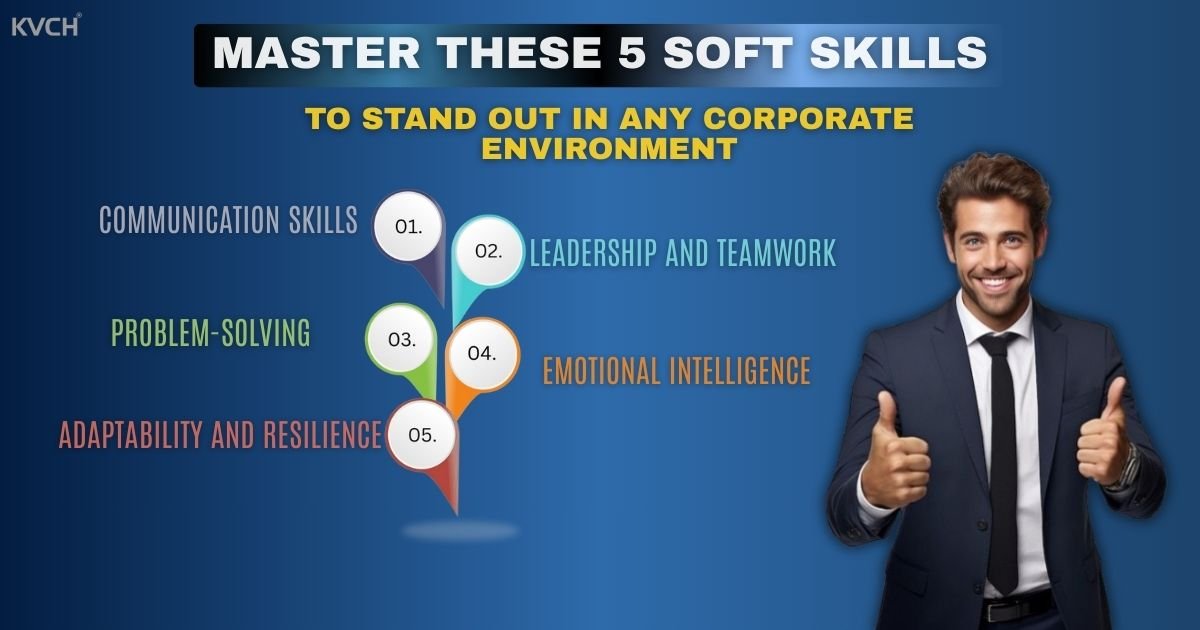
While many soft skills are important, the following five are essential for professionals who want to stand out in any corporate environment:
1. Effective Communication
Effective communication goes beyond simply talking—it requires active listening, empathy, and tailoring your message to diverse audiences. In client-facing roles, it fosters trust and long-term relationships, while within teams, it ensures clarity, reduces misunderstandings, and promotes alignment. Strong communicators bridge gaps, strengthen collaboration, and create an environment where ideas flow freely and business goals are achieved.
2. Leadership and Influence
True leadership is not confined to a job title—it’s about inspiring and motivating others to perform at their best. Employees who can influence peers and drive positive change naturally emerge as future leaders. In the U.S. corporate landscape, where innovation and accountability are valued, leadership skills help professionals stand out and contribute to long-term organizational success.
3. Emotional Intelligence (EQ)
Emotional intelligence is the ability to understand, manage, and respond to emotions—both your own and others’. In corporate settings, EQ reduces workplace conflicts, fosters collaboration, and strengthens team dynamics. Employees with high EQ handle stress effectively, adapt to challenges with empathy, and build stronger professional relationships, contributing to a healthier and more productive organizational culture.
4. Problem-Solving and Critical Thinking
Problem-solving and critical thinking are essential skills for addressing today’s complex business challenges. Critical thinkers evaluate issues objectively, analyze data, and identify innovative solutions that create long-term value. In B2B organizations, employees with strong problem-solving abilities not only address immediate concerns but also anticipate risks, drive efficiency, and open opportunities that extend beyond their defined roles.
5. Adaptability and Resilience
In a fast-changing business world, adaptability and resilience are vital for success. Professionals who embrace change, adopt new tools, and navigate market shifts with confidence help organizations remain agile and competitive. Resilient employees bounce back from setbacks, see challenges as growth opportunities, and thrive in dynamic environments—qualities highly valued in modern corporate cultures.
How Can KVCH Elevate Your Corporate Training Initiatives?
As a trusted provider of corporate training and development, KVCH has helped U.S. companies and global enterprises transform their workforce for over three decades. Their programs are designed to empower employees with both technical expertise and the soft skills needed for success.
Here’s how KVCH supports B2B decision-makers in the USA:
- Customized Training Modules: Tailored programs that focus on communication, leadership, and emotional intelligence.
- Blended Learning Options: Flexible training delivered online, on-site, or in hybrid formats.
- Global Perspective: With extensive experience across industries, KVCH understands the business challenges unique to U.S. companies.
- Certification Recognition: Employees gain certifications that validate skills and boost credibility with clients and partners.
By choosing KVCH, U.S. businesses can ensure their employees are prepared not only to meet today’s challenges but also to lead tomorrow’s opportunities.
The Future of Soft Skills in the Corporate Sector
As automation and AI reshape industries, soft skills are becoming even more valuable. Machines can process data, but they cannot replicate human creativity, empathy, or leadership. This is especially relevant in the U.S., where innovation and customer experience drive competitive advantage.
The future workforce will require a balance of technical expertise and human-centric skills. Companies that embrace corporate skills development and prioritize Corporate Soft Skills Training will be the ones to thrive in an evolving marketplace.
Investing in these skills today ensures employees remain future-ready, adaptable, and equipped to lead organizations into the next era of business transformation.
Conclusion
To succeed in any corporate environment—especially in the highly competitive U.S. market—professionals must master more than technical expertise. By focusing on five essential soft skills—communication, leadership, emotional intelligence, problem-solving, and adaptability—employees can distinguish themselves and advance their careers.
For businesses, investing in Corporate Training and Development is no longer optional. It’s a necessity for building resilient, innovative, and client-focused teams. By partnering with trusted providers like KVCH, decision-makers can empower their workforce with the skills needed to thrive in a changing world.
The path forward is clear: Soft skills are the foundation of corporate success. Master them today, and both individuals and organizations will lead with confidence tomorrow.