If a marine engine starts vibrating more than it should, the problem doesn’t stay in one place for long. It passes through the structure. You begin to see its impact in alignment issues, faster wear, noise complaints, and eventually, frequent maintenance.
That’s why engine mounting isn’t treated as a secondary decision in marine systems. It’s part of the core design.
This guide breaks down how marine engine mounts are built, how they actually work in real conditions, and what matters when selecting them for ships and offshore setups. If you're working with engines, generators, or onboard systems, this is something you need to get right early.
What Are Marine Engine Mounts and Why They Matter
At a basic level, marine engine mounts are the components that support the engine and limit vibration going into the structure.
But in marine setups, it’s not that straightforward.
Equipment operates under constant motion, with changing loads and exposure to moisture, salt, and temperature shifts. A rigid connection between the engine and the structure would transfer every vibration directly into the vessel. Over time, that leads to fatigue in the surrounding components.
Mounts introduce controlled flexibility. They allow movement where needed and restrict it where it becomes harmful. That balance is what keeps systems stable over long operating cycles.
Where Vibration Comes From in Marine Systems
Before getting into design, it helps to understand the source.
Engines generate vibration through combustion forces and rotating parts. Even well-balanced systems produce some level of movement. When that energy has a direct path into the structure, it spreads through decks, frames, and connected equipment.
Now add real conditions: start-stop cycles, load variation, and sea movement. The vibration isn’t constant. It changes. That’s where poorly selected mounts struggle.
This is why marine vibration solutions are always matched to the operating profile, not just the equipment weight.

Key Design Factors You Can’t Ignore
When selecting mounts, three things matter more than anything else: load, frequency, and environment.
Load is straightforward. The mount must support the equipment's weight without excessive compression. Too soft, and the system becomes unstable. Too stiff, and vibration passes straight through.
Frequency is where most mistakes happen. Every machine operates within a range of speeds. The mount needs to isolate vibration within that range. If not, you get resonance, where vibration increases instead of reducing.
The environment is often overlooked. Marine mounts deal with salt exposure, temperature changes, and long operating hours. Materials must hold their properties over time.
You’ll notice that none of these factors works in isolation. Change one, and it affects the others. That’s why mount selection is always tied to system-level thinking.
Types of Marine Engine Mounts and Their Use Cases
Not every application needs the same type of mount. Here’s how they typically break down in marine setups.
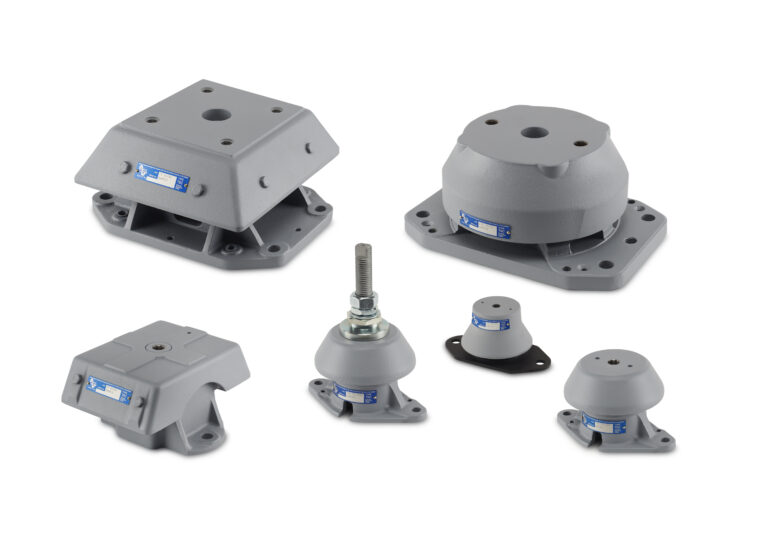
- Rubber mounts are commonly used to support engines and reduce vibration. They absorb movement, so less of it passes into the structure. These are suitable for medium-frequency applications and standard engine setups.
- Spring mounts are used when dealing with heavier loads or lower frequencies. They allow greater movement, which helps isolate slower, more powerful vibrations often seen in larger equipment.
- Combined rubber-spring systems bring both damping and deflection together. These are used in more demanding environments where vibration characteristics vary during operation.
- Hanger mounts carry suspended systems like pipes and exhausts, while limiting how far vibration can move. If you leave them out, that shaking moves straight through the connected lines and spreads everywhere.
When you need more control and stability, you go for turrets or specialised mounts. These are common in systems that need controlled movement rather than simple isolation.
Choosing between these isn’t about preference. It’s about matching the mount to the way the equipment behaves during operation.
How Marine Engine Mounts Work in Practice
At a basic level, mounts reduce vibration by interrupting its path.
When an engine runs, it produces dynamic forces. Instead of allowing those forces to pass directly into the structure, the mount absorbs them. This happens through controlled deformation. The material compresses slightly, then returns to its original shape.
That cycle reduces the energy that gets transmitted.
The goal isn’t to stop movement completely; it’s to manage it. Excess movement causes alignment issues, while a rigid setup fails to control vibration. A properly selected mount keeps both in check. This is especially noticeable when equipment starts or stops, where force changes happen quickly.

Benefits That Show Up Over Time
You don't always notice the effects of proper mounting right away, but they show up as time goes on.
- First, your equipment lasts longer. Less vibration means parts like bearings, couplings, and fasteners handle less stress.
- Second, they also stay aligned. Misalignment is a big reason for performance drops and mechanical issues in marine systems.
- Third, noise levels drop. Proper mounting cuts down on that too, making life easier for the crew and keeping everything within noise limits onboard.
- And finally, maintenance becomes more predictable. Instead of reacting to issues, operators can plan around stable performance.
When looked at over the lifecycle of the equipment, these benefits outweigh the cost of getting the mounts right in the first place.
How to Choose the Right Marine Engine Mounts
There’s no shortcut here. Selection depends on how the system actually operates.
- Start with the basics: equipment weight, centre of gravity, and mounting layout. Then look at operating speed and expected vibration levels.
- From there, consider the environment. In offshore environments, loads don’t stay constant, and conditions are tougher. The mount has to keep up with that.
- One thing to avoid is selecting mounts based only on static load ratings. That doesn’t account for how the system behaves dynamically.
This is where ship engine mounts are usually specified alongside engineering input rather than chosen directly from a catalogue.
Where Specialised Mounting Solutions Fit In
In more complex setups, standard mounts don’t cover everything.
Exhaust systems, pipe networks, and auxiliary equipment all create their own vibration paths. If you don’t isolate these connections properly, vibration just travels back into the structure.
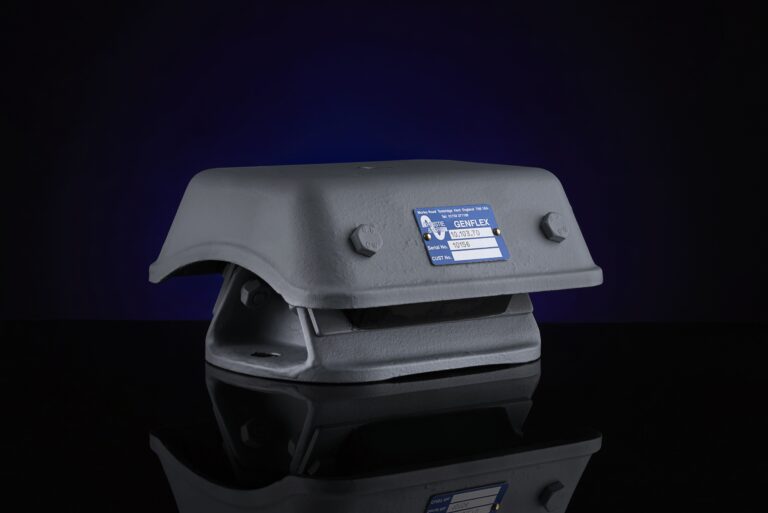
That’s why components like rubber mountings, hangers, and turret mounts are used. Each one supports a different part of the system, whether it’s holding suspended loads or keeping movement under control.
In most setups, they work together to limit vibration across the whole system, not just at the engine.
Conclusion
Marine systems don’t fail suddenly. In most cases, problems build up over time, and vibration is one of the main contributors.
That’s why marine engine mounts are treated as part of the system design, not an add-on. They control how forces move through the structure, how equipment performs under load, and how long components last in real conditions.
Getting this right comes down to understanding the system, not just the component. When mounts are selected based on actual operating conditions, they do their job quietly, and that’s exactly what you want.
Tags : Marine Engine Mounts