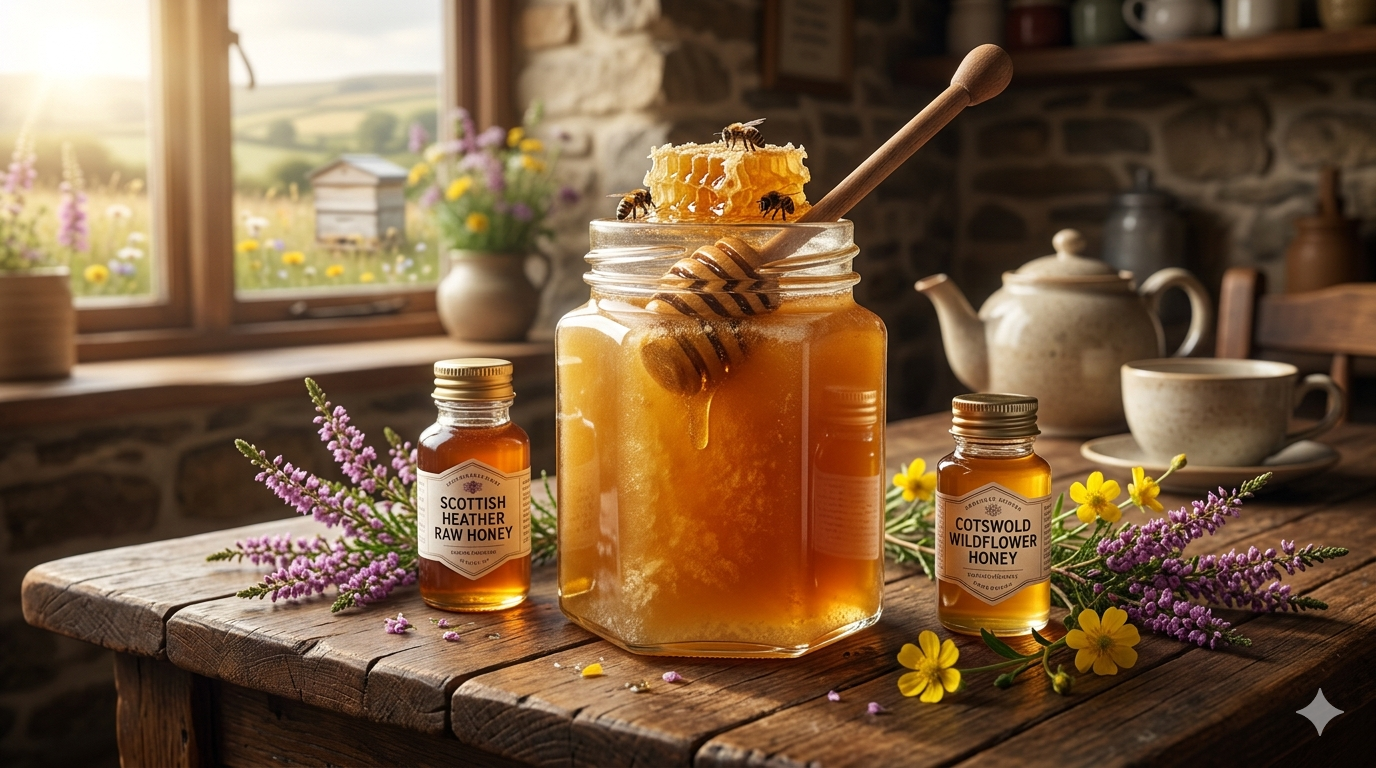
In an era of ultra-processed foods and lab-grown ingredients, there is something deeply comforting about a product that comes to us exactly as nature intended. If you’ve been browsing the aisles of a local health food store or scrolling through wellness blogs lately, you’ve likely noticed a significant buzz surrounding one particular pantry staple. It’s thick, it’s often cloudy, and it’s packed with a nutritional profile that puts standard supermarket syrups to shame.
We are, of course, talking about the rise of authentic, unpasteurized nectar. Across the British Isles, from the rolling hills of the Cotswolds to the rugged heather moors of Scotland, people are rediscovering the profound benefits of raw honey produced by local apiaries in the UK. But what exactly makes this "living food" so special, and why should it have a permanent spot on your kitchen counter?
The Raw vs. Processed Debate: What’s Under the Lid?
To the untrained eye, all honey might look similar. However, the difference between the "clear" honey found in plastic squeeze bottles and the raw variety is night and day. Most commercial honey undergoes a process called pasteurisation, heating the liquid to high temperatures to prevent crystallization and ensure a long shelf life. While this makes the product look "pretty" on a shelf, the heat destroys the very things that make honey medicinal: the enzymes, antioxidants, and delicate phytonutrients.
Raw honey is handled with a "hands-off" philosophy. It is extracted from the hive, strained to remove large debris like beeswax, and bottled immediately. Because it isn't heat-treated, it retains its natural pollen and propolis, the "bee glue" used for centuries for its antimicrobial properties.
A Taste of the British Landscape
One of the most fascinating aspects of honey is that it tells a story of a specific place and time. Since bees forage on flowers within a few miles of their hive, the flavour, colour, and texture of the honey change with the seasons and geography.
In the United Kingdom, we are blessed with a diverse floral landscape. In the spring, you might find honey influenced by oilseed rape or hawthorn, resulting in a creamy, pale spread. Come late summer, the focus shifts to lime trees or borage, offering a lighter, more floral note. And then, there is the legendary Heather honey, often referred to as the "Manuka of the North", which is thick, pungent, and incredibly rich in minerals. This geographical diversity is why searching for quality raw honey in the UK can lead you to a wide variety of unique taste experiences that you simply cannot find in mass-produced alternatives.
Wellness Connection: Beyond Just a Sweetener
While most people use it to sweeten their tea or morning porridge, the therapeutic uses of raw honey uk are backed by both tradition and modern science.
1. Digestive Ally
Raw honey contains natural enzymes that help the body break down carbohydrates and sugars more efficiently. It acts as a prebiotic, meaning it feeds the beneficial bacteria in your gut. A happy gut usually leads to a stronger immune system and better mood regulation, making that morning spoonful much more than just a treat.
2. Seasonal Support
There is a long-standing belief among herbalists that consuming honey produced in your local area can help the body adapt to local pollens. By introducing tiny amounts of these pollens into your system through raw honey, you may find that your body becomes less reactive to the environmental triggers that cause seasonal sneezing and itchy eyes during the British spring.
3. Natural First Aid
Because of its low moisture content and naturally acidic pH, bacteria find it nearly impossible to survive in raw honey. Historically, it has been used as a topical dressing for minor burns and scrapes. It provides a protective barrier while keeping the wound moist, which can help speed up the natural healing process.
How to Identify the Real Deal
With so many brands claiming to be "natural" or "pure," how do you know you’re getting the real thing? Authentic raw honey will almost always crystallize over time. If your jar turns solid or grainy, don’t throw it out! This is a hallmark of high quality. It shows that the pollen is still present and the glucose hasn't been tampered with.
Furthermore, look for "unpasteurized" or "cold-pressed" on the label. Better yet, buy directly from local beekeepers at farmers' markets. Not only do you get a superior product, but you also support the vital work of British beekeepers who are essential for our ecosystem’s pollination.
Kitchen Inspiration: Getting Creative with Honey
You don't have to stop at toast. Raw honey is a versatile ingredient that adds depth to both sweet and savory dishes.
- Power Dressing: Whisk together raw honey, apple cider vinegar, grainy mustard, and extra virgin olive oil for a salad dressing that hits every flavour note.
- Bedtime Ritual: Stir a teaspoon into warm (not boiling) chamomile tea. The natural sugars can help a small amount of tryptophan enter the brain, making it easier to drift off into a deep sleep.
- Cheese Board: Pair a chunk of honeycomb or a drizzle of thick honey with a sharp British cheddar or a creamy goat’s cheese. The contrast between the salt and the floral sweetness is world-class.
A Sustainable Future for Our Bees
Choosing raw honey is also an environmental statement. Small-scale beekeepers generally prioritize the health of their hives over massive yields. By valuing the "raw" state of the product, we encourage beekeeping practices that allow bees to thrive in their natural habitats.
The British countryside depends on these pollinators. From the apples in our orchards to the wildflowers in our meadows, bees are the silent engines of our environment. When we choose to consume honey in its most natural form, we are participating in a cycle that respects the earth, the bees, and our own health.
Final Thoughts
In a world that often feels too fast and too synthetic, raw honey reminds us of the value of patience. It takes thousands of miles of flight and millions of visits to a flower to produce a single jar. By choosing a raw, local product, you aren't just buying a sweetener; you are bringing a piece of the British landscape into your home. It’s pure, it’s potent, and it’s perhaps the most delicious way to invest in your daily wellness.