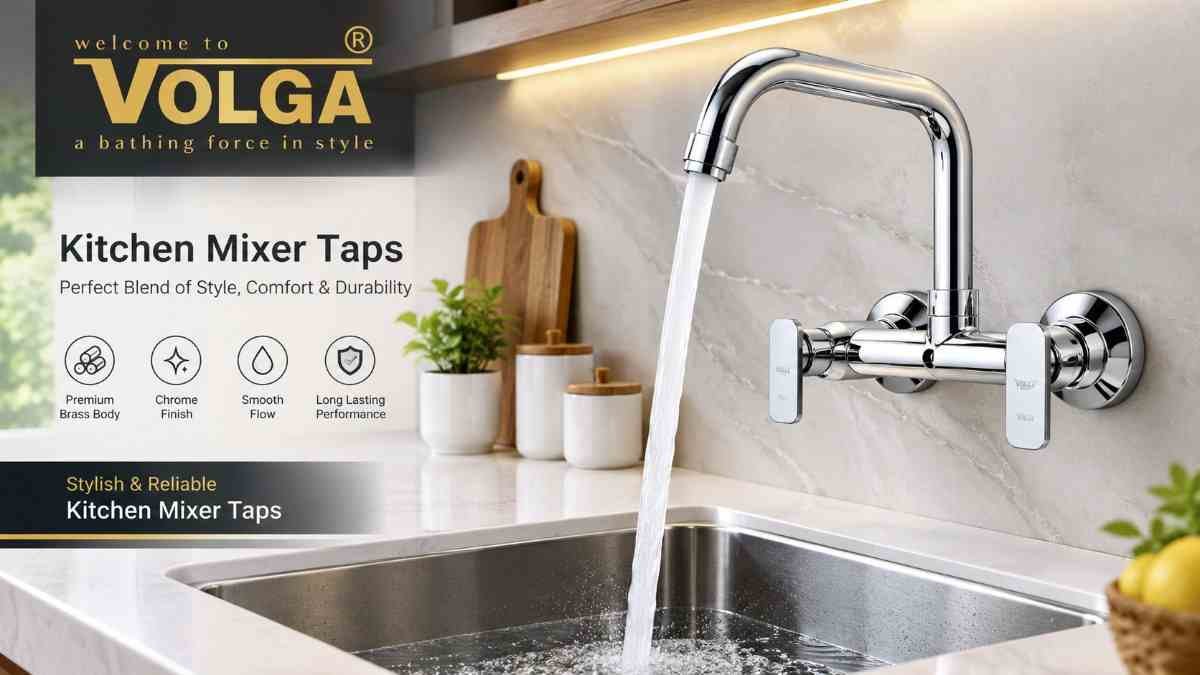
A procurement manager opens a sample box, turns the tap handle, and within three seconds knows whether the finish will survive six months of retail handling. That's the whole test. Kitchen Mixer Taps that pass it get reordered. The ones that don't get returned with a curt email and no second chance. If you're comparing Kitchen Mixer Taps Brands In India for your catalog or your storefront, the gap between a supplier who understands this and one who doesn't usually shows up by the third or fourth container.
Most buyers assume a mixer tap is a mixer tap one lever, one spout, hot and cold water meeting somewhere inside a brass body. That's technically true. It's also the reason so many procurement teams end up with a warehouse full of stock they can't move, because the spec sheet looked fine and the finish didn't.
The Spec Detail Most Buyers Skip
Kitchen Mixer Taps get judged on three things buyers list out loud finish, cartridge quality, and price and one thing they don't ask about until there's a problem: the brass grade underneath the plating.
Brass Body and Cartridge
We manufacture our Kitchen Mixer Taps in DZR (dezincification-resistant) brass, which matters most in regions with hard or chlorinated water. Standard brass bodies corrode from the inside out in these conditions. You won't see it on the sample. You'll see it eighteen months into a retail warranty cycle, and by then it's your problem, not the factory's.
Ceramic disc cartridges are the other line item nobody reads closely enough. A cheap cartridge handles roughly 50,000 open-close cycles before it starts dripping. Ours are rated past 500,000. That's the difference between a tap that needs a service call in year one and one that doesn't.
Finish Types We Supply
- Chrome plated (the standard retail request)
- Brushed nickel
- Matte black — the fastest-growing request from brand owners in the last two years
- Rose gold and antique brass, typically for premium SKUs
Configurations
Single-lever pull-down, pull-out spray, and the wall mount kitchen mixer tap — which is a smaller share of orders but a growing one, especially from buyers stocking for modular kitchen installers who don't want deck-mounted clutter on a stone countertop.
What Separates a Real Supplier From a Catalog Reseller
Anyone can put "manufacturer" in an email signature. Here's what actually tells you whether you're dealing with one, and what a weak answer sounds like against each point.
- Factory ownership and tooling. A real answer includes their casting process and finishing line. A bad answer is "we work with trusted partners" — which usually means they're reselling someone else's stock under their own label.
- Certification currency. Ask for the current ISI or BIS certificate, not the one from two renewal cycles ago. A bad answer dodges the date.
- Defect and returns policy in writing. A supplier who says "we'll handle defects case by case" doesn't have a policy. You’ll lose that negotiation once the shipment is already in.
- MOQ flexibility for new SKUs. A bad answer quotes the same MOQ for a new matte black finish as for a proven chrome bestseller, with no acknowledgment that the risk profile is different.
- Lead time honesty. Ask what happens if a shipment is delayed. A bad answer promises zero delays ever. Every factory has bad weeks. The ones worth ordering from tell you that upfront.
Why Sourcing From the Right Manufacturer Protects Your Margin
Buyers don't need more quality talk. They need reasons that show up on a balance sheet.
Fewer warranty claims means fewer refunds eating into your margin on units you already sold at cost-plus. A cartridge rated for 500,000 cycles instead of 50,000 means your customer complaints drop, which means your brand reputation with retailers stays intact instead of degrading one bad review at a time.
Consistent finish quality across batches means you're not explaining to a retail chain why batch four looks different from batch one. Direct factory pricing, without a reseller markup layered in, protects your landed cost even when freight rates spike. And working with Kitchen Mixer Taps Manufacturers who hold current BIS certification keeps your import documentation clean, which matters more than most buyers realize until customs flags a shipment over paperwork.
Gujarat sourcing: What does it imply for your supply chain
We manufacture out of Gujarat, which sits inside India's largest brass and bath-fittings manufacturing belt. That's not incidental. It means our raw material sourcing brass rod, chrome plating chemicals, cartridge components happens within a tight regional radius instead of across three states, which is one less variable that can delay your order.
For buyers on the western and northern coasts, this location cuts inland freight time to Mundra and Nhava Sheva ports. For exporters working with European and Middle Eastern buyers, it means container consolidation is easier because most of the ancillary bath fittings you're likely also sourcing faucets, shower sets, angle valves come out of the same industrial cluster.
About Us
We've been manufacturing bath and kitchen fittings out of Gujarat since 2014. We stopped offering a particular chrome plating grade in 2022 after two export buyers flagged surface pitting within eight months in high-humidity coastal markets we switched to a thicker triple-layer plating process instead, even though it added to our cost. That's what a decade of buyer feedback does to a production line: it makes you change things you were previously comfortable with.
We're not the cheapest quote you'll get. We're the supplier you call six months later and don't need to call twice.
Send us your target finish, configuration (single-lever, pull-down, or wall mount), and order volume, and we respond with a formal quote within 48 hours. MOQ starts at 100 units per SKU for standard finishes and 250 units for custom finishes like matte black or rose gold. Reach out through volgabathfittings.com with your requirement sheet, and mention Volga Bathfittings in your subject line so it routes straight to procurement.
Conclusion
Kitchen Mixer Taps are a small line item on a purchase order and a large source of returns when the sourcing decision is rushed. Working with an established Kitchen Mixer Taps Manufacturer In India means fewer surprises after the container clears customs, not just a better price on paper. The buyers who get this right stop shopping for suppliers every quarter and start building one relationship that compounds.
FAQs
1. What's the difference between kitchen mixer taps manufacturers and suppliers in India?
A manufacturer casts, machines, and finishes the tap in-house. A supplier or trading company sources from various factories and resells under their own catalog. Both can be legitimate, but manufacturers typically offer better pricing at volume and more control over quality consistency, since there's no middleman markup or communication gap with the actual production line.
2. What MOQ should I expect from kitchen mixer taps suppliers?
It varies by finish and configuration. Standard chrome finishes usually start around 100 units per SKU. Custom finishes or wall mount kitchen mixer tap configurations often carry a higher MOQ because the tooling and finishing runs are smaller and less predictable.
3. Are wall mount kitchen mixer taps harder to install than deck-mounted ones?
They require in-wall plumbing planned before the countertop goes in, which is harder to retrofit. If you're stocking for renovation projects rather than new builds, deck-mounted mixers are usually the safer bet for your customers.
4. Do kitchen mixer taps manufacturers in India export internationally?
Many do, including us. Export-ready manufacturers should have current BIS or ISI documentation and experience with the packaging standards that survive sea freight — a detail that trips up factories used to domestic-only distribution.
5. What finish lasts longest in hard water regions?
Chrome over DZR brass generally outperforms lower-grade brass finishes in hard or chlorinated water. That said, no finish is fully immune to scale buildup over years of use — regular descaling still matters, and we tell buyers that upfront rather than overselling durability.