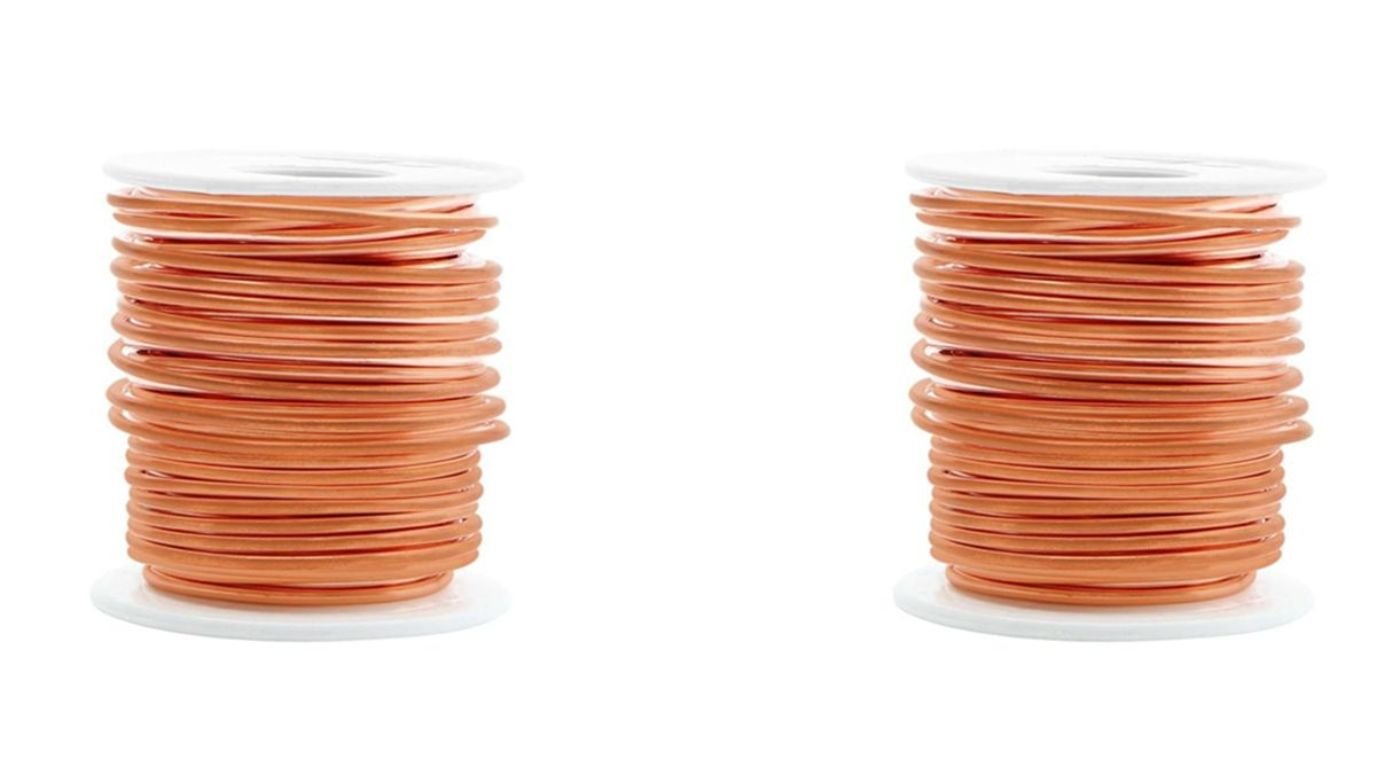
Copper wire carries current through almost every electrical system running today, from a wall socket to transmission lines spanning hundreds of kilometers. Copper is rated at 100 % IACS. Copper is close to the top of the conductivity scale. This is why high conductivity copper wire gets required anywhere energy loss needs to be kept low. In this article, we will explore the advantages of copper wire, its uses, the different types of cables, and what to look for when choosing one.
What Is Copper Wire?
Copper wire is a conductor made from copper pulled out into a single solid strand or twisted together into numerous thinner strands. At 20°C, pure copper has a resistance of about 1.68 × 10⁻⁸ ©·m, which is second only to silver among the major metals. Permanent installations use solid wire. Stranded wire can be bent repeatedly without strand fatigue.
Key Benefits of Copper Wire in Electrical Systems
Six properties explain why copper remains the default conductor across residential, industrial, and utility electrical work.
Excellent Electrical Conductivity
Copper conducts at 58 million siemens per metre, or 100% IACS. Aluminium reaches roughly 61% IACS, so a copper conductor of equal cross-section carries more current with less voltage drop. Lower resistance means lower energy loss across every metre of cable.
High Durability and Strength
Annealed copper reaches a tensile strength of around 220 MPa, while hard-drawn copper reaches 380-400 MPa. That strength lets conductors survive installation stress, vibration, and thermal cycling without fatigue. Cables routed through machinery or vehicle chassis flex constantly, and copper holds up through years of that movement.
Superior Thermal Conductivity
Copper conducts heat at 385-401 W/m·K, among the highest figures for any commercial metal. Heat from resistive losses spreads along the conductor and dissipates into the insulation and surrounding air, rather than building up at one point, keeping insulation from degrading at localized hot spots.
Corrosion Resistance
Unlike iron-based metals that rust gradually after moisture exposure, copper develops a very thin oxide coating on exposed surfaces that retards further oxidation. Copper wire is hence suitable for wet, coastal or industrial environments, especially where tinned or insulated varieties are providing further protection.
Flexibility and Easy Installation
Copper wire stranded, made up of several fine strands, makes bends around tight corners and through conduit without kinking or shattering. This flexibility reduces installation time on operations needing several bends and junction boxes and allows cable to get into areas a solid conductor couldn't reach.
High Safety and Reliability
Copper's stable performance under load keeps voltage and current within expected tolerances as a system ages. Connections made with copper conductors hold low contact resistance over time, cutting overheating risk at joints and terminals a common failure point with lower-conductivity alternatives.
Applications of Copper Wire in Electrical Systems
Copper wire's conductivity and durability carry it into five major categories of electrical infrastructure.
Power Generation and Transmission
High-voltage transmission lines, transformer windings, and substation busbars depend on copper to move large amounts of power with minimal loss. Transformers use copper windings because the metal's conductivity keeps winding resistance low at the high current densities found in step-up and step-down operations.
Residential Wiring
Household circuits run on copper conductors sized from 1.5mm² for lighting up to 6mm² or larger for cookers and water heaters, following standards such as IS 732 in India. Copper's record in domestic wiring spans decades, with installations laid 30-40 years ago still running today.
Industrial Electrical Systems
Factory floors route copper wiring through control panels, motor drives, and machinery wiring, where current draw spikes during start-up and equipment runs continuously across multi-shift operations. Copper handles these load swings without the resistance increases that cause voltage drop at motor terminals.
Electronics and Communication
Circuit boards use copper traces to convey signals and power between components. Copper conductors in coaxial and twisted-pair cables transmit data with minimum loss across the length of the cable. Conductivity maintains little signal deterioration over runs greater than 100 meters.
Automotive Industry
Modern vehicles carry wiring harnesses built from copper conductors running to lights, sensors, control modules, and battery connections, with cable runs totaling more than 1,500 meters per vehicle. Copper's flexibility lets these harnesses route through tight chassis spaces without conductor fatigue.
Types of Electrical Copper Cables
Solid copper wire is used for fixed wiring in walls, panels and cables where no bending is necessary and requires only one conductor strand. Stranded copper wire is a bundle of small strands that provides it with the flexibility for machines, vehicles and anything that involves movement. Tinned copper wire has a thin coating of tin on the strands that provides corrosion resistance in maritime, outdoor, or humid settings. Copper wires are covered with PVC, XLPE or rubber, rated for specific voltage and temperature ranges, and used for anything from control wiring, to medium-voltage current distribution.
Factors to Consider When Selecting Copper Electrical Cables
Load capacity comes first; a cable sized too small for its current draw overheats, while oversizing adds unnecessary cost. Voltage rating must be equal to or greater than the cable system working voltage. Common ratings are 450/750V for building wiring. Depending on environmental conditions, temperature, moisture & chemical exposure, normal PVC insulation may not be sufficient, and XLPE, rubber or tinned conductors may be required. Copper wire and cables in solid, stranded and insulated form in various specifications, including IS 694 and IEC 60228.
Conclusion
The default conductor for power distribution, home wiring, industrial systems and electronics is copper wire. This is because of the unique mix of properties such as high conductivity, mechanical strength, thermal properties and corrosion resistance. Electrical copper wire and copper electrical cables remain superior on the factors that matter for long term installations, less energy loss and fewer overheating problems. For any system where today’s needs have to be safely transmitted, copper is the conductor of choice for engineers.
Tags : Copper wire