Choosing the right inspection method is critical for ensuring product quality, safety, and compliance. As components become more complex and tolerances tighter, traditional inspection techniques often fall short. Industrial computed tomography has emerged as a powerful non-destructive testing (NDT) solution—but is it the right choice for your inspection needs?
This article explores what industrial CT scanning offers, when it makes sense to use it, and how to decide if it fits your requirements.
What Is Industrial Computed Tomography?
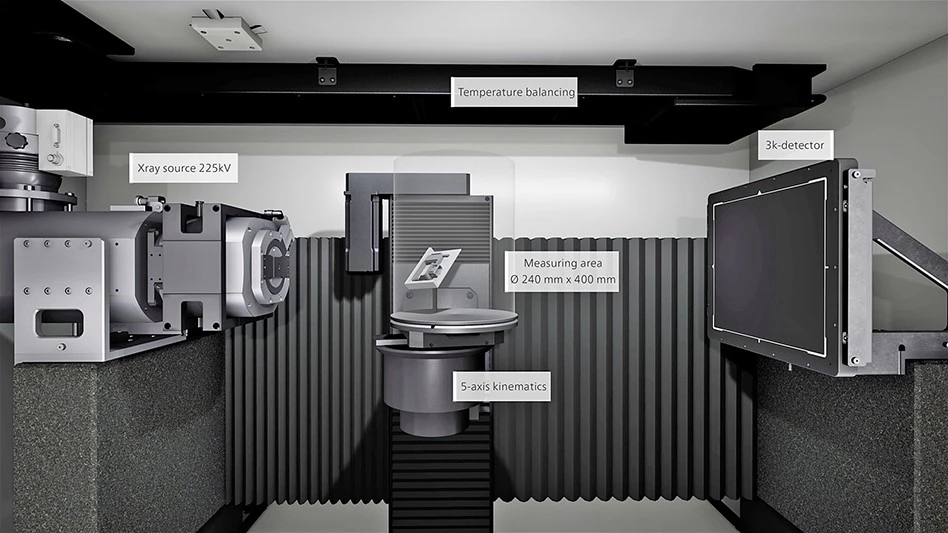
Industrial computed tomography is an advanced inspection technique that uses X-rays to produce high-resolution 3D images of a component’s internal and external structures. By capturing multiple projections and reconstructing them into a digital model, industrial computed tomography allows engineers to analyse parts without cutting, dismantling, or damaging them.
Unlike traditional inspection methods, industrial CT scanning provides a complete view of complex geometries, hidden features, and internal defects in a single scan.
Key Benefits of Industrial Computed Tomography
Industrial computed tomography offers several advantages that make it an attractive inspection option:
Non-Destructive Inspection
Parts remain intact, allowing for full inspection without compromising usability or safety.
Internal and External Visibility
Industrial CT scanning reveals internal structures such as voids, cracks, porosity, and assemblies that cannot be accessed by surface-based methods.
High Measurement Accuracy
Industrial computed tomography supports precise dimensional measurement and comparison against CAD models.
Time and Cost Efficiency
By combining defect detection and metrology in one process, industrial CT can reduce inspection time and rework costs.
When Industrial CT Scanning Is the Right Choice
Industrial computed tomography is particularly well-suited for inspections involving:
Complex internal geometries
Additively manufactured (3D-printed) components
Multi-material or assembled parts
High-value or safety-critical components
Failure analysis and root cause investigation
Industries such as aerospace, automotive, medical devices, and precision engineering frequently rely on industrial CT scanning to meet strict quality and regulatory standards.
Limitations to Consider
While industrial computed tomography is highly capable, it may not be the best option in every situation:
Cost – CT scanning is more expensive than basic inspection methods
Part size and material – Very large or dense components may require specialised systems
Resolution trade-offs – Higher resolution scans often require longer scanning times
Understanding these limitations helps ensure industrial CT scanning is used where it delivers the greatest value.
Industrial Computed Tomography vs Traditional Inspection Methods
Compared to visual inspection, ultrasonic testing, or coordinate measuring machines (CMMs), industrial computed tomography offers a more comprehensive analysis. However, traditional methods may still be preferable for simple measurements, high-volume inspections, or surface-only analysis.
The most effective inspection strategies often combine industrial computed tomography with other inspection techniques to balance cost, speed, and accuracy.
How to Decide If Industrial CT Scanning Is Right for You
To determine whether industrial computed tomography fits your inspection needs, consider:
Component complexity and internal features
Required accuracy and resolution
Inspection frequency and production volume
Regulatory or safety requirements
Budget and turnaround expectations
Consulting with an experienced industrial CT provider can help assess feasibility and optimise scanning parameters.
Conclusion
Industrial computed tomography is a powerful inspection tool that delivers unmatched insight into complex components. If your inspection needs involve internal structures, high precision, or non-destructive analysis, industrial CT scanning may be the right solution.
By understanding its benefits, limitations, and ideal applications, you can make an informed decision and ensure your inspection process supports quality, safety, and efficiency.
Tags : industrial ct scanning