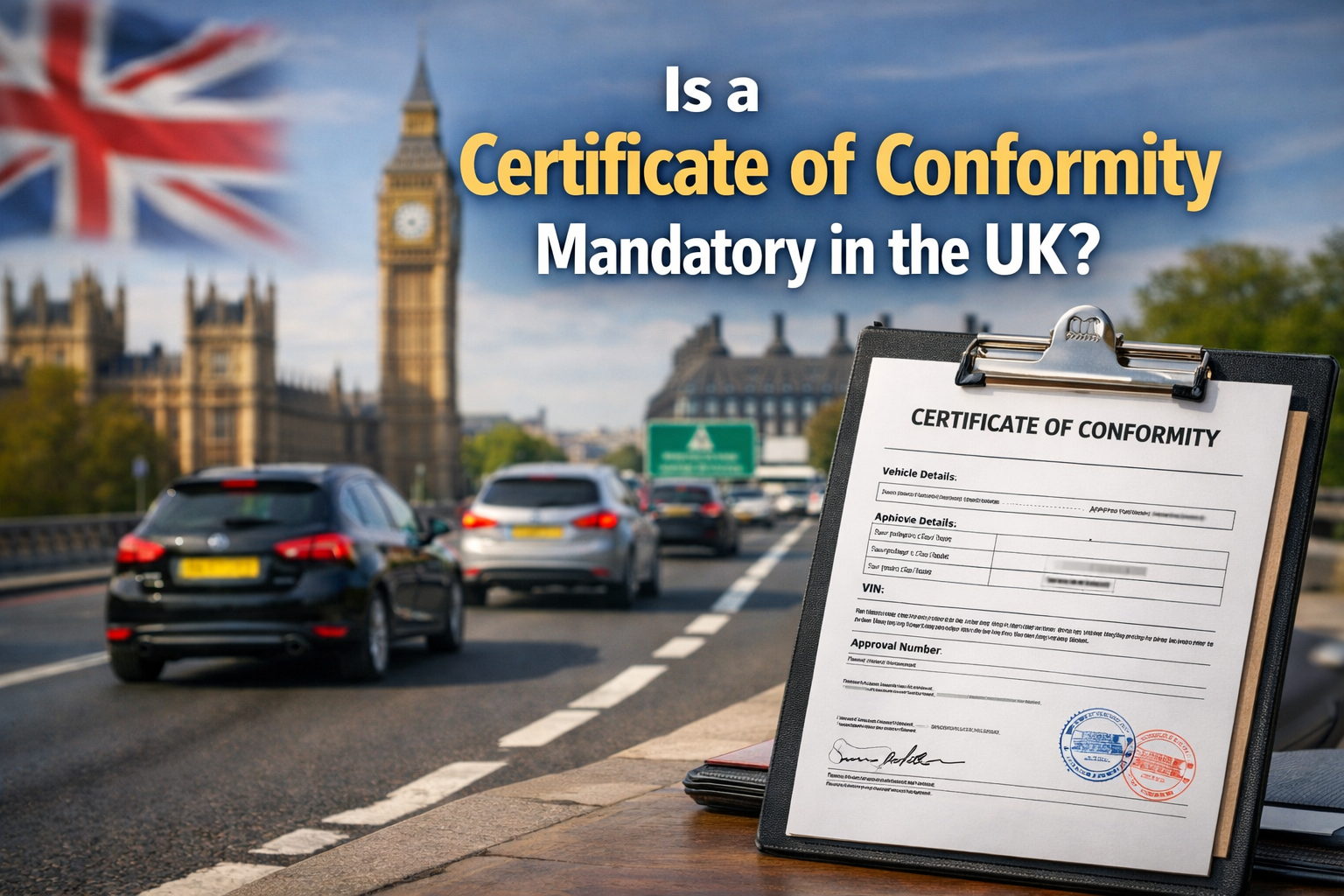
If you are importing a vehicle into the United Kingdom or registering a car that was not originally built for the UK market, one question comes up almost immediately: Is a Certificate of Conformity mandatory in the UK?
With tighter DVLA checks, digital registration systems, and stricter compliance rules becoming more common, understanding the role of a Certificate of Conformity has never been more important. Many vehicle owners face delays, rejections, or unexpected costs simply because they are unsure whether this document is required for their situation.
This guide from dvlaadvice.co.uk explains everything you need to know in simple terms, including when a Certificate of Conformity is mandatory, when it is not, and what alternatives may be accepted.
What Is a Certificate of Conformity?
A Certificate of Conformity, often shortened to CoC, is an official document issued by the vehicle manufacturer. It confirms that a vehicle meets UK and European type approval standards.
In practical terms, the document proves that your vehicle complies with legal requirements for:
- Safety standards
- Emissions regulations
- Technical specifications
- Environmental compliance
The DVLA uses this information to decide whether a vehicle can be legally registered and used on UK roads.
Why the Certificate of Conformity Matters in the UK
The DVLA relies on accurate technical data to register vehicles correctly. A Certificate of Conformity provides verified information directly from the manufacturer, which reduces the need for inspections or additional testing.
Without a valid CoC, the DVLA may not be able to confirm whether the vehicle meets UK requirements. This can result in delays, requests for alternative documents, or in some cases, refusal of registration.
Is a Certificate of Conformity Mandatory in the UK?
The short answer is it depends on the vehicle and how it is being registered.
A Certificate of Conformity is mandatory in many common situations, but not in every case. The requirement depends on factors such as the vehicle’s origin, age, and approval status.
Below is a clear breakdown.
When a Certificate of Conformity Is Mandatory
You will usually need a Certificate of Conformity if:
1. You Are Importing a Vehicle into the UK
If you are importing a car, van, or motorcycle from another country, the DVLA typically requires proof that the vehicle meets UK type approval standards. A CoC is the most straightforward way to provide this proof.
2. The Vehicle Has EU or UK Type Approval
Vehicles that were built with EU or UK type approval are normally registered using a Certificate of Conformity. This applies to most modern vehicles manufactured for the European market.
3. You Are Registering a New or Nearly New Vehicle
New or nearly new vehicles often require a CoC because they have not previously been registered in the UK. The DVLA uses the certificate to record technical data accurately.
4. You Want a Faster Registration Process
A valid Certificate of Conformity often speeds up DVLA processing. Without it, additional checks or inspections may be required.
When a Certificate of Conformity May Not Be Required
There are situations where a Certificate of Conformity is not mandatory.
1. Older Vehicles
Older vehicles that were manufactured before modern type approval systems may not require a CoC. In these cases, alternative documentation is usually accepted.
2. Vehicles with UK Registration History
If a vehicle has already been registered in the UK and is simply being re-registered or transferred, a CoC is usually not needed.
3. Individual Vehicle Approval Routes
Some vehicles can be registered using alternative approval schemes, such as Individual Vehicle Approval or motorcycle approval routes. These routes replace the need for a Certificate of Conformity.
What Happens If You Do Not Have a Certificate of Conformity?
If you do not have a Certificate of Conformity when one is required, the DVLA will not automatically reject your application. However, the process becomes more complex.
You may be asked to provide:
- Manufacturer confirmation letters
- Technical specification documents
- IVA or alternative approval certificates
- Inspection reports
These alternatives often take more time and may involve additional costs.
Can You Apply for a Certificate of Conformity?
Yes, in most cases, you can apply for a replacement or duplicate Certificate of Conformity.
Manufacturers or authorised providers issue CoCs based on the vehicle identification number. Processing times and fees vary depending on the manufacturer and vehicle type.
If you are unsure how to obtain one, dvlaadvice.co.uk can help guide you through the correct process and ensure the document meets DVLA requirements.
Common Mistakes That Delay Registration
Many vehicle owners experience delays due to simple misunderstandings. Common issues include:
- Assuming a CoC is optional when it is required
- Submitting incomplete or unofficial documents
- Using incorrect vehicle details
- Applying under the wrong approval route
Understanding whether a Certificate of Conformity is mandatory for your vehicle helps avoid these problems.
How DVLA Uses the Certificate of Conformity
The DVLA uses the CoC to record essential vehicle data, including:
- Engine capacity
- Fuel type
- Emissions figures
- Weight and dimensions
- Seating capacity
Accurate data ensures correct taxation, compliance, and road legality.
Why Professional Advice Can Make a Difference
Every vehicle registration case is slightly different. What works for one imported vehicle may not work for another.
Seeking guidance from specialists such as dvlaadvice.co.uk can save time, reduce stress, and prevent costly errors. Professional advice ensures that you submit the correct documents the first time.
Frequently Asked Questions
Is a Certificate of Conformity always required for UK vehicle registration?
No. It is required in many cases, especially for imported and newer vehicles, but not for every vehicle.
Can I register a vehicle without a Certificate of Conformity?
Yes, but only if alternative approval documents are accepted by the DVLA. This often involves additional steps.
How long does it take to get a Certificate of Conformity?
Processing times vary depending on the manufacturer and vehicle details. Some are issued quickly, while others take longer.
Is a digital Certificate of Conformity accepted?
Yes, provided it is an official document issued by the manufacturer or an authorised provider.
What if my vehicle does not qualify for a Certificate of Conformity?
In that case, you may need to follow an alternative approval route such as individual vehicle approval.
Final Thoughts
So, is a Certificate of Conformity mandatory in the UK? In many situations, yes. Especially if you are importing a vehicle or registering one without previous UK approval, the Certificate of Conformity plays a crucial role in the DVLA process.
Understanding when it is required, when it is optional, and what alternatives exist can save you significant time and frustration. If you are unsure about your specific case, expert guidance from dvlaadvice.co.uk can help ensure a smooth and successful registration.