Integrating Access Control Systems with RFID and Surveillance Technologies
By flap barrier 05-05-2026 532
When Access Control Stops Being
As facilities scale, managing vehicle access becomes more complex than just opening and closing entry points. Multiple systems—security, monitoring, and identification—start operating in parallel, often without proper coordination.
This is where most operations begin to face friction. Delays increase, visibility drops, and decision-making becomes reactive instead of controlled.
Modern infrastructure solves this by moving away from isolated systems and toward integrated access ecosystems.
The Real Problem with Standalone Systems
A standalone access control setup may work in low-traffic environments, but it quickly reaches its limits in larger operations.
Common issues include:
- Fragmented data across systems
- Delayed or manual verification processes
- Limited visibility into real-time vehicle movement
- Lack of coordination between security and access control
Over time, these gaps create inefficiencies that impact both performance and control.
How RFID Transforms Entry Processing
RFID (Radio Frequency Identification) introduces a level of speed and precision that manual systems simply cannot match.
Instead of stopping vehicles for verification, RFID allows automatic authentication the moment a vehicle approaches the entry point.
In high-volume environments, this shift is critical.
RFID systems can reduce vehicle processing time from manual checks to near-instant recognition, significantly improving throughput without compromising control.
Key advantages include:
- Contactless and seamless vehicle identification
- Consistent and error-free authentication
- Reduced dependency on human intervention
- Faster processing during peak hours
This makes RFID particularly effective for facilities handling continuous vehicle flow.
Why Surveillance Integration Matters
While RFID handles identification, surveillance adds context and verification.
Integrated surveillance systems allow operators to visually confirm access events, ensuring that system data aligns with real-world activity.
This becomes especially important in situations where:
- Multiple vehicles enter simultaneously
- Unauthorized access attempts occur
- Incident investigation is required
By combining system-based authentication with visual monitoring, organizations gain a more reliable and transparent access control process.
Building a Unified Access Ecosystem
The real advantage comes when access control, RFID, and surveillance are not treated as separate tools, but as a connected system.
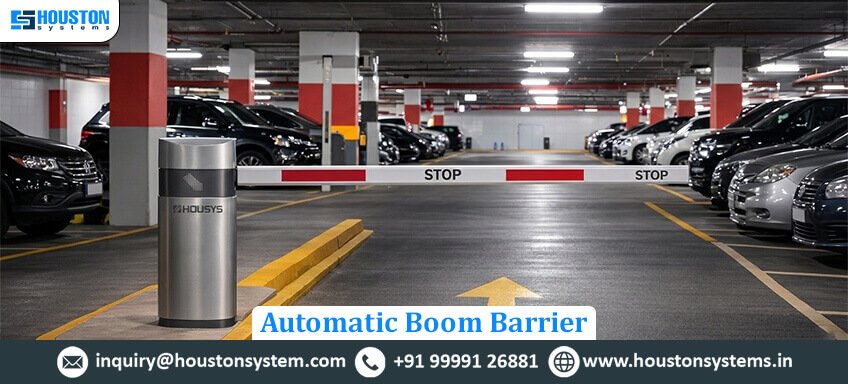
A key part of this setup is using integrated boom barrier systems with RFID and surveillance, where physical access control works in sync with identification and monitoring technologies.
This integration allows:
- Instant synchronization between entry actions and system data
- Centralized monitoring across all access points
- Faster decision-making based on real-time insights
- Reduced operational complexity
Modern infrastructure increasingly relies on such integrated systems to maintain both efficiency and full operational visibility.
Real-World Scenario: From Delays to Real-Time Control
Consider a commercial facility handling heavy daily vehicle movement. Initially, the facility relied on manual checks supported by a basic access control system.
Before integration:
- Entry delays during peak hours
- Limited visibility into vehicle activity
- Inconsistent data tracking
After integrating RFID and surveillance:
- Vehicles were identified instantly
- Entry points were monitored in real time
- Data became centralized and easily accessible
- Operational control improved significantly
The result was not just faster access—but a more predictable and manageable system.
What to Look for in an Integrated System
Not all integrations deliver the same results. For a system to perform effectively, it must be designed with compatibility and scalability in mind.
Key considerations include:
- Seamless communication between RFID, surveillance, and control systems
- Centralized dashboards for monitoring and control
- Real-time data processing and alerts
- Scalable architecture for future expansion
- Reliable system synchronization
A well-integrated system should feel like a single platform—not multiple tools stitched together.
Why Integration Improves More Than Just Access
Integration does more than speed up entry—it improves how the entire operation functions.
With connected systems, organizations can:
- Reduce manual intervention
- Improve coordination across departments
- Gain actionable insights from access data
- Respond faster to operational changes
Instead of reacting to problems, teams can manage access proactively.
Conclusion
Access control is no longer just about managing entry points—it is about managing systems, data, and visibility together.
Standalone systems may work temporarily, but they cannot keep up with the demands of modern operations.
By integrating access control with RFID and surveillance technologies, organizations create a smarter, faster, and more reliable infrastructure.
For facilities aiming to scale efficiently while maintaining full control, integration is not just an upgrade—it is a necessity.