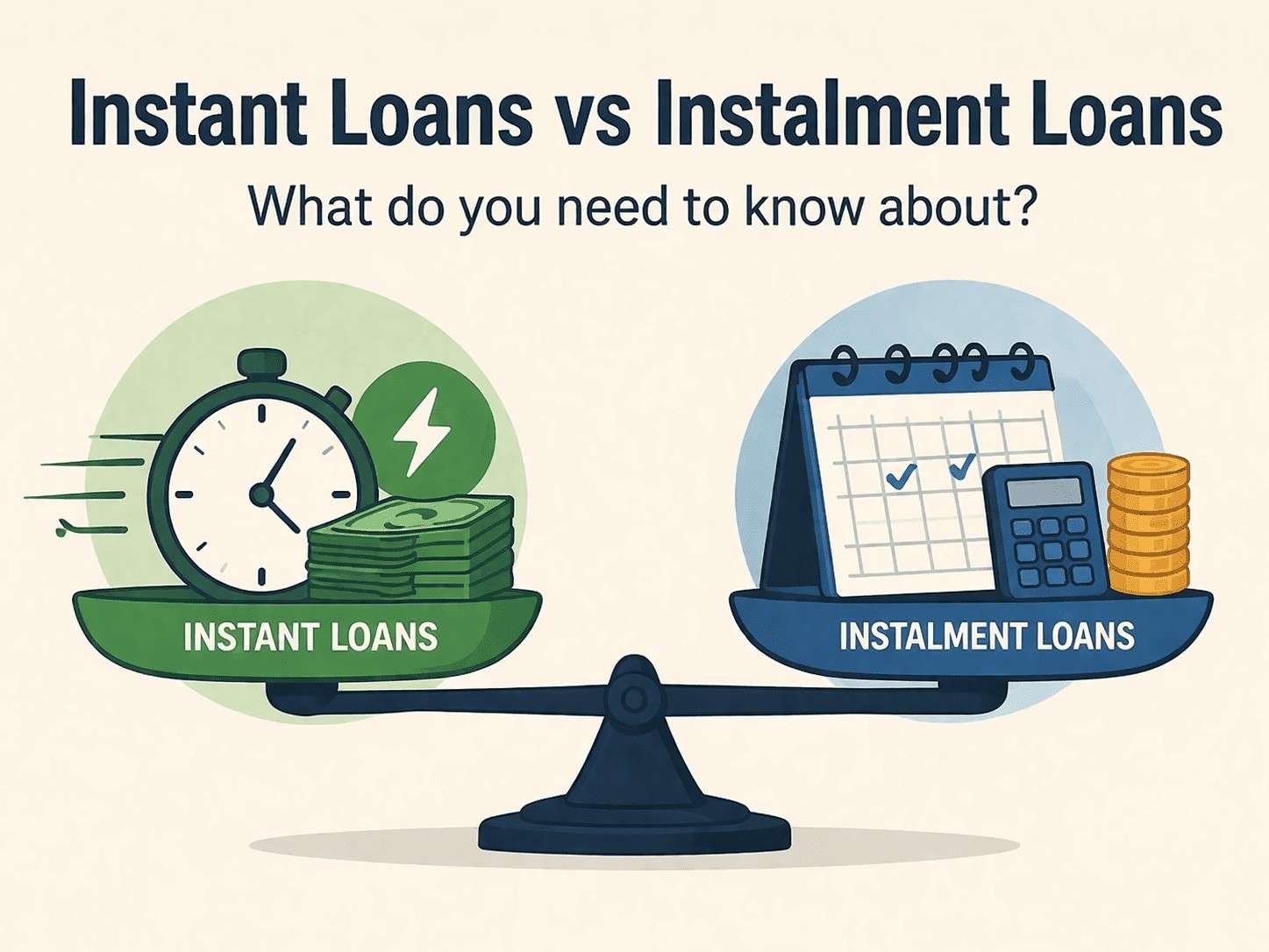
Instant loans are small loans. Several names, such as payday loans and emergency loans, are used to call them. Instalment loans, as the name suggests, are loans that are paid back over a fixed period of time. Here is how instant loans differ from instalment loans:
Instant loans | Instalment loans |
| Instant loans are small loans. The maximum loan amount you can borrow is up to £1,000. | Instalment loans start from £5,000. There is no maximum limit. Mortgages are also instalment loans |
| Instant loans are paid off in one fell swoop. | Instalment loans are paid down over an extended period |
| You will already know how much interest you have to pay. | Personal loans and other similar loans involve fixed repayment schedules, but mortgages might charge variable interest rates. |
| Instant loans can ruin your credit score when you fail to discharge the debt, but they cannot help ameliorate your credit rating. | Instalment loans are known for building credit histories, provided the minimum repayment period is at least six months. |
Instant loans: advantages and risks
Now that you know, quick loans are aimed at funding small emergencies. Whether you need some money to have your car repaired or to have your leaky faucet fixed, you can consider using instant loans. Such loans are aimed at subprime borrowers, and hence they are also called bad credit loans.
Qualifying for loans for bad credit from direct lenders is not hard at all. Once you submit an application form, a lender will quickly process it. After ensuring your repayment capacity, the money will reflect in your account.
They are called instant loans as they can be approved the same day. Once the application is processed, it takes a couple of minutes to credit money to your account. One of the reasons why these loans are quickly processed is that they involve a soft check. It means no hard inquiries are made, so there is no risk of losing your credit points.
However, if the loan amount is between £500 and £1,000, some lenders prefer to run a hard credit check. It means hard inquiries will be made. Bear in mind their impact is temporary. Your credit score will bounce back as soon as you settle the whole debt. It is vital to understand that too many such loans will call your credibility into question. This might call for high interest rates.
In order to protect your credit history, you should not have too many payday loans, nor should you miss payments on them.
Upsides | Downsides |
| These loans offer speed and convenience. The loan amount is approved the same day. You can apply via either a lender’s website or app (if they have any). | These loans charge high interest rates as they are extremely risky. Lenders cannot turn to your assets in case you make a default. High interest rates offset the risk involved. |
| For up to £500, no hard credit inquiries are run, so there is no risk of losing your credit score. | There is a risk of falling into an ongoing debt cycle if you miss a payment. These small loans are rolled over. Interest will keep accruing. |
| No collateral is required. In case you fall behind on payments, there is no risk of losing an asset. | The repayment period is quite short, normally 14 days. You might find it hard to have enough money to pay for other expenses after paying off the debt. This may lead to financial problems. |
| Since they are aimed at funding small emergencies, money is disbursed quickly. | These loans cannot help you meet large unexpected expenses, such as home improvement. |
| You can apply for these loans this instant, despite a bad credit rating. | Instant loans cannot help ameliorate your credit score despite on-time payments. |
Instalment loans: pros and cons
Instalment loans include personal loans and secured loans. All loans that are paid down over an extended period of time are known as instalment loans. The biggest benefit of these loans is that they are more manageable than short-term debts such as payday loans. You can easily budget around monthly payments.
All instalment loans include fixed payments every month, but some mortgages charge variable interest rates, so monthly payments cannot be fixed. In this case, you need to be quite careful about your budget to ensure timely payments.
Advantages | Disadvantages |
| The biggest benefit of these loans is that payments are predictable. You can easily make your budget around these payments. | You will be tied to longer repayment periods. There is no guarantee that your financial condition will remain the same. |
| You can borrow a large amount of money. they can be employed to fund unexpected and planned expenses. | These loans require you to have a good credit score. Borrowers with bad credit ratings might not receive approval, and if so, they will be charged a high interest rate. |
| They can help build your credit history. | Some instalment loans such as mortgages require collateral. There is a huge risk of losing your house in case of non-payments. |
Other things you should know about them
Whether you take out instalment loans or short-term emergency loans, bear in mind that all types of loans are expensive.
Under no circumstances should you borrow money more than you can afford. It is not necessary that you will be able to pay back what you need. Try borrowing what you can afford. It might be lower than you need.
If you are trying to build your credit score, you do not need to take out personal loans. You should rather consider using credit builder loans. These small loans are paid down over a period of six months. They will help improve your credit score.
The final word
Instant loans and instalment loans are aimed at funding different kinds of needs. There are some lenders who accept payments in instalments for small loans too, but despite that, they cannot help build your credit rating because the whole debt does not last for more than a month. Understand how both types of loans work and then decide which one will be suitable for you.