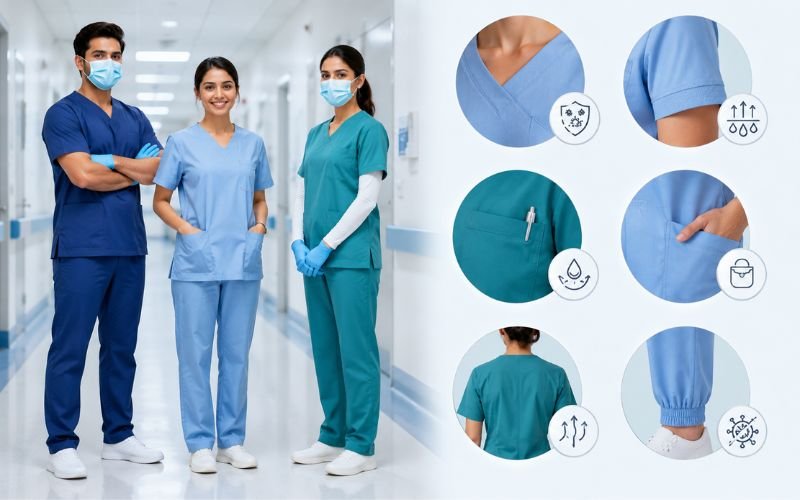
Healthcare environments operate under strict hygiene protocols where infection prevention is a constant priority. Medical clothing is a critical part of this system as it serves as a protective barrier minimizing the risk of contamination and helping to protect patients and staff. An effective hospital clothing design will be comfy, durable and meet clinical hygiene requirements with a professional look in a high stress work environment.
The sourcing partners are also essential in the modern healthcare facilities to ensure quality and consistency. By selecting a reputable Healthcare Uniform Supplier in Dubai like Futuremind Uniforms, one will be able to access sophisticated medical uniforms that are created using safety oriented materials and are able to resist infections effectively. Knowing the basic Infection Control Features in Hospital Uniforms assists hospitals in choosing uniforms that are more protective, facilitate daily work as well as have a high level of hygiene in all departments.
Must Have Infection Control Features in Hospital Uniforms for Healthcare Staff
1. Antimicrobial Fabric Protection
One of the Infection Control Features in Hospital Uniforms is antimicrobial fabric. It is developed to restrict the increase of bacteria fungi and other dangerous microorganisms on medical clothing. This aids in minimizing the possibility of the survival of pathogens on clothes during extended shifts. It also reduces the risk of cross contamination among patients staff and the hospital surfaces hence is critical in ensuring hygiene in the clinical settings.
2. Fluid Resistant Material
Healthcare clothing that is resistant to fluids is a protective barrier against blood bodily fluids and chemical splashes. This will not allow the liquids to seep into the cloth and transmit dangerous organisms. It is particularly necessary in emergency rooms ICUs and surgical units where the risk of exposure is high. This characteristic assists in keeping clean and minimizing the risk of transmitting infections at critical medical procedures.
3. Breathable Yet Protective Fabric
Protective fabrics are breathable and keep healthcare workers comfortable, at the same time not compromising on safety. These materials enable the air to flow properly and this helps in controlling body temperature during prolonged working hours. Simultaneously they decrease moisture accumulation which may cause bacteria growth. This perch of comfort and security underpins improved performance and hygiene in challenging hospital settings.
4. Easy to Disinfect Material
Medical clothes should be able to facilitate frequent washing and high disinfection without compromising the quality. Fabrics that are easy to clean with disinfectants can be easily cleaned in the industries to get rid of harmful pathogens. This guarantees that clothing can be used several times in hospitals. Durable materials also retain their protection properties over time that aid in ensuring uniformity in infection control standards in health care facilities.
5. Seamless or Reinforced Stitching
Continuous or reinforced stitching will assist in minimizing crevices in which dirt and bacteria can accumulate. Flat seams make a smoother surface which is less difficult to wash properly. Strengthening of the stitching also enhances the wear in high usage applications. This design method will minimize contamination areas and effective hygiene control that is critical to safe healthcare practices.
6. Anti Static and Anti Adhesion Properties
Anti static and anti adhesion qualities do not allow dust lint and airborne particles to adhere to healthcare attire. This is especially necessary in sterile settings like operating rooms and laboratories. It makes the surface of clothing cleaner and extends the shelf life of clothing and minimizes the chances of microbial contamination. This helps in creating a safer and more controlled clinical environment.
7. Color Coded Infection Control Systems
Medical clothing is color coded to help group hospital staff based on department and level of risk of infection. This system lessens cross contamination through the separation of the work areas and duties. It also enhances the identification of staff and efficiency of workflow. ICU surgery and general wards have different colors to ensure hygiene boundaries and reinforce infection control measures in healthcare settings.
8. Proper Fit and Coverage Design
Healthcare clothes should be adequately fitted to minimize the risk of contamination. Garments which are loose may be in contact with contaminated surfaces easily. Properly designed workwear gives secure cuffs complete coverage and freedom of movement. This will provide greater protection and at the same time enable medical professionals to carry out their work in a comfortable and efficient way in the clinical settings.
9. Moisture Wicking Technology
Moisture wicking fabrics are used to keep healthcare professionals dry by eliminating sweat off the body. This minimizes moisture accumulation that may cause bacteria growth and the development of odor. Dry clothing improves comfort and hygiene during long shifts. This capability enhances improved performance and keeps staff focused in challenging high pressure healthcare settings.
10. Disposable or Hybrid Apparel Options
Disposable or hybrid healthcare attire is used in high risk medical situations to enhance infection control. These are single use or limited reuse clothing to minimize the risk of contamination. They come in very handy in the times of surgery outbreak and emergency care. This will reduce the risk of transferring pathogens and promote the overall level of safety in the hospital.
Conclusion
The quality of medical clothing worn daily does not only contribute to strong infection prevention in healthcare through protocols but also through the quality of the protocols. All the design elements of fabric technology to construction have a direct impact to minimizing the risk of contamination and ensuring a safe clinical environment. The well designed attire in hospitals that lay emphasis on this has provided a better system of protection to the staff and patients.
Dwelling on Infection Control Features in Hospital Uniforms will assist healthcare facilities to raise the level of hygiene and maintain the same level of safety throughout all departments. These features can be used to achieve improved compliance, mitigate risks of infection and improve overall healthcare performance in challenging medical settings when appropriately implemented.
Tags : Hospital Uniform Uniform