How X-Ray Baggage Scanners Identify Hidden Threats Using Imaging Technology
By flap barrier 28-04-2026 334
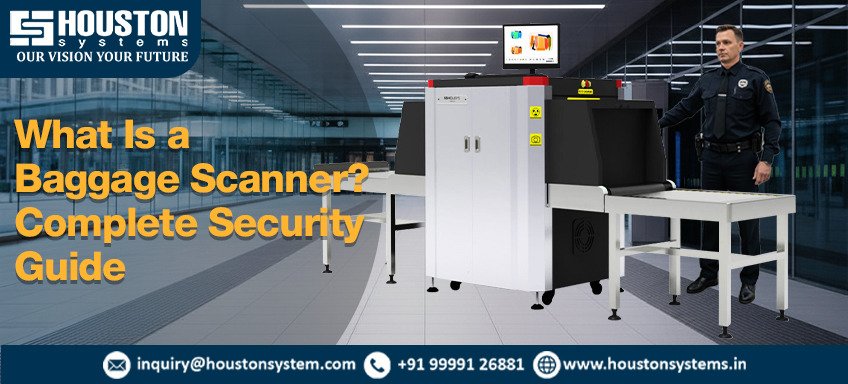
A single undetected threat in a crowded public space can have serious consequences—yet in places like airports, metro stations, and commercial complexes, hundreds to thousands of bags are screened every hour. Relying on manual inspection alone simply cannot match this scale or accuracy.
This is why modern security infrastructure depends heavily on X-ray baggage scanners—systems designed to detect concealed threats quickly, non-intrusively, and with high precision. But what makes these machines so effective?
The Science Behind X-Ray Imaging
At the core of every baggage scanner is a simple but powerful principle: different materials absorb X-rays differently.
When luggage passes through the scanner:
- X-ray beams penetrate the bag
- Sensors measure how much radiation is absorbed
- Software converts this data into color-coded images
Typical color interpretation:
- Orange → Organic materials (food, explosives, plastics)
- Blue → Metals and dense inorganic objects
- Green → Mixed or intermediate materials
This layered visualization allows operators to “see inside” a bag without opening it—something no manual process can achieve at scale.
How Hidden Threats Are Actually Identified
Detection is not just about seeing objects—it’s about interpreting patterns.
Modern luggage screening technology combines multiple detection techniques:
1. Material Discrimination
Dual-energy scanning differentiates between organic and inorganic substances—critical for identifying explosives or narcotics.
2. Density Mapping
High-density objects (like firearms or concealed blades) appear darker and more defined, helping operators quickly isolate threats.
3. Shape Recognition
Security personnel are trained to recognize suspicious outlines—such as weapon components or irregular circuitry inside electronic items.
4. Layer Penetration
Even if an item is hidden beneath multiple layers or inside compartments, X-rays can expose it due to their penetration capability.
In real-world scenarios, this means a weapon hidden inside clothing or electronics can still be detected without unpacking the bag.
The Human + Machine Advantage
Technology alone isn’t enough—trained operators play a critical role.
In high-security environments:
- Operators analyze scan images in real time
- They look for anomalies in shape, density, and placement
- Suspicious bags are flagged for secondary inspection
Experienced operators often identify threats not just by objects, but by unusual packing patterns or inconsistencies within luggage.
This combination of human judgment + machine precision is what makes modern screening systems highly reliable.
How AI is Enhancing Threat Detection
Today’s systems are no longer limited to manual interpretation. Advanced software and AI are transforming how threats are detected.
Key advancements include:
- Automatic Threat Detection (ATD)
Instantly highlights suspicious objects on the screen - AI-Based Image Recognition
Learns from thousands of scans to improve detection accuracy - Multi-View Imaging
Displays objects from multiple angles for better clarity - Reduced Human Error
AI assists operators, especially during high-volume screening
This is especially critical in environments where speed and accuracy must coexist, such as airports or metro hubs.
Real-World Application: Why This Matters
In high-traffic facilities, the challenge is not just detecting threats—it’s doing so without slowing operations.
For example:
- Airports process hundreds of bags per hour per lane
- Commercial buildings need quick visitor screening without queues
- Industrial sites require consistent security checks across shifts
In such cases, relying on advanced security screening solutions ensures:
- Faster throughput
- Consistent detection accuracy
- Reduced reliance on manual checks
- Better overall risk management
Facilities handling large volumes often adopt x-ray baggage scanner systems specifically designed to balance speed, precision, and reliability in demanding environments.
Limitations and Why Technology Still Wins
No system is perfect. Challenges include:
- Complex object overlap inside bags
- Operator fatigue during long shifts
- Evolving threat concealment techniques
However, compared to manual inspection, X-ray systems still offer:
- Far greater detection capability
- Non-intrusive screening
- Scalable performance in high-traffic zones
This makes them an essential part of modern layered security infrastructure.
Final Thoughts
X-ray baggage scanners have fundamentally changed how security screening works. By combining physics-based imaging, intelligent software, and trained human analysis, these systems can detect hidden threats with speed and precision that manual methods simply cannot match.
As public spaces become more crowded and security challenges more complex, adopting smarter screening technology is no longer optional—it’s a critical investment in safety and operational efficiency.